Hi ,
Ever felt like some exercises just don’t fit quite right? Trust us, you’re not alone!
In our pursuit to provide the best coaching, understanding body mechanics plays a pivotal role when it comes to exercise selection. Today, we explore how tailoring exercises to body proportions enhances movement proficiency, performance, and comfort, particularly when it comes to compound movements and free weight exercises.
Optimizing Compound Movements with Body Type-Specific Variations
Understanding the interplay between limb length and torso ratio can significantly influence the effectiveness of compound exercises. Here’s how fitting exercise variations to individuals can transform their fitness journey:
- Movement Proficiency: Adjusting exercises like squats and deadlifts to accommodate different limb lengths helps maintain proper alignment and technique, reducing injury risk and improving movement efficiency.
- Performance Optimization: For those with longer limbs, variations such as the sumo deadlift or high-bar squat can leverage their natural biomechanics, leading to better force production and power output.
- Comfort and Confidence: Personalized adjustments, like elevating heels for squats or using a neutral grip for bench presses, can enhance comfort, allowing clients to perform with greater confidence and focus.
Remember, unless there’s a specific need for a particular exercise, like a barbell back squat for a powerlifter, there’s no mandatory exercise. The key is finding variations that best suit individual clients.
Integrating Isolation and Single Joint Exercises
To ensure a well rounded training plan, complement your compound movement selections with specific isolation exercises:
- Addressing Specific Weaknesses: Isolation exercises zero in on areas needing extra attention. For clients preferring sumo over conventional deadlifts, adding hamstring curls strengthens the posterior chain. Likewise, longer-limbed clients might benefit from extra triceps work to support pressing movements, achieving a more symmetrical development.
- Enhance Muscle Symmetry: Thoughtful inclusion of isolation exercises promotes balanced muscle development, crucial for aesthetic goals and functional strength.
- Enhance Joint Stability and Mobility: Supporting joint health is vital for quality movement and injury prevention. For instance, lateral raises can boost shoulder stability and range of motion, especially aiding those with longer arms. By emphasizing these exercises, you build structural integrity, helping clients perform compound lifts with greater ease and efficiency.
Action Items: Personalizing Client Programs
- Conduct a Detailed Assessment: Evaluate each client's body type to guide exercise selection, focusing on both compound and isolation movements.
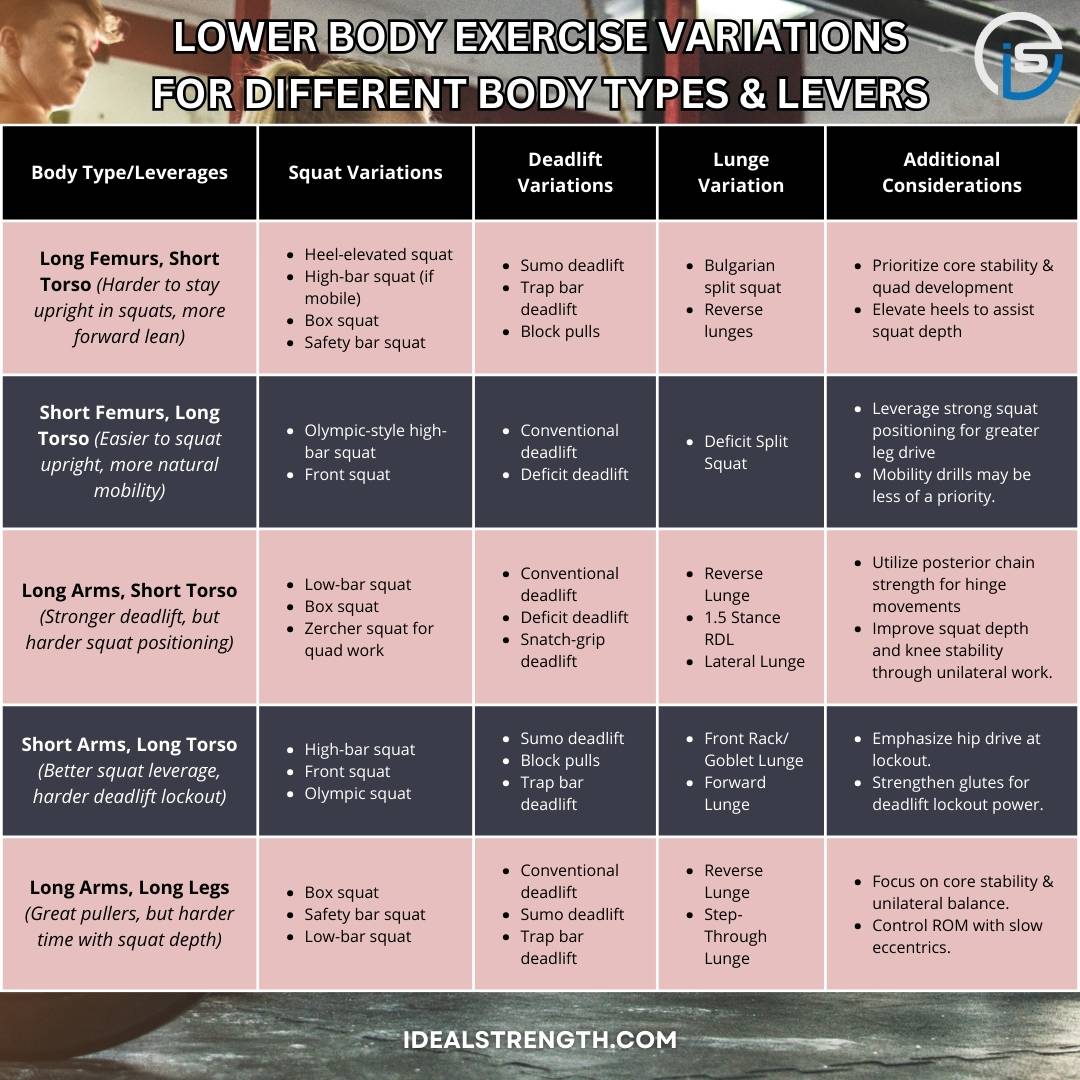
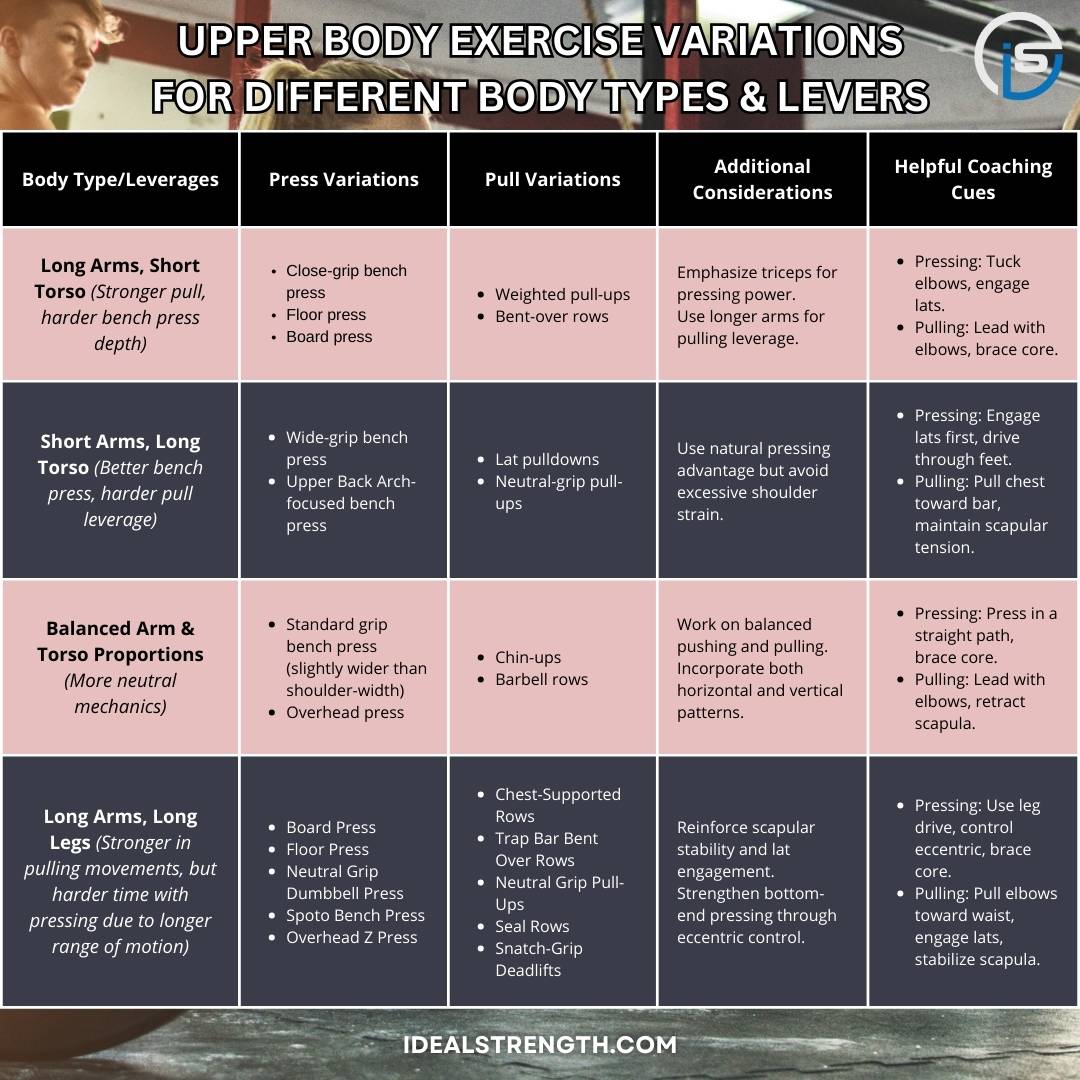
- Apply Tailored Variations: Use the Body Type Exercise Guide to select variations that best suit individual biomechanics and goals.
- Educate and Empower: Clearly communicate the rationale behind exercise choices to clients, enhancing their understanding and engagement.
Resource Highlight: Body Type Exercise Guide
We're thrilled to offer the Body Type Exercise Guide, providing precise exercise variations tailored for different body types and levers. This resource comes in handy with creating well-rounded, effective training routines.
Community Engagement:
What strategies have you used to balance compound and isolation exercises for diverse body types? We’d love to hear your experiences. Share with our Trainer Edge community, and your insights might feature in a future edition!
To your strength and adaptability,
Coach Dan & Tasha
Ideal Strength Trainer Edge
P.S. Know a coach who could benefit from this? Share our newsletter link: https://sendfox.com/lp/19j4dx. Your referrals help us build a stronger, more informed community!
0 comments