Hi
In today’s email, I want to dive into the specifics of U-tube heat exchangers. These exchangers can offer several advantages depending on your application requirements, but there are also important considerations to keep in mind.
So let's start.
Cleaning: Shell vs. Tube Side
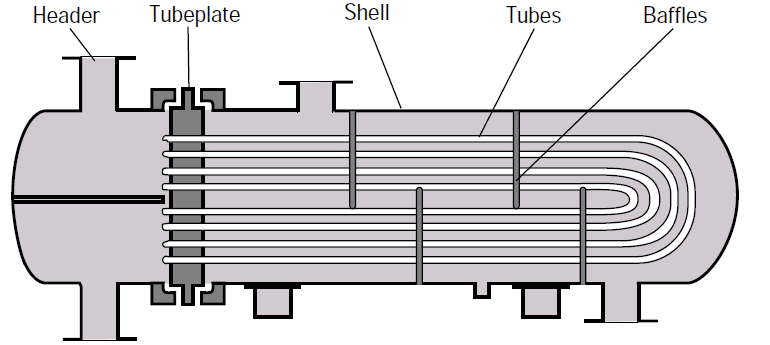
One of the key features of a U-tube heat exchanger is that the tube bundle is removable, which allows for mechanical cleaning of the shell side. This is particularly useful in applications where fouling is expected on the shell side and regular maintenance is required to ensure optimal performance.
However, it's important to note that while the shell side can be cleaned easily, this is not the case for the tube side.
Due to the U-bend shape, only the outermost tubes can be cleaned mechanically. This makes U-tube exchangers less suitable for applications where frequent or thorough cleaning of the tube interiors is necessary.
That's why in reboilers we use U tube when heating with steam in the tube side as cleaning is not a concern. However, if we use a fouling fluid as a heating medium, we avoid the use of U tube bundle in this case.
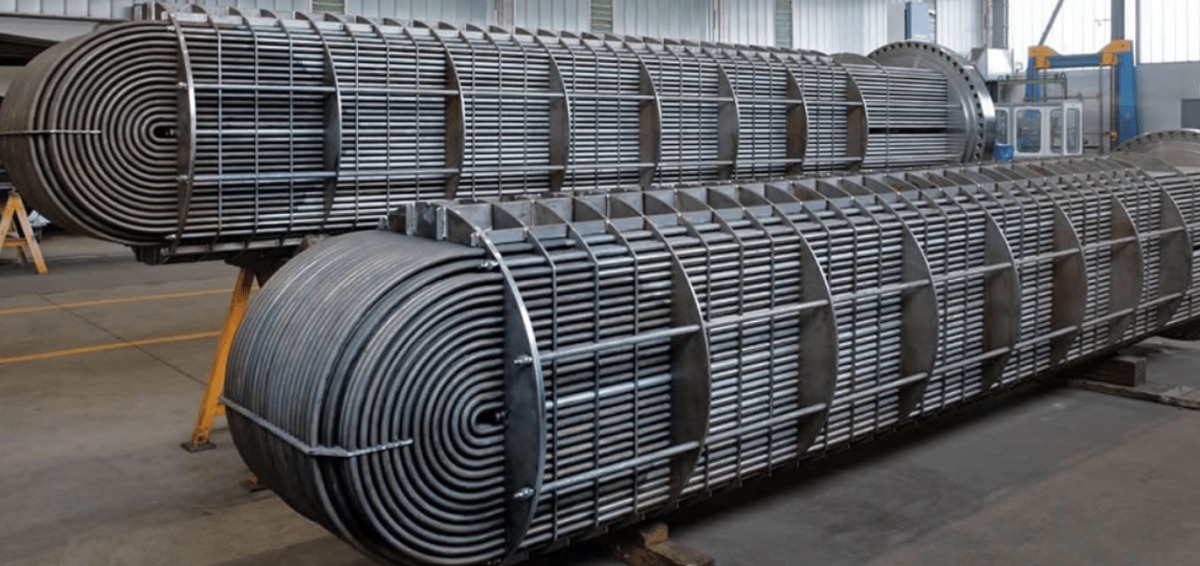
U tube bundle before being inserted in a shell and tube exchanger
Cost and Compact Design
When it comes to cost, U-tube exchangers can be more economical compared to other heat exchanger designs, such as floating head exchangers. The main reason for this is the use of only one tubesheet, which reduces material and fabrication costs.
However, it's worth noting that the bending of the tubes and the need for a larger shell diameter to accommodate the U-bend radius can offset some of the cost savings, bringing the overall cost closer to that of a fixed-tubesheet exchanger.
Despite this, U-tube exchangers still offer a relatively compact design that can be beneficial in situations where space is limited. Their ability to handle a wide range of applications while maintaining a smaller footprint compared to other designs makes them a strong contender for tight spaces.
Thermal Expansion
One of the most significant advantages of U-tube heat exchangers is their ability to handle differential thermal expansion. Since one end of the tube bundle is free to expand or contract, U-tube exchangers are particularly suited for applications where there are large temperature differences between the shell and tube sides.
This design flexibility helps mitigate thermal stresses, making U-tube exchangers ideal for high-temperature applications or processes where temperature fluctuations are common.
Conclusion
To summarize, U-tube heat exchangers are an excellent choice when you need a removable bundle for easy shell-side cleaning, particularly in processes with significant thermal expansion considerations. Although the tube interiors can be difficult to clean, the lower initial cost and compact design make them a practical solution for many applications.
However, if your process involves dirty fluids inside the tubes or requires frequent internal tube cleaning, you may want to consider alternative designs like floating head exchangers.
If you'd like to explore different exchanger TEMA types and the factors affecting their selection, you can check out our video (Choosing the proper Exchanger TEMA type) in the below link:
If you have any questions or suggestions, feel free to reply to this email!
Regards
Mohamad
P.S.It's time to get your Process Engineering career to the next level. Process Engineering Masterclass is on sale for a very limited time.
0 comments