read time 9 minutes
Welcome to The Listening Table Newsletter, a weekly newsletter where I provide actionable ideas to help you build a more connected, better listening life.
Let's start with something useful:
When I met with Adam Lippin, the founder of the HearMe listening app, he told me that "Listening is breathing." He says that listening is a full body experience, and if you aren't able to hear your breathing internally, you won't be fully present in the moment for the person you're listening to.
🎉Celebrating: Here's a picture of Ecuador's first listening table

📱 Comic: I'm not ghosting you but...

I drew a comic about the other side of ghosting people. The age of ultra connectivity is a challenge to adjust to. Just because you can be contacted ALL OF THE TIME doesn't mean that you're going to be able to respond to messages at any time.
When you are having a tough time, it is tough to reach out to people and ask for help. Asking for help is hard enough. If you are the type to withdraw when overwhelmed, let's do away with the shame of feeling like you're letting people down if you can't reply to every message.
If you know someone is going through a hard time:
- Try giving them a phone call. If they don't pick up, send a text that says why you called.
- Reach out intermittently. It may take a while to catch them in a good place.
- Offer to help them with anything, or something specific. Make it easy for them to say yes, and also easy for them to say no.
I have a friend who I'd text or call about once every other month for several years. We went to high school together, and he had been dealt a barbed hand by life. I kept in contact with him loosely over the years, with a phone call that usually went to voice mail. An occasional text. Fine.
I later heard from a mutual friend that he'd been dealing with cancer (he was treated and it is a very good result now) and the chemo and other drugs had really messed him up. I increased my calls to about once a month, maybe every two weeks or so from time to time. Still almost always went to voicemail.
Sent a few texts.
Eventually, we got to a place where he'd pick up the phone a bit more often. This is in part to me finding out when the best times for him to be randomly called are.
He recently told me these calls were so valuable to him. He'd lost most of his friends after falling off the map. People reached out once or twice but gave up. Not me though! He said even seeing the missed calls let him know there was someone there for him, which made a difference despite not having the energy to chat on the phone.
For me, this made it all worthwhile. The all wasn't even that much. It takes two minutes to call someone and leave a voicemail. Seven seconds to send a text.
Here's the trick: In a voicemail, say they don't need to call you back, and that you'll call again sometime. Takes the pressure off. Makes it fun.
🎥 This Email Is Brought to You By GROK

Sponsorships make it possible for me to work on sharing the power of listening with the world who doesn't have it yet. If you've got any interest in building your own listening skills, check out GROK cards - which are on sale for 30% for the rest of the month. This is the best deal you will ever get for these.
Want me to personally help you through a listening block? I have 2 spots available to join my new 1-on-1 coaching program. Since it's brand new, I'm offering it for 100% off. Reply to this email if you're interested in hearing more.
Happy Listening,
Orly Israel
Fun Fact: Abraham Lincoln was both a champion wrestler and a licensed bartender before he became the US president.
LAST WEEK'S LISTENER APPRECIATION
One viewer in Saudi Arabia saw listening in a new light:
"Being born in a culture that thinks mental health is a myth and just an excuse to avoid hard work, I grew up not knowing how to express my feelings or communicate in general. The closest I've been to telling people how unwell I am mentally would be a single 'just tired' to their 'how you've been' question.
If my answer was longer than that I would instantly feel like a burden for pulling them in my messy thoughts. Being listened to always felt like a risky situation. I only discovered your account two weeks ago but I kept tearing up over almost every video I watched The courage these people have to come up to a stranger and share something very personal or traumatic was mind blowing to an introvert like me and all that took was a listening table and you, of course. LOL.
I think it's really fascinating how much people want to say to the world but also sad because a lot of them aren't surrounded by compassionate understanding listeners like you. I hope your content and message spread widely across the world. What you do is truly important and I could really see it changing our society for the better. Good luck and thank you for bringing awareness. Love from Saudi Arabia."
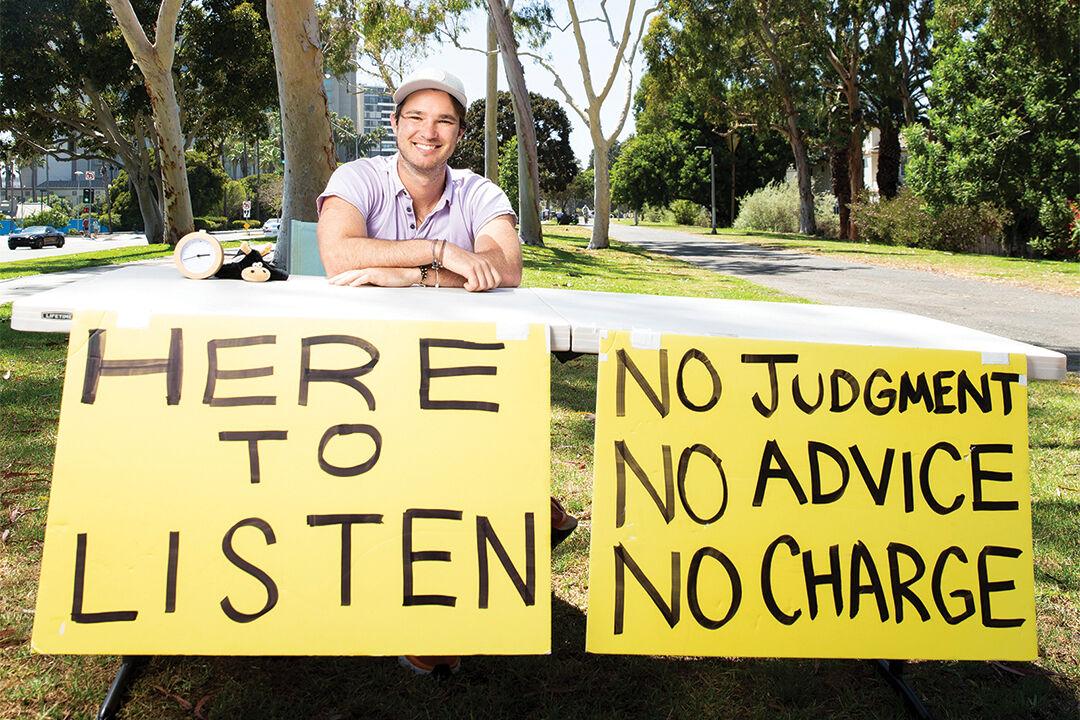
Setting up a listening table may not be for everyone.
There are a lot of reasons not to do it: it's inconvenient, bad weather, dangerous conditions, fear. Remember than any table can be a listening table if you make it one. You don't even need the table. If you do want to set one up, come to my How To Table session online on Sunday.
Please send your breakthroughs to me by simply replying to this email.
Let me know if you'd prefer to remain anonymous.
Happy listening,
Orly Israel
Not a New York Times Bestselling Author Yet
My Website -- My Instagram -- My YouTube Channel
----------------------------------------------
Until I find the right format for a newsletter, I'll be borrowing the formats of people whose newsletters I admire and subscribe to.
This one is a combination of Noah Kagan's and Mark Manson's and Sahil Bloom's Curiosity Chronicle and Bobby Hobert's.
.
About this newsletter: You're receiving this email because you signed up to my newsletter. Each week, I'll send you a combination of ideas, updates, and learnings, or something to try in your life. If you no longer wish to receive this newsletter and all other updates from me, you can unsubscribe.
Disclaimer: By sending your breakthrough you are giving us your explicit consent to process the data and share it with our newsletter subscribers, thelisteningtable.com website visitors and on social media, including any sensitive data such as information regarding mental health, racial or ethnic origin, political opinions, religious or philosophical beliefs, sex life or sexual orientation. You may opt out and/or request deletion of the data at any time. You acknowledge that once we have shared your breakthrough with the other email subscribers we can no longer delete the data from their mailboxes.
0 comments