
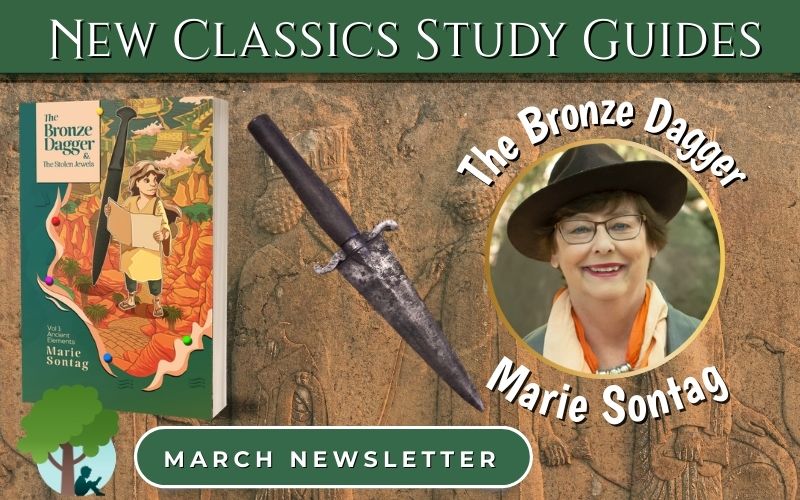
New Classics Study Guides provides online study material for The Bronze Dagger & the Stolen Jewels, a historical fiction adventure for 10-14-year-olds about ancient Mesopotamia. Whenever I give author presentations, I’m often asked how I came up with the story’s plot.
It all started with a bronze dagger.
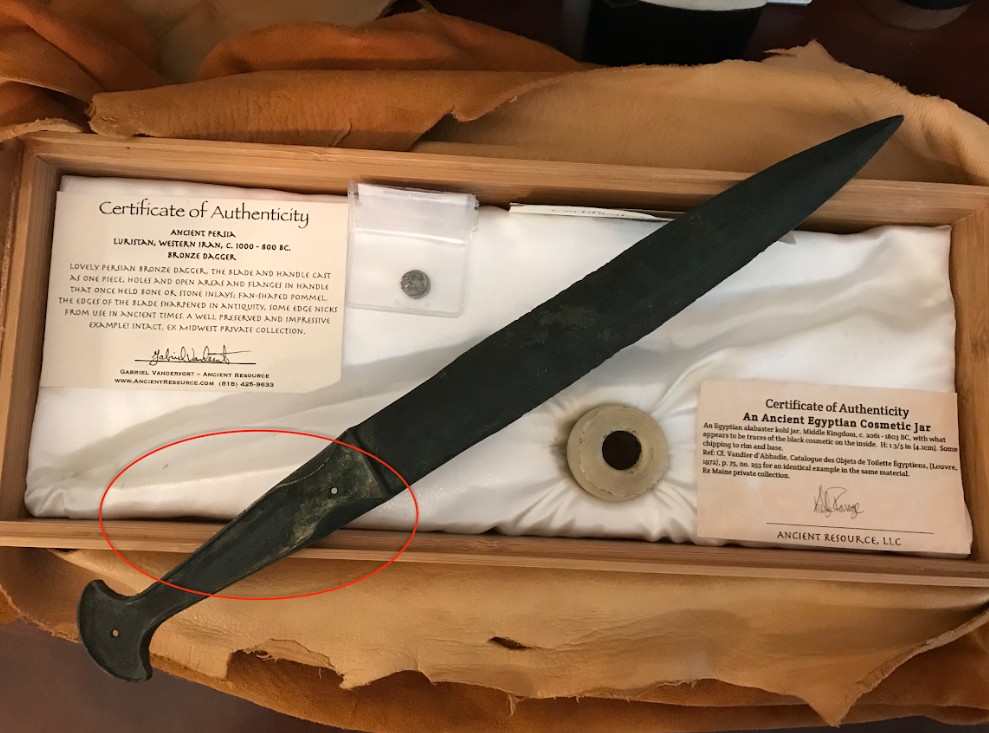
When my sixth-grade social studies students were learning about the Babylonian King Hammurabi, my husband and I visited a store that sold artifacts. I saw a bronze dagger dating from the time of Hammurabi, about 4,000 years ago. Grabbing my husband’s arm, I tugged him over. “Look,” I said, pointing to the dagger in the glass case. “This is from the time of Hammurabi. Wouldn’t it be great if I owned it so my students could touch it?“
My husband nodded. “That would be awesome.”
I continued to point at the object. “This is something that was on Earth at the same time as someone they’re learning about in a dusty old textbook.”
“Ah-ha.” My husband nodded again.
“So, can we buy it?”
“Ah, no.” He smiled in a way that said, You already knew the answer before you asked, but it was cute that you asked.
I stared at the dagger and thought, If that dagger could talk, what would it say? Who did it see? Who made it? Why did they make it?
As we left the store, I continued to ponder those questions. Over the next several days, I came up with fictional answers to my queries. After researching more about ancient Babylon, my mind plotted the story. After the book came out, I bought the bronze dagger, and now share it during author visits.
The main character in The Bronze Dagger & the Stolen Jewels, 13-year-old Samsuluna (Sam), owns a bronze dagger given to him by his uncle before his uncle moved away. It provides Sam with a physical object that reminds him to hope—a hope that there are people who love and care for him. A hope that calms his fears. A hope that loosens the bitterness buried deep within his soul.
Writers frequently draw inspiration for their stories from tangible items, artwork, or specific occurrences. Each of us also has a story. As your life unfolds, watch for special moments you may want to reflect upon later. Saving a memento from the event can remind you of that significant occasion. As the 17th-century writer and historian Thomas Fulton said, memories are “storied in the cupboard of the heart.”
I few years ago I saved a snapshot of an important moment in my grandson’s life. When my six-year-old grandson experienced the trauma of his parents’ divorce, his life turned upside down. But when we attended a reenactment of Jesus’ passion, it made his Bible stories come to life. As a result, he asked Jesus into his heart.
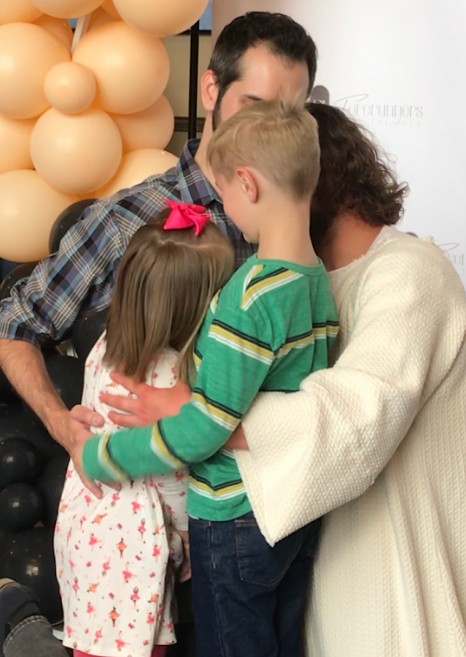
After the program, my grandson wanted to tell the actor who played Jesus what he had done. He knew the man wasn’t really Jesus, but he wanted to solidify his decision. I took a picture of my grandson, his dad, and his sister meeting with the actor and praying with him. The picture I took of that moment now sits on his dresser as a remembrance of an item in the cupboard of his heart.
What tangible evidence do you have for memories stored in your cupboard?

. . . tickles her imagination by “bringing the past to life, one adventure at a time.” She writes adventurous, award-winning middle grade and young adult historical novels, leaning much on her thirteen years of experience teaching middle-school students. You can download a free study guide for The Bronze Dagger on the New Classics website.
---------------------

--------------------
You received this email because you signed up for our newsletter, entered a giveaway, or downloaded a freebie. Unsubscribe at any time.
0 comments