Hi ,
We've talked about why we need check valves on pump discharge , but here's what can go wrong if you place them in the wrong position.
However, have you ever wondered why check valves are typically installed upstream of isolation valves rather than downstream? This seemingly simple design choice can significantly impact the system's maintainability and safety.
The Critical Placement Decision
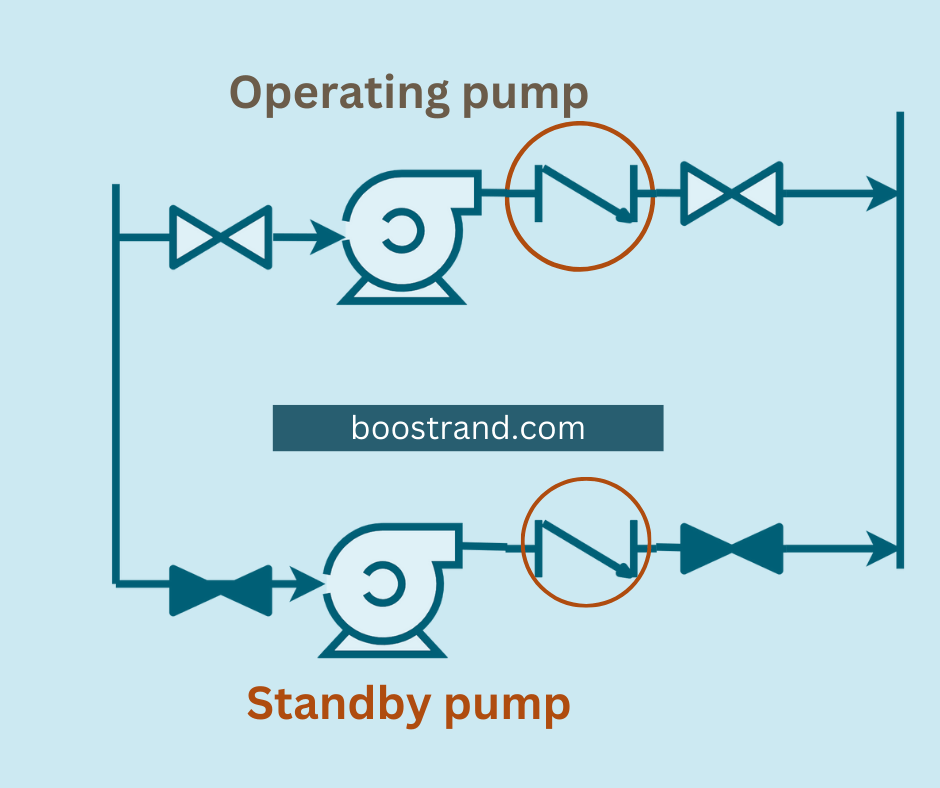
When we install a check valve between the pump and the discharge isolation valve (upstream placement), we're making a strategic choice that offers several advantages:
- Simplified Maintenance: If your check valve needs repair or replacement, you can isolate just that section without affecting the entire system. Placing it downstream would require shutting down larger portions of your system or even draining tanks.
- Enhanced Pump Protection: The check valve immediately protects your pump from reverse flow and potential water hammer damage - especially critical in multi-pump systems where one pump might shut down while others continue operating. In case of compressors, it's even more critical.
- Improved Safety: During pump maintenance, having the isolation valve downstream means you can work on the pump without pressurized fluid in your work area.
The Reality Check on Check Valves
Here's something important to consider: Check valves are inherently more prone to failure than isolation valves. Why?
- They're constantly moving with flow changes, leading to wear on seats and seals
- They're sensitive to debris that can prevent proper sealing
- Unlike isolation valves, they can't provide true positive isolation
✅That's why we place isolation valves downstream of the check valve—when the isolation valve is closed, it reduces backflow incidents, making the check valve a second line of defense rather than the sole protection.
This is why we emphasized in our previous discussion about using double check valves for critical applications where backflow could cause severe issues.
Check Valves Latent Failure
⚠️ Here's the scary part: check valves can fail silently. Since they only close when backflow occurs, which is not the normal scenario. This means that a stuck-open check valve might go unnoticed for months—until the one moment we desperately need it.
Best Practice Tip: API 521 highlights this risk and recommends:
- Double check valves in critical backflow scenarios.
- Using different valve types in series (e.g., piston + spring‑loaded split wedge) to improve sealing across varying ∆P conditions.
- If there is no firm inspection procedure to inspect the check valves, we shall even need an additional layer of protection against backflow
💡Remember, proper valve arrangement isn't just about following standards - it's about understanding the "why" behind each decision to create safer, more maintainable systems.
Want to dive deeper into check valve selection and when to use non-slam check valves? Check out our video series on P&ID development.
I hope you enjoy today's email. If you are interested in specific subjects to talk about, feel free to reply to this email.
Happy Learning!
Mohamad
0 comments