
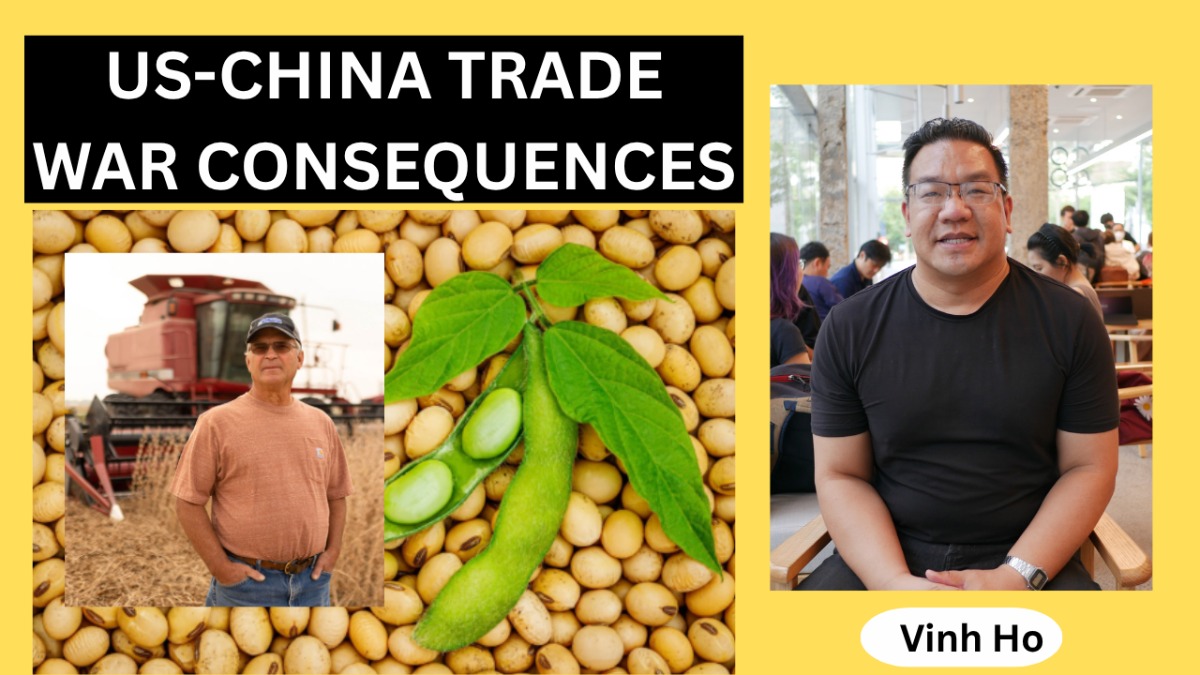
One of the unintended consequences of Trump’s trade war is the American soybean farmer losing approximately $12 billion market share in 2025.
This blow to the Midwestern soybean producing states of Illinois, Iowa, Minnesota, and Indiana hits home as someone who grew up in southern Minnesota in the 1990s.
Since Trump announced staggering tariffs on the world at the White House Rose Garden in April, especially 145% punishing China tariffs, China has halted buying any American soybeans since May.

US soybeans are of high quality and highly sought after by China.
Now that we are in peak soybean harvesting season, there is no indication that China intends to buy any at all, jeopardizing half of all US soybean sales.
While the government works on a soybean farmer reimbursement bailout, the effects for years to come may be worse felt yet.
Since the 1990s, China has been the US’ largest soybean buyer. Especially during China’s economic breakneck growth in the early 2000s, the country came to rely heavily on US soybeans.

The US is experiencing peak season soybean harvest right now.
For the most part, China uses soybeans as pig and chicken feed, to satisfy the nation’s growing appetite as well as cooking oil where soybean oil tends to break down less under intense cooking methods such as wok stir-fry.
Regardless, China is the world’s largest soybean consumer, and the trade war fallout has hit American soybean farmers the most.

Soybeans are used as animal feed.
Brazil, the world’s largest soybean producer, along with Argentina have taken over where the US left off.
It has been reported that China has increased its buying percentage considerably from these two Latin American countries.
While the American soybean farmer may receive relief in the form of a financial bailout this round, once China decides to move on to purchase its soybeans from other nations, it’s nearly impossible to regain that coveted market share.

Soybeans are tuned into cooking oil in China.
While all eyes are on a Trump-Xi meeting on the sidelines of the APEC meeting in South Korea at the end of October, a favorable US-China trade deal may be a little too late.
As China’s Xi Jing Ping has stated before, “No one wins in a trade war,” and the American farmers are now on the receiving end.
0 comments