Do you remember #GirlBoss? Or maybe #BossBabe?
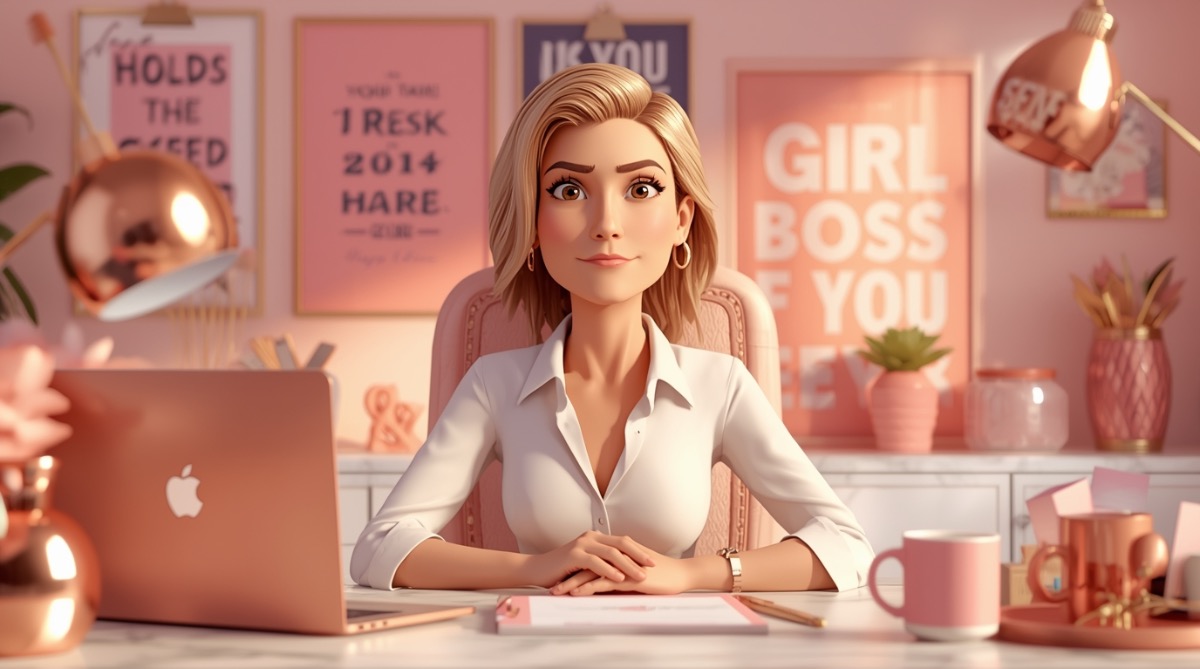
It was 2013, or maybe 2014 and Instagram was inundated with gorgeous images of elegant home office setups with plenty of pink, marble and rose gold. The book #GirlBoss by Sophia Amoruso (founder of Nasty Gal) was everywhere. Women were reading it on subways, posting about it on social media, treating it like a manifesto. The Washington Post even called it ‘Lean In for Misfits’, referencing the book by then COO of Facebook Sheryl Sandberg.
I never read the book, but I didn't need to. The imagery sold the message: women could blaze their own trail, build their own ladder—and goddammit, it would be pink. Or rose gold. No more glass ceilings. No more waiting for permission.
The entire #GirlBoss culture fed us the belief that we could say goodbye to the limitations that women experienced in traditional workplaces. It sold us the idea that we could build something ourselves where we wouldn’t have to shrink ourselves and wait for a man to promote us. We could build a brand that reflected our values. We could be seen and heard.
And with the explosion of social media it made it feel accessible to any of us. Many of us felt there was finally a way to gain success without acting like men or sacrificing everything.
But slowly, things began to unravel. The rose gold started to tarnish. And we began to see what we'd actually bought into. It was still hustle culture, it was just painted pink. It still told us that if we weren’t succeeding it was our own fault. Forget structural barriers like childcare, healthcare and systemic sexism, we just weren’t hustling enough, believing in ourselves enough, or authentic enough. It all revolved around capitalism. Empowerment only came via financial success, growth, scale and flexibility; the same metrics that defined masculine success.
And then the founders began to fail miserably.
Sophia Amoruso, who wrote the book on the subject, literally, had multiple discrimination lawsuits filed against her company, former employees alleged she created a toxic work environment and by 2016 her company Nasty Gal had filed for bankruptcy.
The co-founder of The Wing, the women-only co-working space that epitomized millennial feminist branding, resigned in 2020 amid accusations of racism and creating a toxic workplace.
Glossier founder Emily Weiss stepped down as CEO of the company in 2022 after former employees came forward with allegations of racism and creating a ‘mean girl’ culture.
The hypocrisy was deafening.
At the same time we were beginning to wake up to the fact that the entire movement didn’t exactly challenge the patriarchy. It didn’t question the systems that were designed to extract labor and exhaust people. Nor did it question whether building an empire was a good goal. It just was saying, “Hey, you can do it too as long as you don’t stop performing. Preferably while wearing pink.”
By 2020 the term #GirlBoss and others similar were being used in an entire different way. Ironically or in downright disapproval.
Why?
Because the pandemic made it clear that the hustle was unsustainable. In the face of schools closing and childcare becoming unavailable women were burning out.
And that’s when a shift begam to happen. Anti-hustle messaging and sentiment began to appear. The realization dawned that entrepreneurship didn’t solve structural inequality. A prison painted pink with rose gold and marble accessories was still a prison and women were waking up to that truth.
The shift is still happening. Because true change usually doesn’t explode overnight with a catchy hashtag. And it’s not nearly as pretty on social media.
But it’s out there. Women, especially women in midlife, reaching a point where they are asking themselves why they have to try to make themselves fit into a structure built for men. They are understanding that they should be able to succeed without sacrificing everything else in their lives. That the very things we’ve been told about ourselves that wasn’t good for business, intuition, compassion, emotion, etc. are in fact extremely powerful.
Just because the #GirlBoss culture is a relic of our past doesn’t mean the wolf isn’t still out there in different pink clothing. Phrases born of books and so-called gurus like “Let Them” wear the same overpowering perfume, lulling us into giving away parts of ourselves in order to make everyone else more comfortable.
Take it from someone who was lured in by the girl power gingerbread house that was the #GirlBoss movement. Scrape away at that pretty outer layer and you’ll find the same ugly, often unspoken rules. The ones that are designed to keep us in line.


Decoding the Shift: What's Different This Time?
So if #GirlBoss was a trap, what makes this any different?
Fair question.
The #GirlBoss movement said: Build an empire. Hustle harder. Scale. Grow. Perform.
It still centered masculine definitions of success. It still demanded we prove our worth through productivity and constant achievement. It just let us do it in pink.
What I'm talking about is different.
This isn't about building an empire. It's about building something sustainable that fits your actual life. It's not about hustling harder. It's about working differently, in ways that honor your energy and values. It's not about performing empowerment. It's about quietly reclaiming your authority without needing validation.
This shift doesn't ask you to:
- Optimize yourself into exhaustion
- Perform authenticity for likes
- Chase someone else's definition of success
It asks you to:
- Trust what you already know
- Question systems that don't serve you
- Build work that supports your life instead of consuming it
#GirlBoss told us we could opt out of patriarchy by working harder within it.
This shift recognizes that real change means questioning the game itself.
It's slower. It's quieter. It doesn't photograph well for Instagram.
But it's real. And it doesn't require you to betray yourself to get there.
0 comments