In Memory of Phyllis (Fina) Halio, A”H who passed away in good health at the age of 101 on 28 October 2025. Phyllis was the daughter of Sara and Albert Torres (publisher of the Spanish-Jewish Weekly newspaper La Vara) and wife of Hank Halio (author of Ladino Reveries). Phyllis was an officer of the Sephardic Social Club of South Florida, the ASF affiliate Sephardi Federation of Palm Beach County, Florida, and a life-long supporter of Women's American ORT, now ORT America. En pas descansa. ~Sponsored by ASF Board Member, Dr. Joe Halio
Click here to dedicate a future issue in honor or memory of a loved one
Subscribe ◊ Upcoming Events ◊ ASF Sephardi Shop ◊ Donate ◊ Sephardi Ideas Monthly ◊ ASF Sephardi House ◊ Archive
The Sephardi World Weekly is made possible by Daniel Yifrach, Rachel Sally, Professor Rifka Cook, Maria Gabriela Borrego Medina, Rachel Amar, Deborah Arellano, & ASF VP Gwen Zuares!
“Ahl Al-Kitaab: Exploring My roots Through the Sephardi House Fellowship”
By Alon Leshem, Jewish&
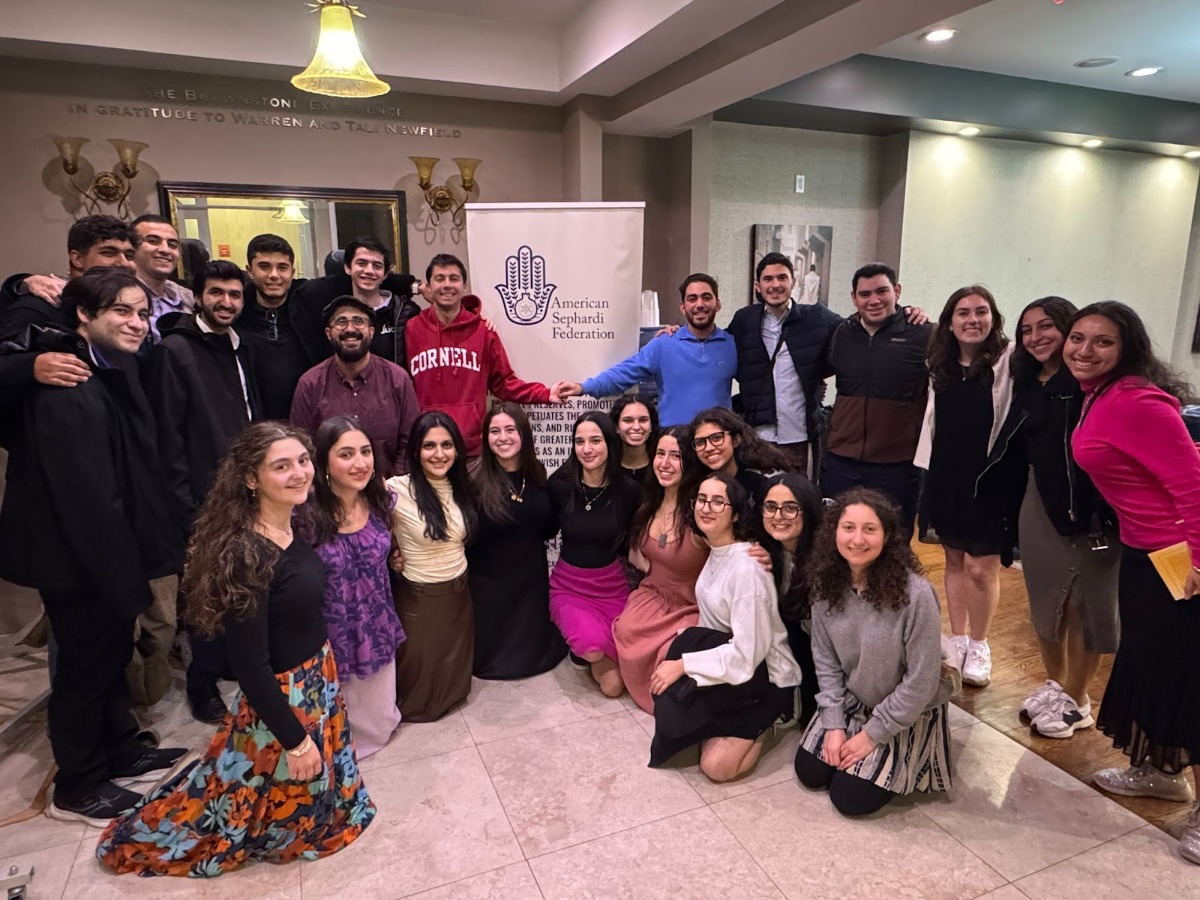
ASF Sephardi House Fellows, Fall National Shabbaton & Leadership Summit, NYC, November 2024
Alon Leshem is a student at the Yeshiva University’s Benjamin N. Cardozo School of Law with a special interest in the languages and history of the Levant. A proud Jew with family roots twelve generations deep in the Land of Israel, Leshem reports experiences all-too-common on American college campuses today, “Friends were assaulted on campus for being visibly Jewish.”
But it’s not simply a matter of physical safety. An ideological-spiritual war is also being waged against Jewish identity, and the gap between Leshem’s lived experience and the post-Oct. 7th collective gaslighting has been especially difficult to digest. While
Israelis were instructed to ‘go back to Europe’ following chants of ‘min al-mayeh l-al-mayeh, filasteen ‘arabiyeh’—’from the [river] to the [sea], Palestine is Arab,’ [there] were even calls to ‘globalize the Intifada,’ the word used for waves of riots and attacks that targeted the military and civilians alike.
For Leshem, “These chants that rang throughout campus had a deeper resonance,” as the attacks come on all sides:
My European ancestry was clearly unwelcome: neither my great-grandfather, who found refuge in Israel following the Holocaust nor the branch of my family that made aliyah six generations ago (then, the Ottoman Empire) had a place in the narrative. My ‘Arab’ side found no refuge either. My Tripolitanian grandfather, a Libyan-born Arabic-speaking lawyer, leveraged his identity to advocate for his Palestinian clients. He was attacked in the very Intifada that my fellow students now glorify. Even my twelve generations-long roots in the Land of Israel (which trace back to Syria) have not protected me from accusations of being a colonizer.
Ultimately, Leshem credits the American Sephardi Federation’s Sephardi House Fellowship for helping him navigate the tension between the need to hide his identity and his desire to openly explore the various strands of Jewish history. Leshem sets the tension in stark relief by contrasting the hostility encountered on college campuses with a conversation that he recently enjoyed with a Muslim cab driver from Turkmenistan that explored
Hebrew, Arabic, Persian, and Turkmen; the criteria Hakim Musa ibn Maimoun (the Rambam) laid out for identifying the messiah; and our shared confusion at the Catholic holy trinity and transubstantiation.
~~~~~~~
FEATURE: “VIDEO: A sign of Jewish unity as Ashkenazi Jews celebrate the Sephardi language, Ladino”
By Moishele Alfonso, Forward
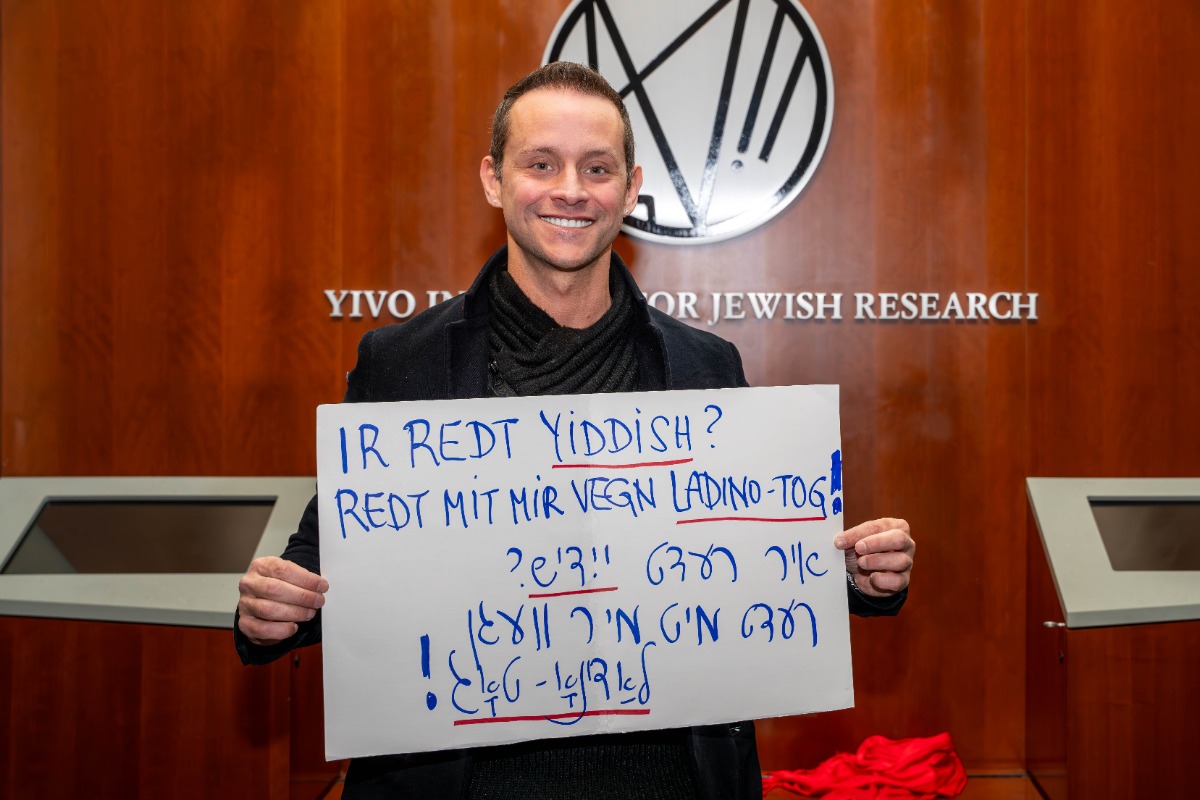
Moishele Alfonso at the ASF’s 7th Annual New York Ladino Day, 21 January 2024, Center for Jewish History
(Photo courtesy of Zakaria Siraj)
Yiddish speaker and teacher Moishele Alfonso recently “attended the New York Ladino Day: a celebration of Sephardi culture at the Center for Jewish History, presented annually by the American Sephardi Federation.” But Moishele didn’t only attend the event, he reported on it. In Yiddish, with English subtitles.
In his report, Moishele shares (in Yiddish) how “Rabbi Marc Angel gave a talk about the optimism of Ladino civilization” and Elizabeth Graver discussed her novel Kantika, inspired by the life of her Istanbul-born grandmother, Rebecca. Since “Ladino Day is, of course, not just for Sephardim. Ashkenazis also came – and even Yiddish speakers!”
Moishele stood with a handwritten sign at the event inviting Yiddish-speakers to share their experience. Avrom (Albert) Rosenblatt answered the challenge, also in Yiddish:
Yes this is my first time and it’s very enjoyable. I’m really happy to be here… It’s a contribution that Ladino speakers have given to humanity and it deserves to be studied.
~~~~~~~
Join us for Salud i Beraha: The 9th Annual NY Ladino Day!, proudly presented by the American Sephardi Federation in partnership with the Sephardic Foundation on Aging.
The celebration will feature a musical performance by Brazilian Ladino singer Fortuna, accompanied by her quartet, a talk and exhibit by Sephardic artist Becky Behar: Tu ke bivas and will include a special highlight — Keynote Speaker Dr. Joe Halio!
Sunday, 11 January, 2:00–5:00 PM EST
in person @Center for Jewish History,
Sign-up Now!
~~~~~~~
“How One Yemenite Granddaughter Is Embracing Her Heritage with Film and Jachnun”
By Dana Schneider, Jewish Food Society
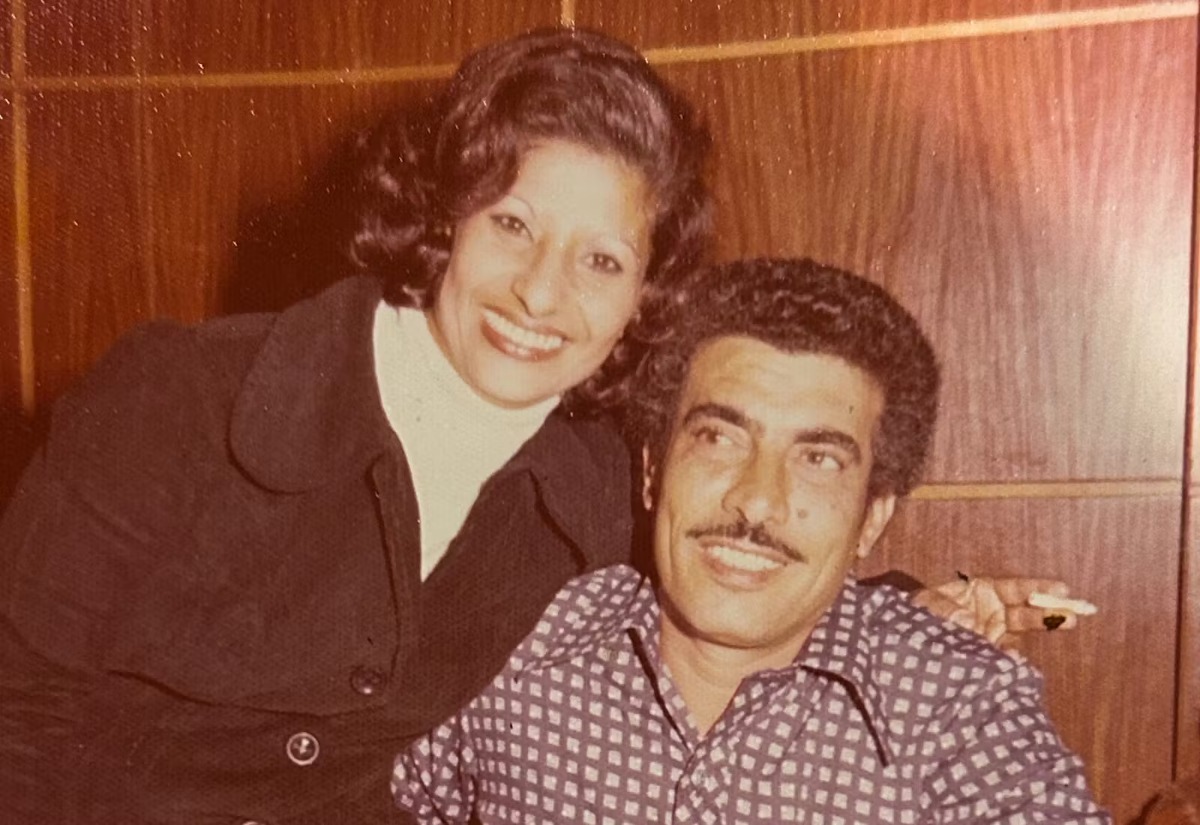
Dana’s grandparents, Malka and Zion Arusi, in Tel Aviv, 1970’s
(Photo courtesy of Jewish Food Society)
Dana Schneider’s mother’s side of her family “traces their heritage to Taizz and Sanaa in Yemen.” A Yemenite-Jewish-American filmmaker, Nice Jewish Girl is Schneider’s coming-of-age story and an exploration of what it means to not fit in.
Schneider’s grandmother, “Safta” Malka, moved to Israel “from Taizz as a young child during World War II, arriving by a boat carrying livestock.”
Two generations later, “Dana is part of what she describes as a generational awakening in the Yemenite community that’s reviving music, art, and traditions. “‘It’s a really beautiful thing to see.’”
Schneider’s Yemenite-Jewish roots were nurtured by her mother’s insistence on Hebrew in the household and by summers with extended family in Israel, especially at Safta Malka’s home on Shabbat:
Every Saturday… in Israel, [Dana] would go over to Safta Malka’s home for the meal and then head to the beach. The house was always full on those Shabbats. “My grandmother's place used to be a revolving door,” Dana recalls. Family friends, aunts, uncles, and cousins would stop by, starting from early in the morning.
The Saturday mornings included an iconic dish, jachnun, a “rich overnight bread” that Safta Malka served grated tomatoes, a spicy herb sauce called “schug,” eggs, and fried fish:
food has been a pathway to celebrating her heritage. Dana first made jachnun when she was a girl, but rededicated herself to understanding how to make it when she moved back to the U.S. as an adult and could no longer stop by Safta Malka’s home every Shabbat. Making jachnun took on even greater meaning after Malka passed away last year.
How does Dana know if she’s faithfully following Safta Malka’s recipe? By the sound of the preparations:
Dana.. says that she could hear when she was working the dough correctly by the familiar clinking of her
~~~~~~~

Birkenau (Auschwitz II) How 72,000 Greek Jews Perished
By Albert Menache, M.D.
Memoirs of An Eyewitness; NUMBER 124454
This is the story of the destruction of the Balkan Sephardic Jewish Community by the Nazis in WWII. Written by the President of the Jewish Community of Salonica, Greece, it is the earliest published account by a survivor. Written while still in the concentration camp on smuggled paper, it has been out of print since the first edition appeared in 1947.
This new edition has been updated with historical documents, photographs, and notes on the restoration of Jewish life in Greece after the war.
Watch Dr. Joe Halio speak about “Dr. Albert Menache & The Holocaust in Salonika”
One Hundred Saturdays: Stella Levi and the Search for a Lost World
One of Wall Street Journal’s Ten Best Books of the Year and a Recipient of the Jewish Book Council’s Natan Notable Book Award
By Michael Frank
The remarkable story of Stella Levi whose conversations with the writer Michael Frank over the course of six years bring to life the vibrant world of Jewish Rhodes, the deportation to Auschwitz that extinguished ninety percent of her community, and the resilience and wisdom of the woman who lived to tell the tale.
With over a century of life behind her, Stella Levi had never before spoken in detail about her past. Then she met Michael Frank. He came to her Greenwich Village apartment one Saturday afternoon to ask her a question about the Juderia, the neighborhood in Rhodes where she’d grown up in a Jewish community that had thrived there for half a millennium.
Neither of them could know this was the first of one hundred Saturdays over the course of six years that they would spend in each other’s company. upon arrival.
Probing and courageous, candid and sly, Stella is a magical modern-day Scheherazade whose stories reveal what it was like to grow up in an extraordinary place in an extraordinary time—and to construct a life after that place has vanished. One Hundred Saturdays is a portrait of one of the last survivors drawn at nearly the last possible moment, as well as an account of a tender and transformative friendship that develops between storyteller and listener as they explore the fundamental mystery of what it means to collect, share, and interpret the deepest truths of a life deeply lived.
~~~~~~~
Upcoming Events or Opportunities
Our friends at The Habura present:
Members Online Series
Hegyonei Uziel
An Introduction to Rabbi Uziel’s Rooted Cosmopolitan Judaism
“Join Dr. Aryeh Tepper for a three-part exploration of Hegyonei Uziel, the culminating work of Rabbi Ben-Sion Meir Hai Uziel 1880-1952), will examine R. Uziel’s on the soul, Torah generations, the e sessions 1, and suffering, revealing
the foundations of his Rooted Cosmopolitan Judaism, and to arouse interest in a group that will learn the book, lishma.”
Sunday, 7 December at 2:00PM EST
Members Access Here

~~~~~~~
Our friends at Qesher in partnership with the American Sephardi Federation present:
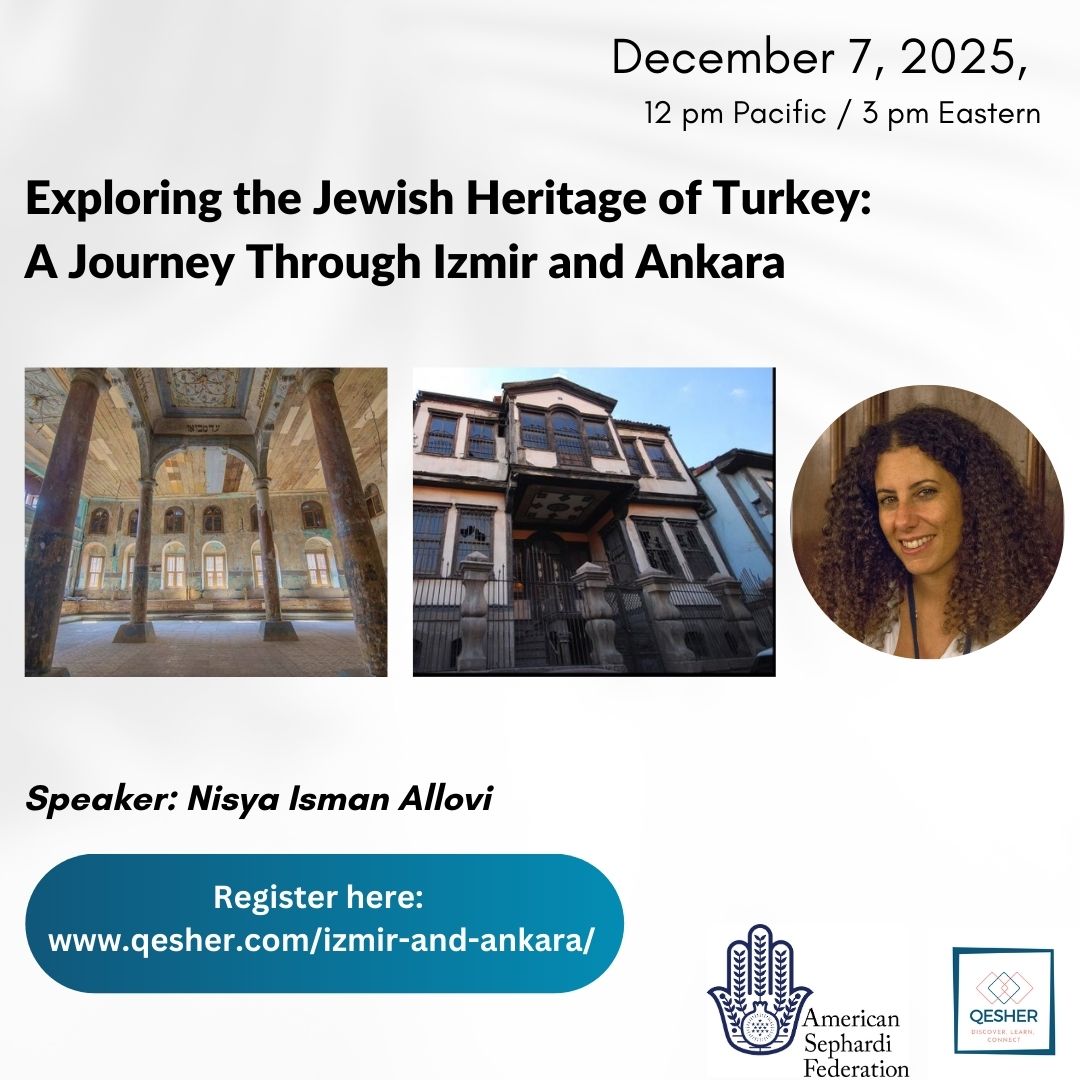
Exploring the Jewish Heritage of Turkey: A Journey Through Izmir and Ankara
“After exploring Istanbul, we still need to explore Jewish life in two major cities in Turkey.
The first is Izmir, also known as Smyrna, which stands out for its rich history and remarkable personalities, as well as its significant cultural heritage where vibrant Jewish life continues. At the turn of the 20th century, Izmir was home to around 50 synagogues and Jewish schools, leaving behind an exceptionally rich legacy.
Our second city to explore is Ankara, the capital of Turkey, which has a small but vibrant Jewish community and a beautiful synagogue. The Jewish presence in Ankara dates back to the 1st century BCE. Here, architecture plays a key role in preserving the authentic texture of the Jewish neighborhood.
Let’s discover the legacy, stories, structures, historical figures, and cultures of these two cities in Turkey together.”
Sunday, 7 December, at 3:00 PM ET
Sign-up Now!
Live on Zoom
Tickets: $18
About the speaker:
Nisya Isman Allovi is the Director and Curator of The Quincentennial Foundation Museum of Turkish Jews. Born in Istanbul and graduating in Cultural Heritage and Tourism, she has attended advanced curatorial seminars at AEJM (Association of European Jewish Museums) and in the Federal Republic of Germany.
She was also a Kaplan Fellow in Yesod Cohort II and has presented in various countries on the topic of “Jews of Turkey.” Married and the mother of two children, Nisya is an active member of the Istanbul Jewish community.
~~~~~~~
The American Sephardi Federation presents:
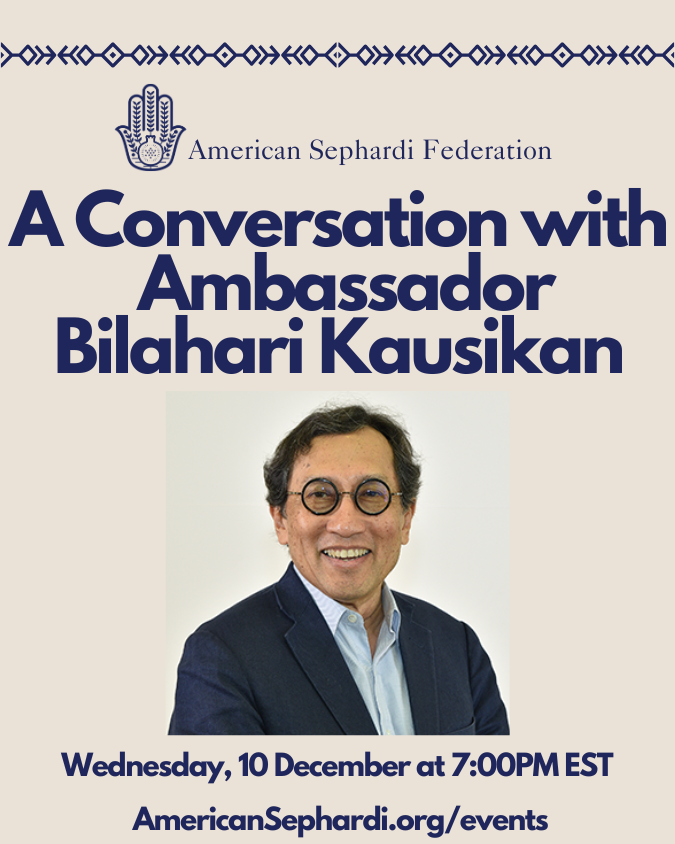
A Conversation with Ambassador Bilahari Kausikan
Join us online for an exclusive conversation with Ambassador BilahariKausikan exploring the post–October 7th geopolitical landscape in the Middle East, the role of China on the global stage, the history and future of Singapore–Israel relations, Singapore’s Iraqi Sephardic Jewish community, and more. He will be hosted by the ASF’s Director of Publications, Dr. Aryeh Tepper
Sign-up Now!
RSVP required; Complimentary
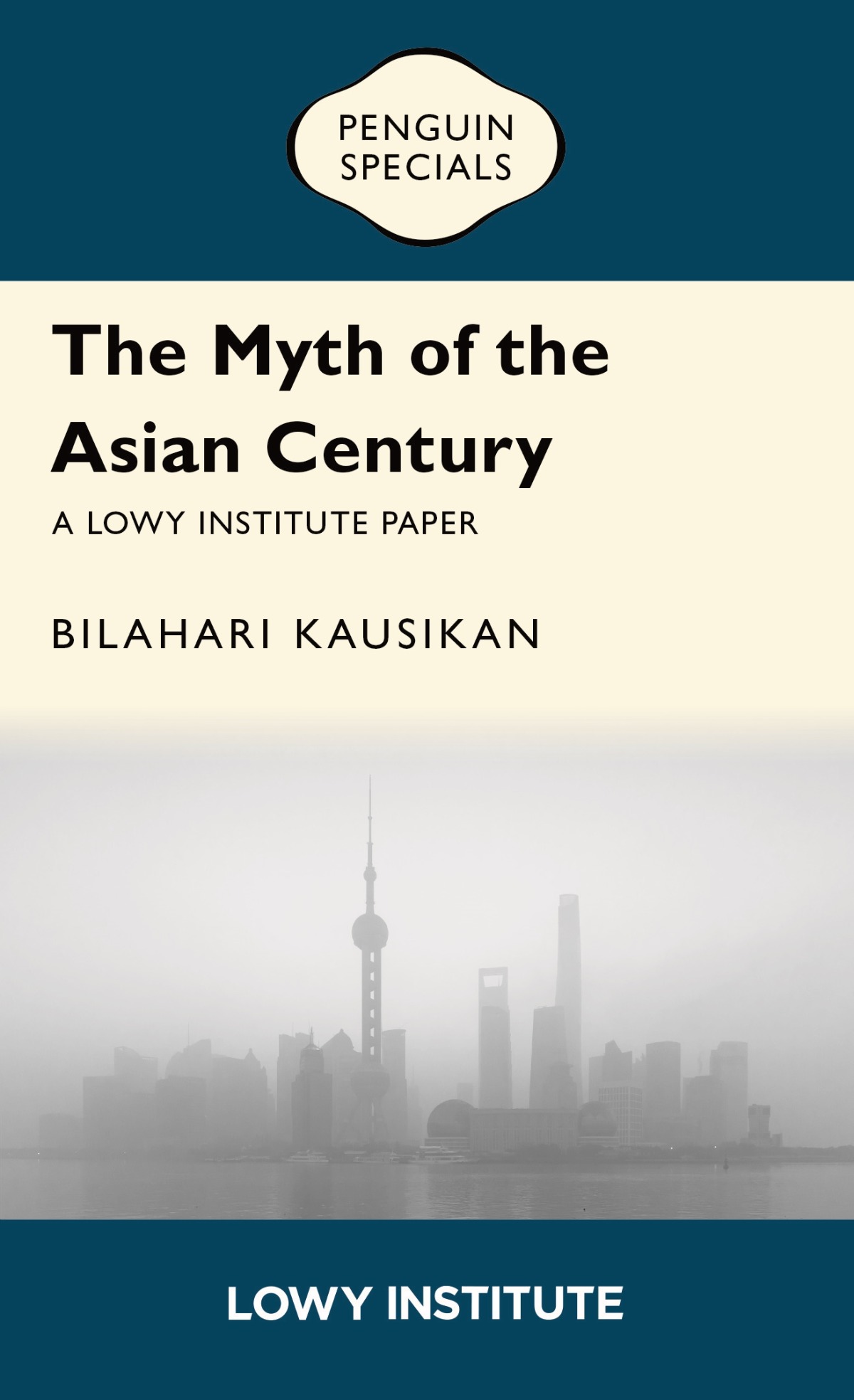
Ambassador Bilahari Kausikan is the retired doyen of Singapore’s diplomatic corps, a student of Singapore’s legendary founding Prime Minister, Lee Kuan Yew, an astute observer of geopolitics, and the author of four books, including his latest, The Myth of the Asian Century (Penguin, 2025).
For more background, please read “When Excellence is a Necessity: Bilahari Kausikan on the Singapore–Israel Connection,” from the June 2023 edition of Sephardi Ideas Monthly.
~~~~~~~
Our friends at Qesher in partnership with the American Sephardi Federation present:
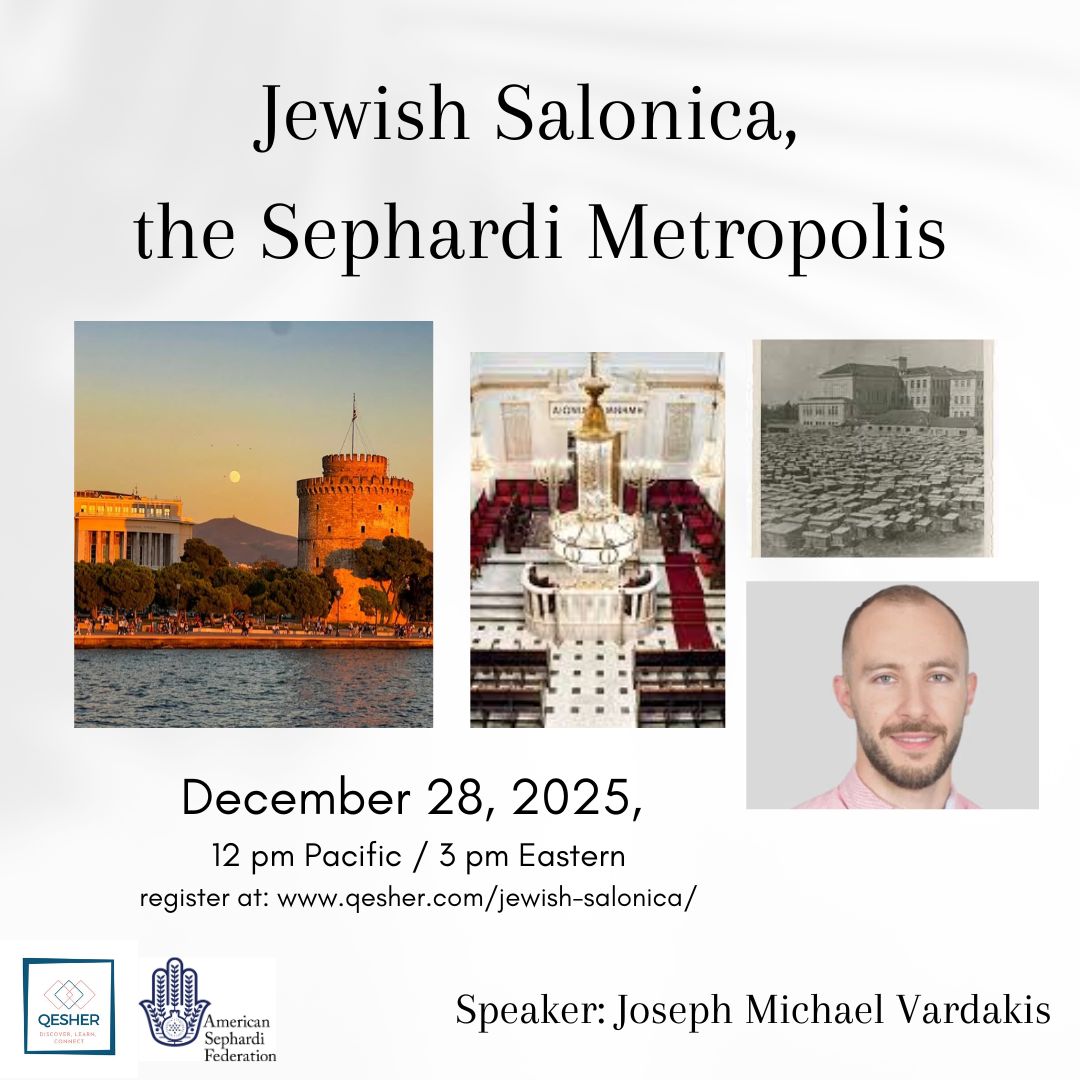
Jewish Salonica, the Sephardi Metropolis
“As Sephardi Jews settled throughout the Ottoman Empire, Salonica—Thessaloniki, now Greece’s second-largest city—grew into a vital center of Jewish life and culture, earning titles such as “Madre de Israel” (“Mother of Israel”) and the “Jerusalem of the Balkans.” For several centuries, it stood as one of the largest and most influential Sephardi cities in the world, offering refuge to Jews from Spain, Portugal, and many parts of the Mediterranean.
This vibrant city became one of the great centers of the Jewish Diaspora, developing a rich cultural heritage whose influence endures today. We will trace the history of this remarkable community from its early development to the present, exploring the traditions and distinctive qualities that made Salonica an indispensable chapter in the story of the Jewish people.”
Sunday, 18 December, at 3:00 PM ET
Sign-up Now!
Live on Zoom
Tickets: $18
About the speaker:
Joseph Michael Vardakis was born in Athens, Greece. He holds a B.A. in Psychology and an M.A. in Psychobiology, and he is currently completing his M.Sc. in Clinical Psychology. He has lived and studied in the UK, South Africa, and Israel, and he now resides in Athens.
Joseph has served as a student counsellor for the Ministry of Aliyah and Integration in Israel and has worked in an educational setting within the Jewish community of South Africa before beginning his academic studies. In his spare time, he offers themed tours in Athens, including visits to sites of Jewish interest.
~~~~~~~
The American Sephardi Federation with the Sephardic Foundation on Aging proudly presents:
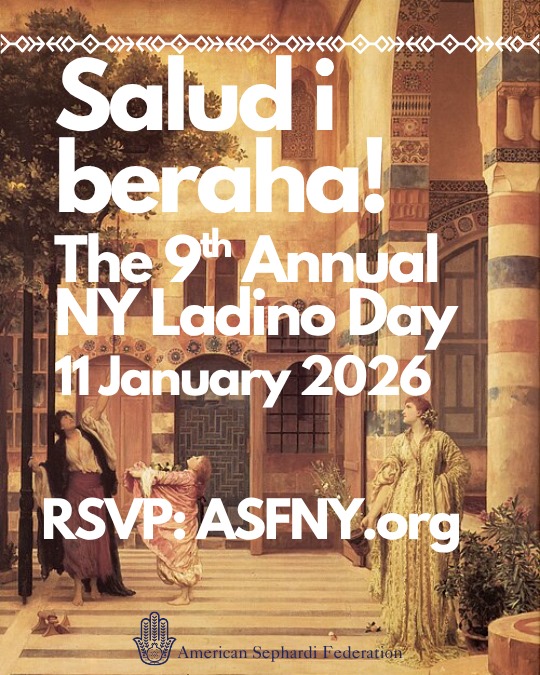
Salud i beraha: The 9th Annual NY Ladino Day!
Curated by Jane Mushabac and Bryan Kirschen
- Musical Performance featuring Brazilian Ladino singer Fortuna, accompanied by her quartet
- A talk and exhibit by Sephardic artist Becky Behar: Tu ke bivas
• Keynote Speaker Dr. Joe Halio
Sunday, 11 January 2:00-5:00PM EST
In-Person @ the Center for Jewish History
15 W 16th Street, New York City
Full program details will be announced soon.
Sign-up Now!
$26 General Admission
(Admission to Ladino Day)
$36 Friend of NY Ladino Day
(Includes a copy of the book: The Historic Synagogues of Turkey, and admission to Ladino Day)
$56 VIP Friend of NY Ladino Day
(Includes VIP reception prior to the program (1:00-1:45PM), a copy of the book: The Historic Synagogues of Turkey, and VIP seating at Ladino Day)
Since 2013, Ladino Day programs have been held around the world to honor Ladino, also known as Judeo-Spanish. January 11th marks New York’s 9th Annual Ladino Day hosted by the American Sephardi Federation.
Ladino is a bridge to many cultures. A variety of Spanish, it has absorbed words from Hebrew, Turkish, Arabic, French, Greek, and Portuguese. The mother tongue of Jews in the Ottoman Empire for 500 years, Ladino became the home language of Sephardim worldwide. While the number of Ladino speakers has sharply declined, distinguished Ladino Day programs like ours celebrate and preserve a vibrant language and heritage. These programs are, as Aviya Kushner has written in the Forward, “Why Ladino Will Rise Again.”
Postcard: Frederic Leighton’s “Old Damascus: Jew’s Quarter (Gathering Lemons),” c.1873-1874
Co-sponsors:
The American Ladino League, and Shearith Israel League Foundation
Please support New York Ladino Day with a generous, tax-deductible contribution to ASF so we can continue to cultivate and advocate, preserve and promote, as well as educate and empower!
Sponsorship opportunities available: