Hi ,
Let me guess: there's a conversation you know you need to have with your teen. But you keep putting it off because you don't want it to blow up.
Their screen time. That friend you're worried about. Their mood lately. Something you saw on their social media.
So you stay silent. And the gap between you grows.
Here's what I want you to know: difficult conversations don't have to be destructive.
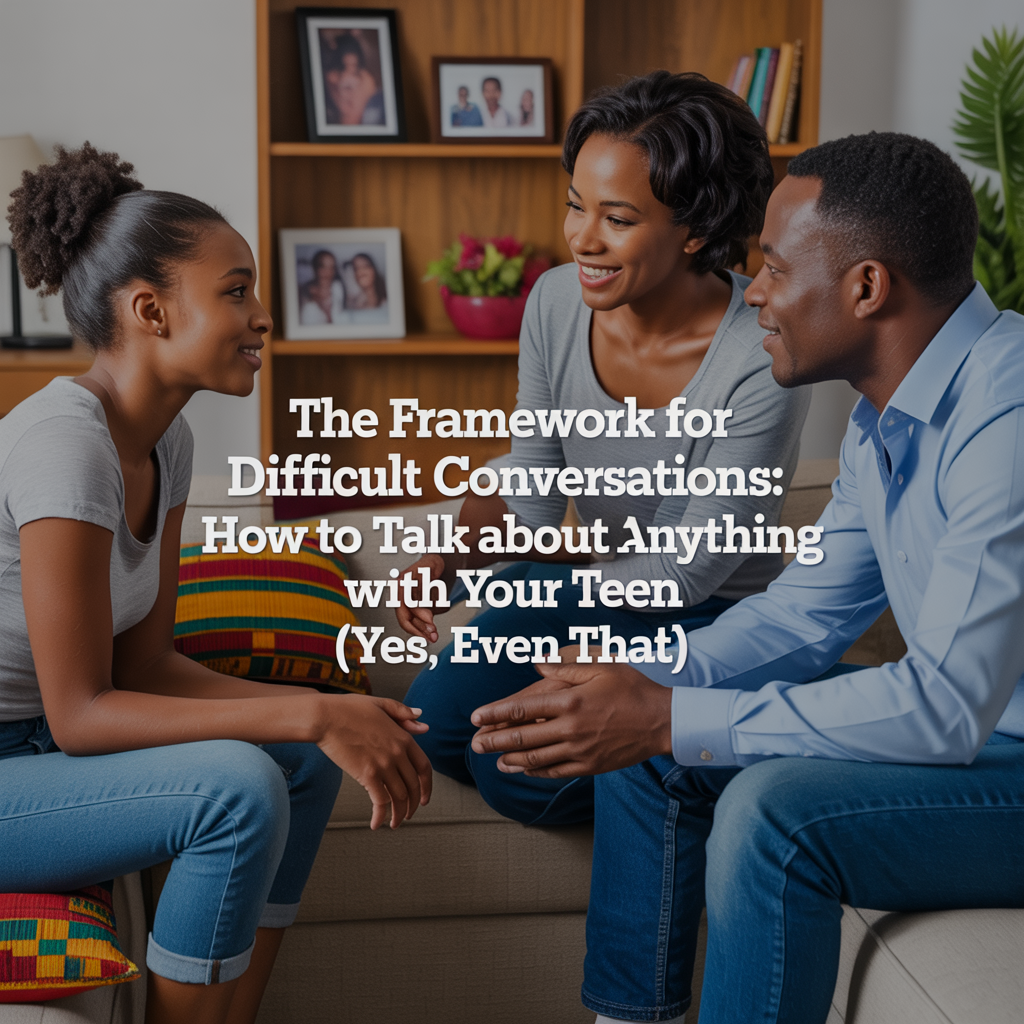
There's a framework that makes even the hardest topics approachable. I call it OPEN:
O - Observe (name what you see, no judgment)
P - Pause (get their perspective before reacting)
E - Express (share your feelings without demands)
N - Navigate (solve it together)
Example: Instead of: "Your screen time is out of control! Give me your phone!"
Try:
- Observe: "I notice you're on your phone pretty constantly"
- Pause: "How does that feel from your side?"
- Express: "I worry it might be taking you away from other things you love"
- Navigate: "What do you think would be a healthy balance?"
The difference? In the first approach, your teen gets defensive and shuts down. In the second, you're actually having a conversation.
When teens feel safe discussing hard topics at home:
✓ They come to you BEFORE making risky choices
✓ Mental health struggles get addressed early
✓ Addictive behaviors (phones and otherwise) can be navigated together
✓ Your relationship deepens instead of deteriorates
This week's challenge:
Have that conversation you've been avoiding. Use the OPEN framework. Focus on connection first, resolution second.
One mother I worked with used this to address her son's suspected marijuana use. Instead of grounding and lecturing, she opened with curiosity. He admitted he'd been vaping to manage anxiety about college applications.
They addressed both the substance use AND the underlying anxiety. If she'd led with punishment? He'd have hidden both problems deeper.
When difficult topics become safe to discuss, families transform.
Next week: How to listen in ways that make your teen actually want to talk to you.
To brave conversations,
Latifah Ajetunmobi.
P.S. Remember: it's not about being perfect. It's about being present and willing to stay connected even when it's uncomfortable.
0 comments