In Memory of Emma Lazarus, A”H, American Sephardi poet, playwright, critic, journalist, and a self-proclaimed “Jewish outlaw”
Click here to dedicate a future issue in honor or memory of a loved one
Subscribe ◊ Upcoming Events ◊ ASF Sephardi Shop ◊ Donate ◊ Sephardi Ideas Monthly ◊ ASF Sephardi House ◊ Archive
The Sephardi World Weekly is made possible by Daniel Yifrach, Rachel Sally, Professor Rifka Cook, Maria Gabriela Borrego Medina, Rachel Amar, Deborah Arellano, & ASF VP Gwen Zuares!
~~~~~~~
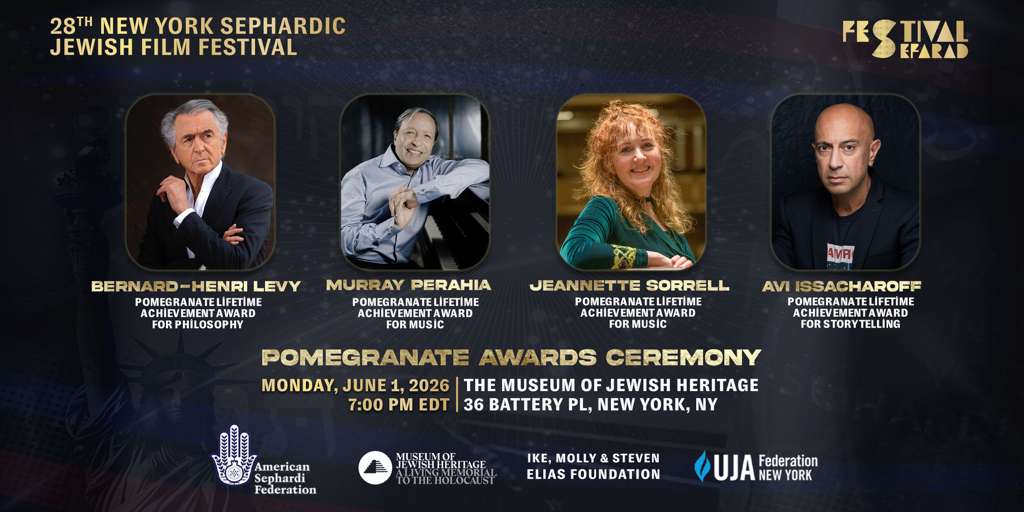
The 28th New York Sephardic Jewish Film Festival - Festival Sefarad
Dedicated to Ike, Molly and Steven Elias
31 May - 7 June 2026
Honoring Avi Issacharoff, Bernard-Henri Lévy, Murray Perahia, and Jeannette Sorrell
Celebrating Sephardi Creativity in the Spirit of America 250!
Presented in partnership with the Museum of Jewish Heritage - A Living Memorial to the Holocaust and made possible by additional support from the UJA-Federation of New York
~~~~~~~
“‘The Restoration of Israel’: Recovering a forgotten Sephardi Zionist voice - review”
By Ashley Perry Peretz, The Jerusalem Post
Book cover: The Restoration of Israel
(Image courtesy of Da’at Press)
In the English-speaking Orthodox world, religious authority still flows mainly through Ashkenazi figures who, in response to Western cultural currents, either reject Zionism as a betrayal of the Torah or who celebrate it as a vivifying response to the crisis of Jewish modernity. Ashley Perry Perez’s review of The Restoration of Israel asks readers to put aside those mental frameworks and to look instead at a Western Sephardi tradition in which return to the Land of Israel grows directly out of a long, confident, and theologically integrated way of life.
Da’at Press and The Habura stand at the center of this shift in perspective. Founded as a study community of rabbis, scholars, and laypeople, The Habura runs an online and in-person beit midrash that works with Da’at Press to augment the voice of the Geonic–Andalusian Torah tradition—rational, expansive, and engaged with God’s world—in contemporary Jewish thought. Under leaders such as Rabbi Joseph Dweck, The Habura’s beit midrash makes this tradition audible in English, exploring a Sephardi tradition in which Zionism is the organic continuation of covenantal history rather than a response to a rupture.
At the heart of the book lies a 1900 Passover sermon in Montreal by Rabbi Aharon David Meldola de Sola, minister of the Spanish and Portuguese congregation Shearith Israel and a leading Western Sephardi rabbi. Framed by a preface and two essays, the sermon becomes the focal case for an argument that Sephardim were not late, reluctant adopters of Zionism but some of its earliest and most natural exponents. The preface places de Sola in a diaspora born from Iberian expulsions whose communities rebuilt institutions in the Atlantic world while maintaining an active relationship with Eretz Yisrael. In that setting, Zionism appeared as a natural extension of centuries of Sephardi practice and thought, not a threat to traditional life.
Rabbi Shalom Morris’s introductory essay deepens this claim by explaining why the idea of return did not frighten Western Sephardi communities:
Western Sephardim possessed a sense of historical rootedness and confidence. They had navigated exile, rebuilt institutions, and engaged with broader society without losing their identity. This confidence translated into a distinctive openness to Zionism. For Sephardim, the idea of return was neither radical nor threatening; it was familiar.
On this view, what later came to be called “Religious Zionism” was already encoded in a traditional Sephardi pattern of life in which faith and political initiative worked together and human effort fulfilled the divine promise.
The sermon delineates the theological and ethical core of that pattern. Preaching on Passover, de Sola compares Israel’s dispersion to a winter sleep in which “germs of national life” remain ready to awaken. He argues that the same providence that scattered the Jews now calls them to act as instruments of their own restoration. While prayer and action are complementary modes, Jews must not only pray for Zion, but act. Ultimately, in de Sola’s hands, Zionism became the fulfillment of the traditional obligation to secure a legally protected home, cultivate the Land of Israel, and provide refuge for persecuted Jews.
Feature: Ir me kero madre a Yerushalayim
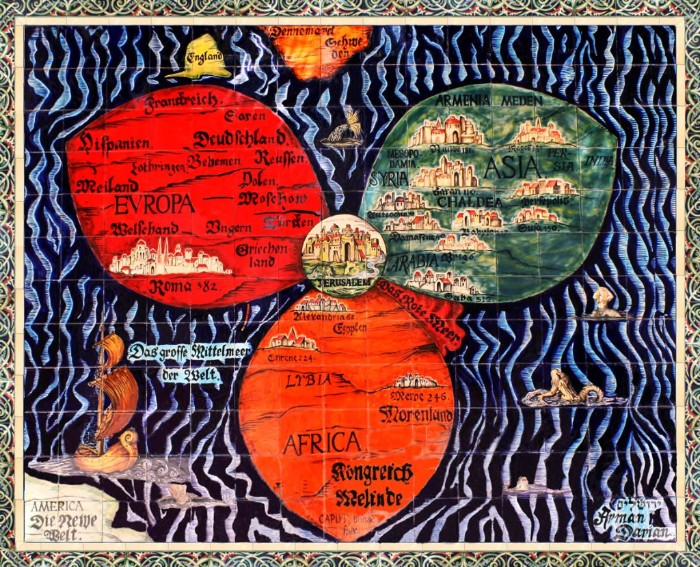
The Safra Square—named in honor of Jacob and Esther Safra, the parents of the extraordinarily successful Sephardic banker and philanthropist Edmond J. Safra—near Jerusalem’s City Hall features Arman Darian’s colorful mosaic based on the historic Bünting Clover Leaf Map (Itinerarium Sacrae Scripturae, Magdeburg, 1581). A mappa mundi created by German theologian and cartographer Henrich Bünting, the map depicts Jerusalem as the figurative center of the world, at the intersection of a clover leaf composed of the European, African, and Asian continents
(Photo courtesy of Österreichischen Jüdischen Museums).
Jak, of Jak and Janet Esim Ensemble fame, captured Turkish-Sephardi singer Bienvenida “Berta” Aguado singing a live and, one suspects, impromptu restaurant rendition of Ir me kero madre a Yerushalayim (“I want to go to Jerusalem, mother”) in 1992. Describing a Sephardic exile’s yearning for a return to Zion (“I will make a home there/ I will belong there”), this Ladino romance is thought to be based on a poem composed in memory of the celebrated poet, thinker, and communal leader Yehuda HaLevi, the most romantic figure from the world of classical Andalusian piyyut. Aguado, who was born in Turkey, fulfilled the song’s promise by making aliyah.
~~~~~~~
Matzah and Flour: Recipes from the History of the Sephardic Jews
by Dr. Hélène Jawhara Piñer
A collection of 125 meticulously crafted recipes showcasing the enduring flavors that define Sephardic culinary heritage.
Matzah and Flour: Recipes from the History of the Sephardic Jews offers a tantalizing exploration of the central role of matzah and flour in Sephardic cuisine. Journey through centuries of tradition as flour, from various grains like chickpea, corn, and barley, intertwines with cultural narratives and religious observance. Delve into the symbolism of matzah, from its origins in the Exodus story to its embodiment of resilience and identity. Each of this cookbook’s thoughtfully prepared recipes is a testament to the transformative power of flour in Sephardic culinary heritage. From savory delicacies to sweet delights, these timeless flavors have sustained Sephardic families through history. Matzah and Flour is a celebration of tradition, history, and the enduring legacy of Sephardic Jewish cuisine.
Jews, Food, and Spain: The Oldest Medieval Spanish Cookbook and the Sephardic Culinary Heritage
by Dr. Hélène Jawhara Piñer
2023 Gourmand World Cookbook Awards Best Jewish Food Culture Book; 2022 National Jewish Book Award Finalist
A fascinating study that will appeal to both culinarians and readers interested in the intersecting histories of food, Sephardic Jewish culture, and the Mediterranean world of Iberia and northern Africa.
In the absence of any Jewish cookbook from the pre-1492 era, it requires arduous research and a creative but disciplined imagination to reconstruct Sephardic tastes from the past and their survival and transmission in communities around the Mediterranean in the early modern period, followed by the even more extensive diaspora in the New World. In this intricate and absorbing study, Hélène Jawhara Piñer presents readers with the dishes, ingredients, techniques, and aesthetic principles that make up a sophisticated and attractive cuisine, one that has had a mostly unremarked influence on modern Spanish and Portuguese recipes.
~~~~~~~
Upcoming Events or Opportunities
Our friends at Kehila Kedosha Janina Synagogue and Museum presents:
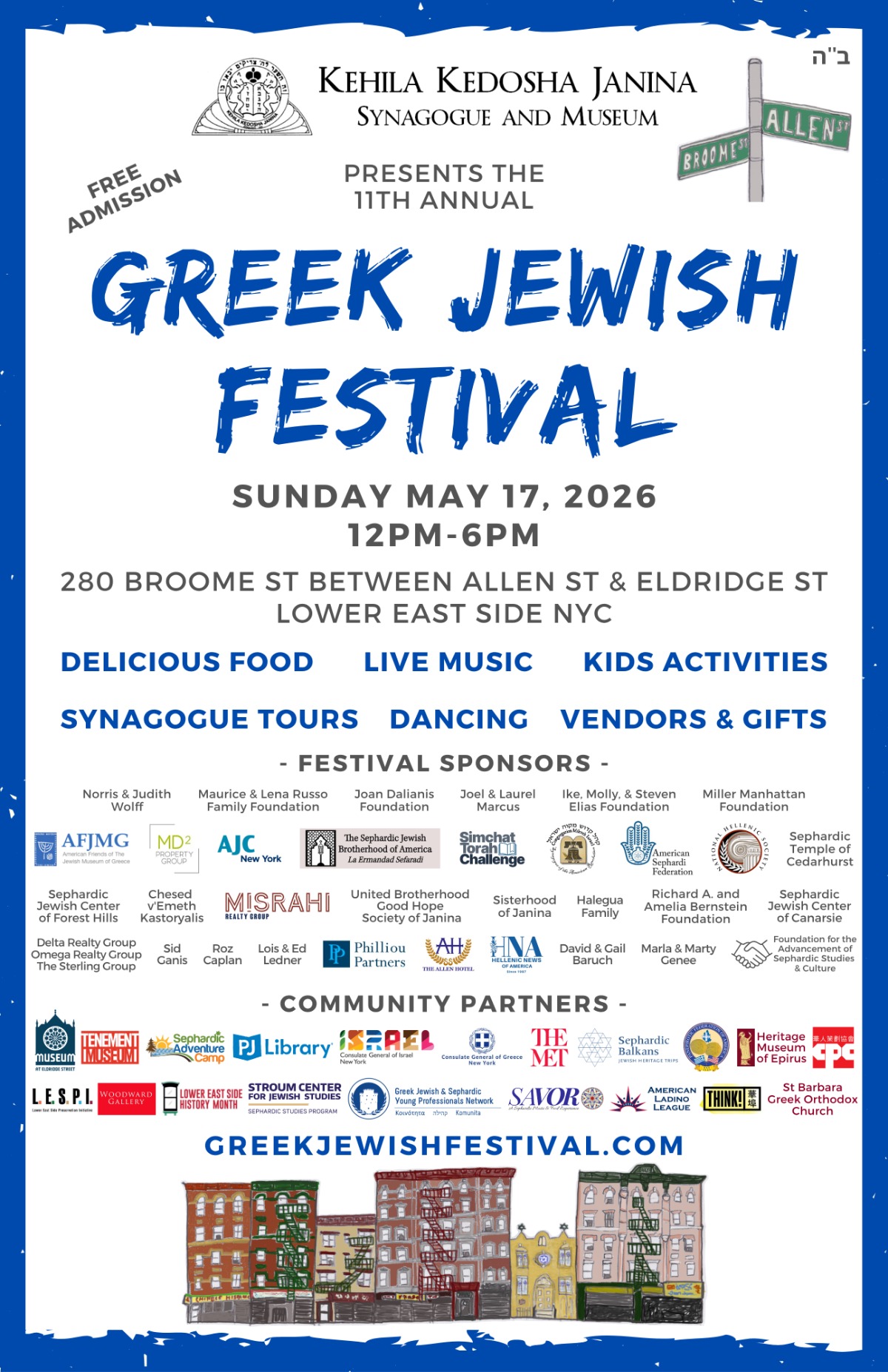
Greek Jewish Festival
“Join the Greek Jewish Festival as we celebrate the unique Romaniote and Sephardic heritage of the Jews of Greece. Experience a feast for the senses including authentic kosher Greek foods and homemade Greek pastries, traditional dance performances with live Greek and Sephardic music, an outdoor marketplace full of vendors, arts and educational activities for kids, and much more!”
Sunday, 17 May 12:00-6:00PM EST
(280 Broome Street, Lower East Side, NYC)
The ASF is once again proud to be a Festival Sponsor.
Learn more at www.GreekJewishFestival.com
~~~~~~~
Our friends at 14th Street Y in partnership with the American Sephardi Federation present:
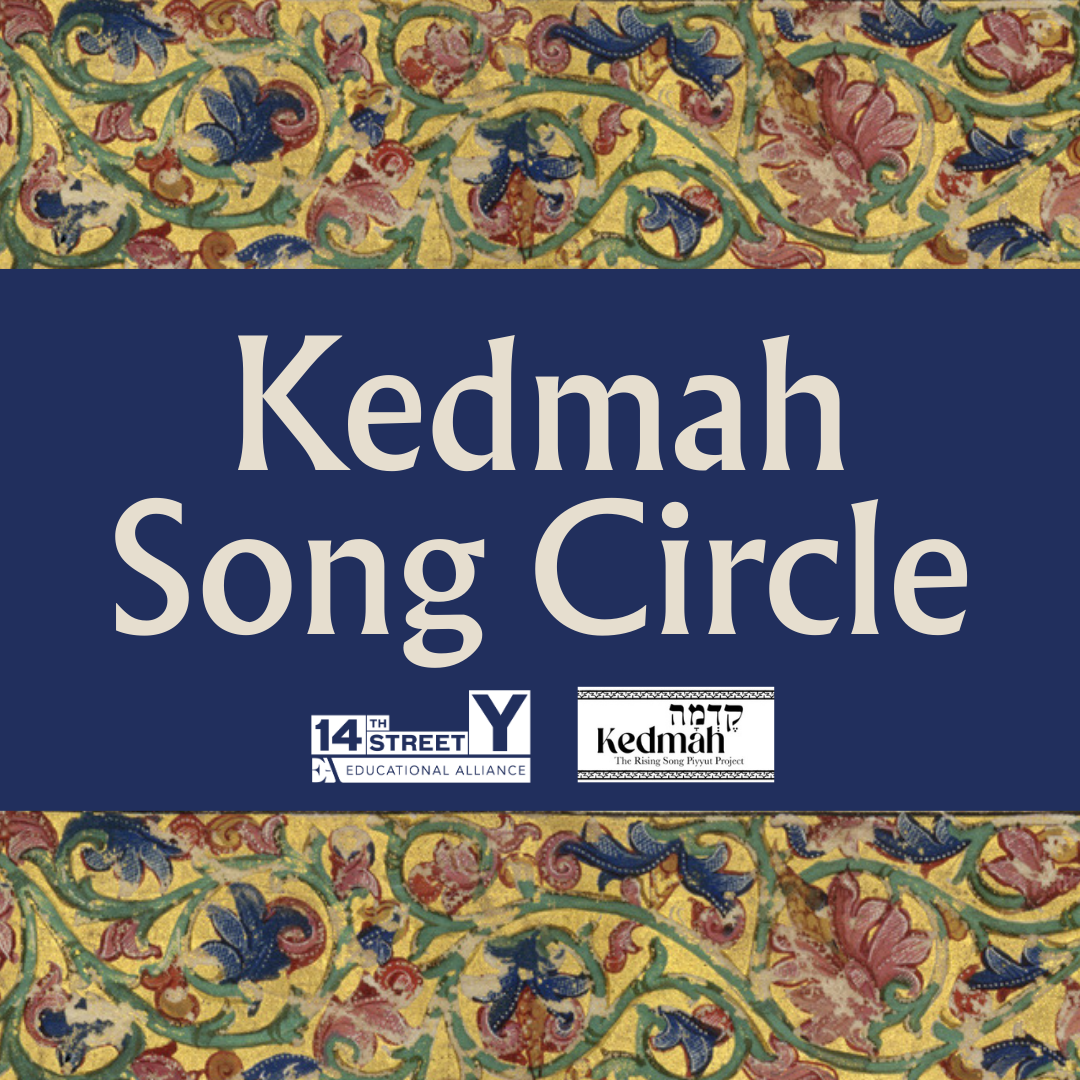
Kedmah Song Circle
“Join Yosef Goldman and Josh Kaye for an immersive evening of Middle Eastern Jewish poetry and song. Each month from January to May, we’ll delve into a single piyyut - a sacred Jewish poem - learn its melodies, and discover the stories and contexts that shaped it. Come sing, learn, and connect in community. All are welcome.”
Monday, 18 May at 7:00PM EST
In-Person @ 14th Street Y
344 East 14th Street, NYC
Sign-up Now!
Tickets: $18
About the Event:
“Kedmah is a musical and educational collective devoted to Mizrahi Jewish poetry and song. Through teaching, performance, and communal singing, Kedmah invites participants to experience the vitality of sacred poetry that has shaped Jewish life across generations.
Yosef Goldman is a composer, vocalist, and spiritual artist drawing on Mizrahi and Ashkenazi devotional traditions to create transformative musical experiences. He co-founded Kedmah and serves as senior advisor to Hadar’s Rising Song Institute. His work has been featured at the Kennedy Center and Kimmel Center. As a rabbi and ritual artist, Yosef leads prayer and teaches sacred music across the spectrum of Jewish life.
Josh Kaye is a guitarist, oud player, and award-winning composer. He performs across the U.S. as a member of the Stephane Wrembel band and leads the Middle Eastern fusion project, Baklava Express. Josh has performed at venues such as The Town Hall, Dizzy’s Club, Blue Note, Symphony Space, and Lincoln Center.”
~~~~~~~
Our friends at the NY Andalus Ensemble present:
An evening of music and song from al-Andalus and North Africa
Spring 2026 “Ya’alat Ḥen”(Graceful Beloved)
Artistic Director, Samuel Torjman Thomas, Ph.D., an ASF Broome & Allen Fellow
Wednesday, 20 May at 7:30PM EST
@La Nacional-Spanish Benevolent Society
239 West 14th Street NYC
Sign-up Now!
Tickets: $23.18-$30.65 (Including Fees)
*Special 10% discount for ASF readers — use promo code ASF at checkout.
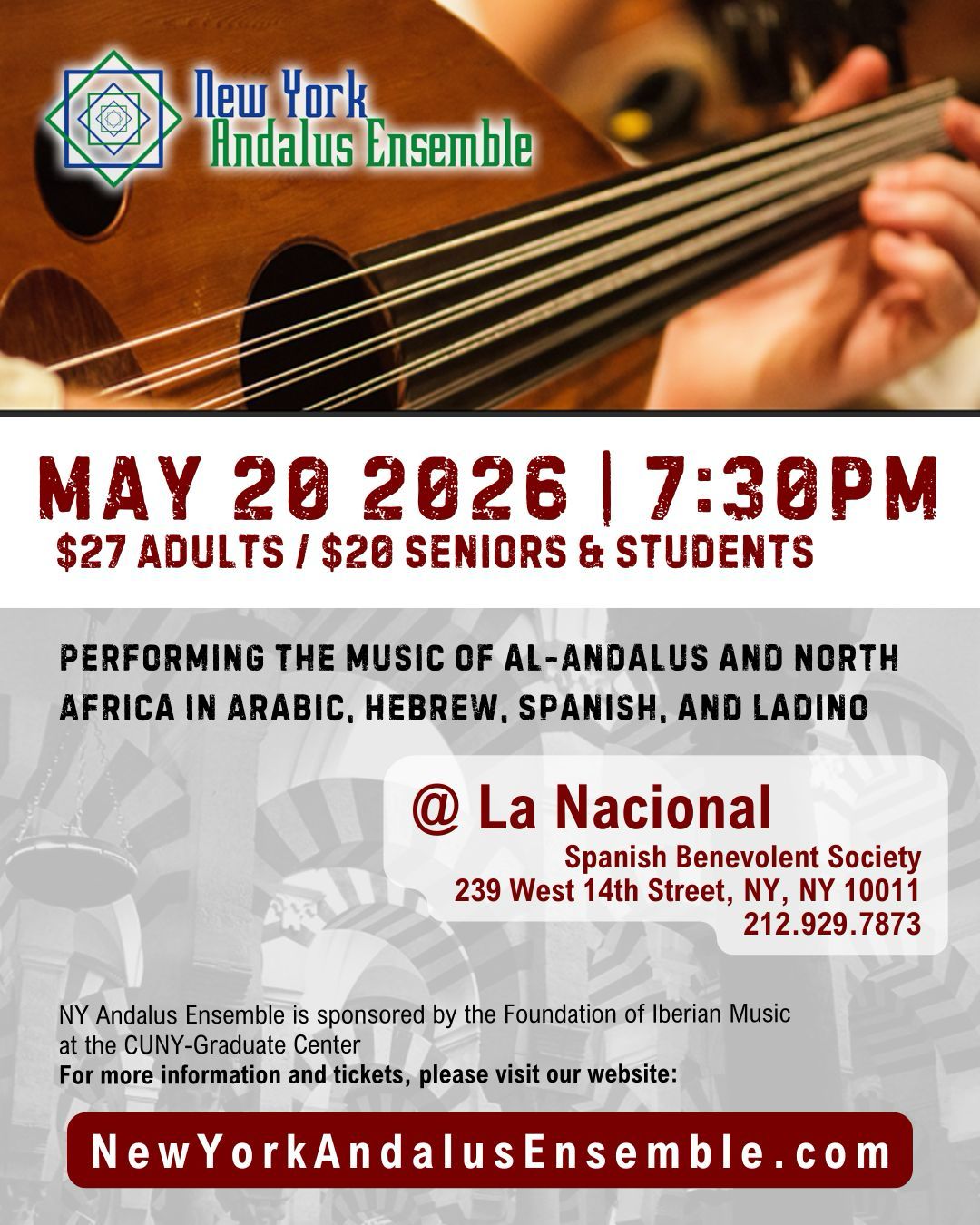
For five hundred years, Christians, Jews, and Muslims lived side by side in medieval Iberia, sharing their arts and sciences to create a scintillating, multicultural tradition of music and poetry. Singing in Arabic, Hebrew, and Ladino to reflect this cultural pluralism, the New York Andalus Ensemble presents spiritual texts and songs of love and everyday life in Al-Andalus, emphasizing the expressive quality of the region’s shared tradition even as it respects the individual cultures that comprise it. Meticulous attention is paid to authenticity of style and pronunciation as ensemble members, hailing from Algeria, Syria, Israel, Morocco, and the United States, pool their linguistic and musical expertise.