
Hi ,
I've been excited to write this email for a while. There's an important life lesson after a small bit of context.
I'm writing about an experience with my manager in my old work.
At the time, I thought it was a negative experience, but am sharing why it's just so important for anyone looking to live an intentional life.
Context.
A few years back, I worked in a small business unit. It was just me and my manager.
We looked after the whole thing within a larger organisation and were trying to scale it.
My manager worked hard and, as a result, I worked harder.
I cared for what I was doing, and also wanted a promotion.
Every quarter, we'd have our check-in/performance lunch - and whilst we worked together every day, if you don't deliberately schedule time for things like this, you just let these conversations roll by.
Anyway, On one of our quarterly lunches, maybe a year into the role, I was VERY desperate to meet: Things had been getting stupidly busy and I needed to say something to him about it.
So, we sit down for lunch and roll into it - "How are you getting on".
And, with my leg slightly shaking from the stress, frustration and mild fear of potential conflict, I elaborate:
"I've been working 12 hour days"
"Sometimes, I'm working on the weekends"
"I know that you're busy, so I don't want to give you more work"
"I've been late to dinners with my girlfriend"
"I'm struggling to keep this going"
...
And then a pause.
I stop speaking.
My manager puts his cutlery down and looks me dead in the eyes and says:
"How did you let yourself get to this point?"
And then a pause again.
When I've told other people this story - they've exhaled heavily here.
And I think I did too.
It certainly wasn't the response I'd hoped for.
I was hoping for immediate recognition, and praise. 'I can't believe you've fought so hard, so brave, you valiant warrior...'
But of course he went on, and his response included:
"I didn't ask for you to work more than your job description requires"
"How much I work shouldn't reflect on you"
And most importantly
"If you don't tell me these problems sooner, I can't do anything about them"
All valid.
All what I didn't want to hear at the time.
What I thought he was doing was shirking responsibility and blaming me for my busy work schedule.
And, in a way, he was.
But only as far as to give me the important lesson: Your problems and challenges are YOUR problem, until you make them MY problem.
Furthermore, he was saying that my absorption of his busyness is the wrong way round.
Ie. Since you're not my manager, you're not required to pick up on additional work and keep it to yourself.
He said something like "If I'm working too hard, I can get us more resources in. But if you take it on and don't tell me, I can't do anything."
It took me a while to really see this logic, especially when I was so wrapped up in the evenings lost and stresses I'd put on myself.
But he's right.
Not only was it my responsibility to not wait a quarter to tell him as I was overworking, it was my responsibility to stop working when I thought I'd done what I should.
And I only truly learnt the importance of this when reading an almost identical account in The Road Less Travelled by Scott Peck - an international self-help bestseller written in the 90s (and one of my favourite books).
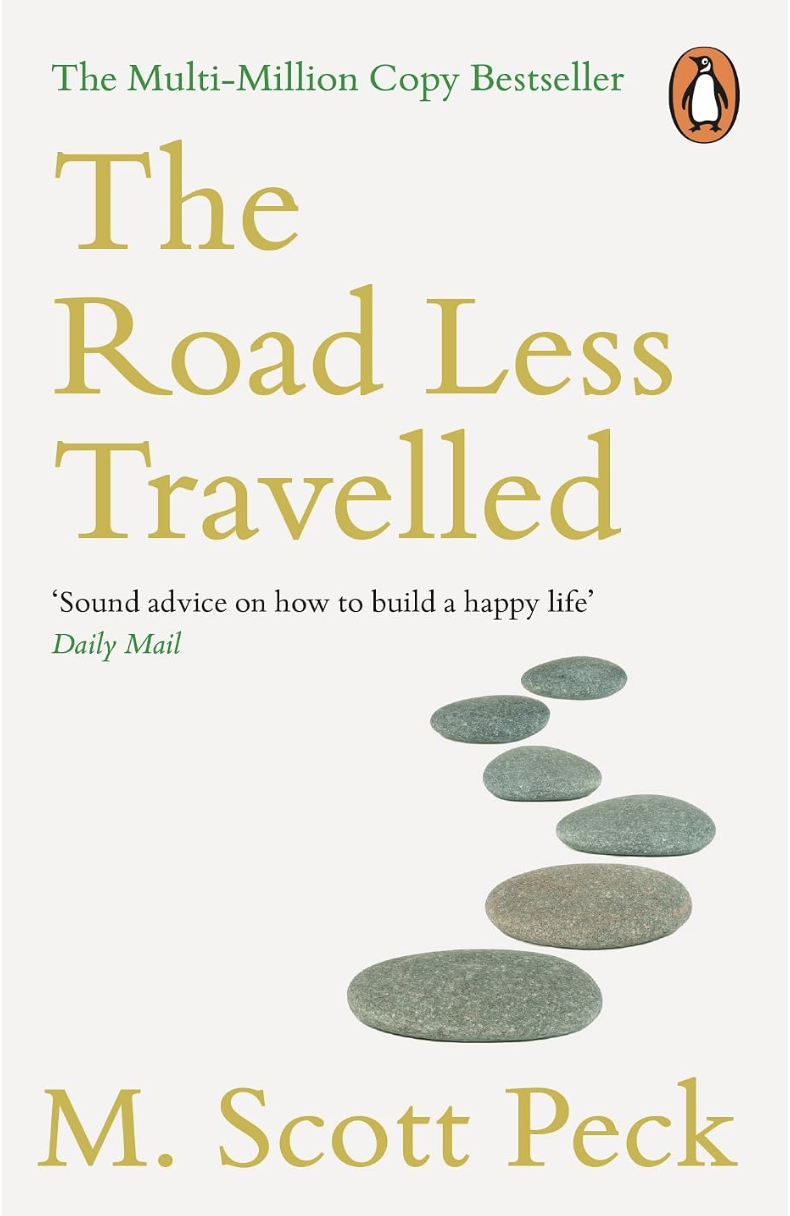
Scott is a junior psychotherapist and moans about the same overworking challenges to his manager (Mac).
Mac listens, and finally says to Scott, "Yes, it seems you do have a problem."
Scott gets angry at his blasé response. So what's Mac going to do to sort it?
""Scott," Mac replied, "I want you to listen. Listen closely and I will say it again. I agree with you. You do have a problem. Specifically, you have a problem with time. Your time. Not my time. It's not my problem. It's your problem with your time. You, Scott Peck, have a problem with your time."
Again, this seems very blunt to hear: when we turn to a manager, we often want them to take responsibility and provide us with solutions...
But Scott realises "My time was my responsibility. It was up to me and me alone to decide how I wanted to use and order my time. If I wanted to invest my time more heavily than my fellow residents in my work, then that was my choice, and the consequences of that choice were my responsibility… these pains were the consequence of a choice that I had made."
And it was after reading this book excerpt that I truly got it.
We all have problems, but whilst we should not suffer them alone, or ask for help if necessary - we should be very careful not to give our problems away to others.
When we do that, we remove the control and agency from ourselves AND we make ourselves worse at solving future problems.
So when my manager said to me at this lunch--
"How did you let yourself get to this point?"
-- He was trying to teach me this lesson.
If I came to him with my problem and asked him to solve it, I'd be taking away my own control and agency over the problem.
Q: Who does he want on his team?
A: Someone who can take responsibility and solve their own problems.
Q: Who do I want to be?
A: Someone who can take responsibility and solve their own problems.
In my instance: I was working too hard, but deep down I knew a lot of this came from my own poor time management, prioritisation and planning. He couldn't fix that even if he halved my workload.
But the other mistake I'd made is not coming to him sooner about how much I was working.
It's important to distinguish between suffering in silence, and giving away your problems.
So, as a good manager, friend, parent or partner, we want to be a listening ear and offer support. But we should be very careful not to take their problems off them.
Otherwise, they're going to need the exact same help the next time.
So what can you do with this story?
Probably in the next 24 hours, you'll be recounting a problem to someone else. Our lives are full of them, and talking them out is one of the best ways to think of solutions.
But, when you're doing this - ask yourself:
Am I thinking this problem through with someone,
or am I asking them to solve it for me?
There's a huge difference.
Be well.
James
0 comments