
👋 Hey. Welcome to issue #125 of The Everyday Athlete Newsletter.
Here are my 3 favourite ideas, learns and resources to help you improve your performance this week (4 min read):
😮💨 Baptise yourself

As a kid, I loved holding my breath underwater.
I’d hang onto the edge of the pool and time myself.
Coming up when I needed to breathe.
I’d recover. And go again.
By the 3rd or 4th hold, time underwater would rocket.
It sometimes got to the point where I’d be under there for so long, I’d wig out and come up because “surely I needed to breathe” rather than feeling a physiological urge to.
I never really thought about what was going on under the hood.
Until I read this study on using underwater breath holds as a warm-up tool to improve endurance performance (yes, you read that correctly).
See, when we hold our breath:
Carbon dioxide (CO2) levels in the blood increase > which counterintuitively increases oxygen delivery to our organs, muscles and tissues. Known as the Bohr effect — essentially — higher CO2 = high oxygen delivery
The body also responds by contracting the spleen > which pumps us with more red blood cells > which increases how much oxygen can be transported.
The body’s response to breath holds is effectively the same as injecting your butt with EPO — but without the whole getting stripped of your Tour de France titles drama.
Plus, when we hold our breath underwater (or even just with our faces submerged):
The “mammalian divers reflex” kicks in — a cool thing human bodies have that helps us survive underwater.
It mostly just slows our heart rate to conserve oxygen.
Anyway, the study…
I shared research back in newsletter #111 that used a dry (on land) breath hold technique to increase:
- 🩸 red blood cell count
- ❤️ peak stroke volume
- 🫁 VO2 max (by about 30%)
This new study did a similar thing but with faces submerged in water.
And they found similar results...
"This evidence suggests that repeated maximal static breath-holding maneuvers enhance the oxygen delivery system by increasing the circulation of reserve red blood cells, heightened muscle oxygen deoxygenation, enhanced aerobic metabolism utilization, and postponing the transition from aerobic to anaerobic metabolism, implying a potential ergogenic effect."
So do we need to go and baptise ourselves before our Saturday morning park run?
Probably not.
But dry breath holds? Maybe.
My read of it is that dry breath holds can help immediately boost endurance performance — something I now do in my warm-ups for hard runs or races (the exact technique can be found here).
And that underwater breath hold training is more of an adaptation. So it can help improve endurance performance when done consistently.
Powerful tool the old breath.
💊 Magnesium cheat sheet
There's dozens of different types of magnesium out there.
Most have different benefits.
Here's a simple cheat sheet from Function Health:
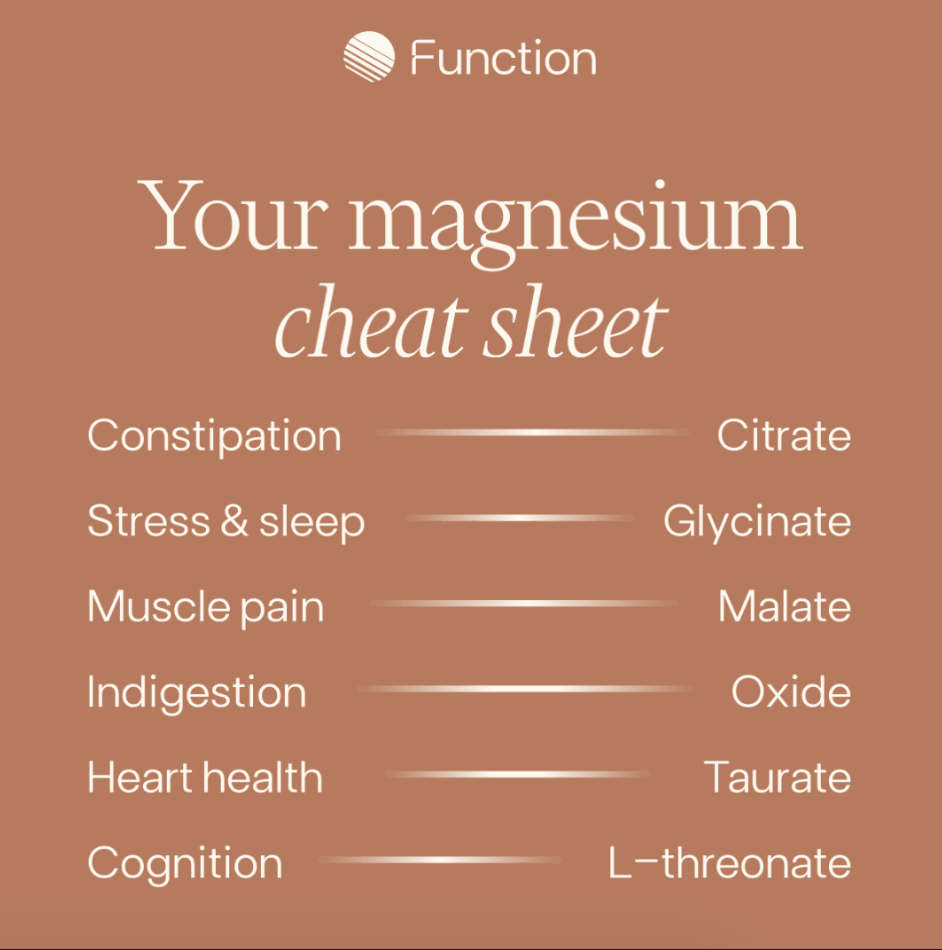
Check the ingredients (most cheap magnesium options are usually just magnesium oxide).
See the magnesium rabbit hole from newsletter #58 for more.
😮💨 Another cue for better breathing in seconds
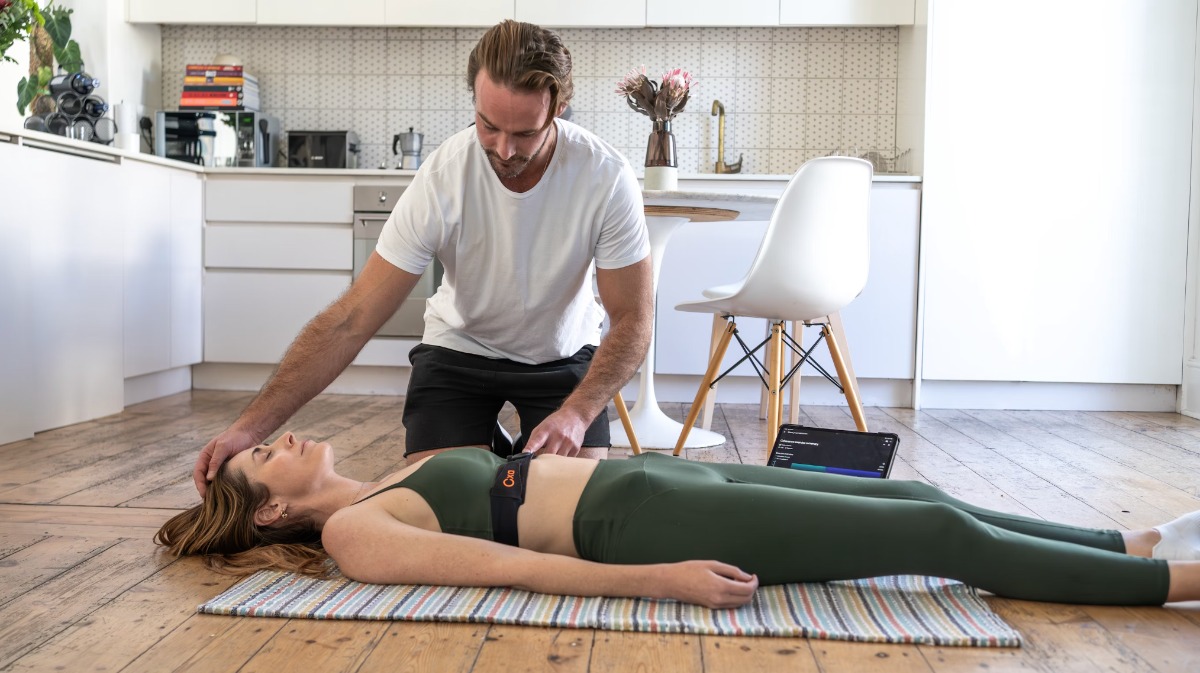
In newsletter #35, I shared "a simple cue to improve your breathing in seconds".
Here is another from a dude called Sasha Chapin:
"I know a ridiculous-sounding tip that could make your whole life more satisfying. You might be breathing too high up in your chest. To correct this instantly, pretend you’re breathing through your asshole."
Weirdly effective way to activate the diaphragm, calm the mind and body.
That's it!
Have a great weekend 🤙
Matt

📬 Did someone forward this to you? I send an email like this every week. Join free here.
👇 If these emails aren't for you anymore you can unsubscribe below. No stress, they're not for everyone.
 Want more? Check out the Everday Athlete Toolbox and Elite Sleep Audit
The Everyday Athlete Newsletter is not a licensed health service nor a substitute for professional health advice, treatment or assessment. The information shared in this email is general and written for a specific audience. If you’re struggling, please see a healthcare professional.
0 comments