
👋 Hey. Welcome to issue #180 of The Everyday Athlete Newsletter.
Here are my 3 favourite ideas, learns and resources to help you improve your performance this week (4 min read):
⛷️ Why the best athletes get sick less (study)

How’s this for a bit of data:
A 9-year study on Norway’s dominant cross-country ski team found:
- 🥇 Olympic medalists & world champs spent an average of 14 days/year sick
- 🎿 Non-podium (but still bloody elite) athletes spent 22 days
Same coaches, training plan, environment.
But the best had a knack of bouncing back faster from illness. Or... bouncing back faster from illness made them the best 👀. Perhaps a combo.
You might think: 8 days — so what?
Sure, it’s a week of missed training and availability.
But I reckon it’s the disruption to momentum and confidence that really matters.
It suggests that the best performers aren’t always the strongest or most talented.
But the most available.
We see this time and time again.
Because...
→ Availability is consistency
→ Consistency is momentum
→ Momentum is confidence
👆 & that sounds like a pretty good pattern to build in life (not just in sport).
So how do we do it?
That’s where data from Finland’s 2018 Winter Olympic team (plus other insights from the study above) can help. Over the three-week Games period, ~45% of athletes and ~33% of staff came down with a cold or flu.
Most likely to be stung:
- ✈️ The day after flights (5× higher infection risk)
- 🏁 The day after races (3× higher risk)
- ➕ Especially when those happened together (race → immediate flight home)
In other words: when stress meets exposure.
When the system is down after stressful events or periods (long travel, competition blocks, heavy work deadlines, new parent life), we're more vulnerable.
So apart from doing the basics well, being in good nick, and getting enough vitamin D...
👉 Double down on recovery (and wash your hands etc) after big pushes, when you’re feeling that nervous system fatigue.
Which, for most, means dialling in sleep…
It reminds me of the study on the Florida State soccer team (from newsletter #75).
They found that hitting specific sleep duration, quality, and consistency numbers - alone - kept players on the field for 90%+ of training and games across a season.
And if elite sleep’s out of your control, consider my Sleep Deprivation Protocol.
And finally - one of the funnier findings from the Olympic illness data - the only athlete who didn’t spread their virus on the flight… sat in business class. So fly up front (lol).
Then we’ll give ourselves the best chance of being fit, healthy, and available for 90%+ of the year. In sport and in life.
💉 Peptides, BPC-157, and the risk–reward question

Peptides have gone from obscure biohacker corners of the internet to dinner-table conversation in about 18 months.
Peptides act like tiny messengers in the body.
They tell cells what to repair, grow, restore, etc.
The most popular one doing the rounds:
BPC-157.
Often described as a “healing peptide.”
In studies (mostly on animals), it seems to help the body repair faster. Things like sore tendons, joints, muscle strains, and even gut irritation.
But only one human study, a humble questionnaire.
So right now, BPC-157 (like many of the peptides going round) sits in the zone of:
Promising on paper, unclear in humans.
My read: without the safety data in humans, you’d have to be pretty desperate.
If you do, it seems the biggest risk is where you get it from... Quality control, contamination, wrong dosing, autoimmune reactions.
🏋️ One of the most effective ways to train (without living in the gym)
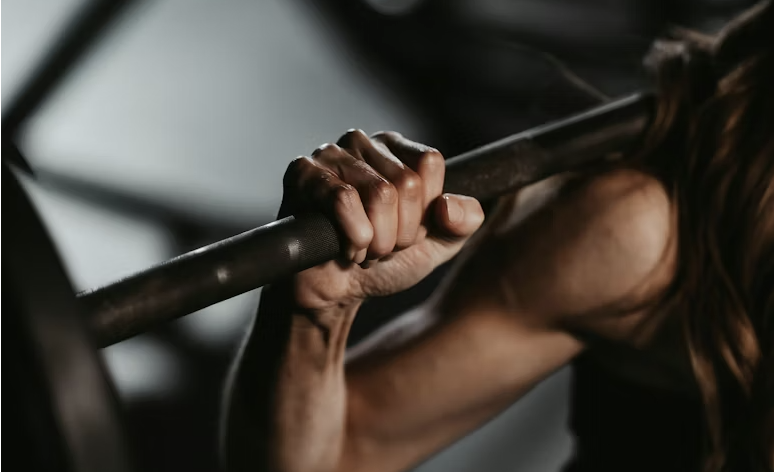
If you’re looking for a bang-for-your-buck training approach, the Complete Fitness framework is the infrastructure I use for 90% of my clients' programs.
It’s what I’ve landed on after years of experiementing. Based on my experience and the science.
Here it is:
- 🏋️ Lift weights 3x/week (full body compound movements)
- 🚲 Bookend each session with short mobility warm-up & a HIIT finisher (5-10 mins, e.g. cardio machine, skipping rope)
30-45mins/session.
Then building up to:
- 🏃 On alternate days: cruisey cardio (e.g. ruck, run, swim, cycle); or a longer interval (VO2 max-style) session
A huge piece of this is the strength side of things.
So if you want to understand the structure, logic and principles I use to write strength programs in the Complete Fitness format, I put together a free guide:
👉 Strength Training for the Busy Minimalist
Go well.
That's it!
Have a great weekend 🤙
Matt
📬 Did someone forward this to you? I send an email like this every week. Join free here.
👇 If these emails aren't for you anymore you can unsubscribe below. No stress, they're not for everyone.
The Everyday Athlete Newsletter is not a licensed health service nor a substitute for professional health advice, treatment or assessment. The information shared in this email is general and written for a specific audience. If you’re struggling, please see a healthcare professional.
0 comments