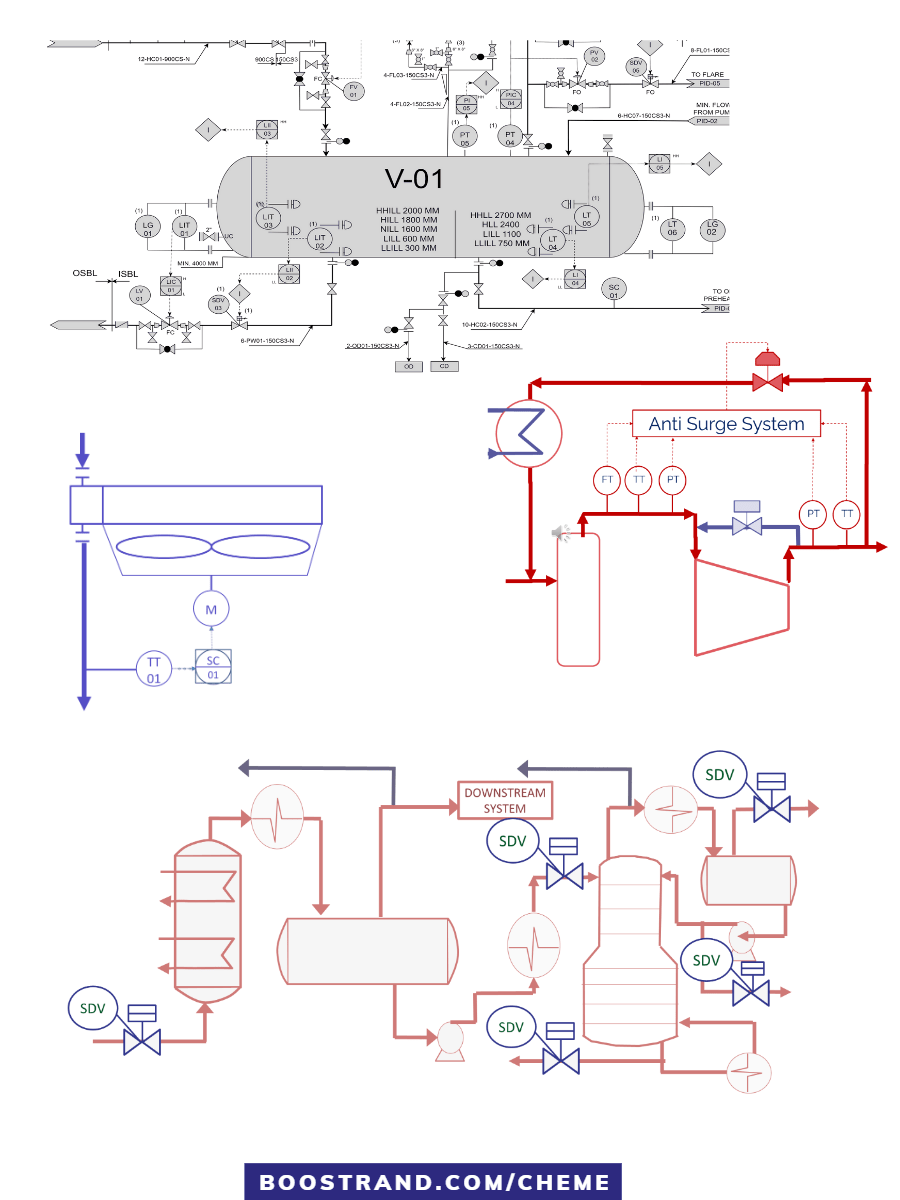
When sizing a separator, it's highly important to define the degree of separation we need from the vessel. A higher separation degree means a higher vessel size. So it's important to define the exact specifications we need to ensure a properly sized vessel.
In general, API 12J states that liquid carryover is normally less than 0 .1 gallon per MMSCF.
Here we need to define how much liquid entrainment is accepted in the gas?
If the exit gas from the vessel is entering a compressor for example, then liquid entrainment may cause damage to the compressor. In this case, there shall be stringent separation requirements related to liquid entrainment.
However, if this gas is going to another vessel or to an absorber or a distillation tower for further separation, then in this case, the liquid entrainment requirements can be relaxed.
The same can be applied in the case of liquid liquid separation. If we are talking about oil and water separation as an example, the traces of water may affect downstream process. This may be the case if we are talking about e.g poisoning a reactor catalyst.
On the other hand, the traces of oil in water can be an environmental issue related to the disposal of this water. Based on the amount of oil, we shall need more complex systems so that this wastewater can reach the allowable disposal limits specified by the environmental law.
In liquid liquid separation, it is usually expressed in form of particle size. So we may define that the maximum droplet size of water in oil is 150 micron and the maximum droplet size of oil in water is 400 micron. The criteria of course depends on the project and the standards that shall be used.
In one of my latest videos 🎥 Separator type selection, internals and design criteria , I have discussed different criteria for sizing a separator, you can check it out in the below link:

I hope you shall enjoy the video, and if you have any question, comment or suggestion, feel free to reply to this email.
Regards
Mohamad
0 comments