Hi
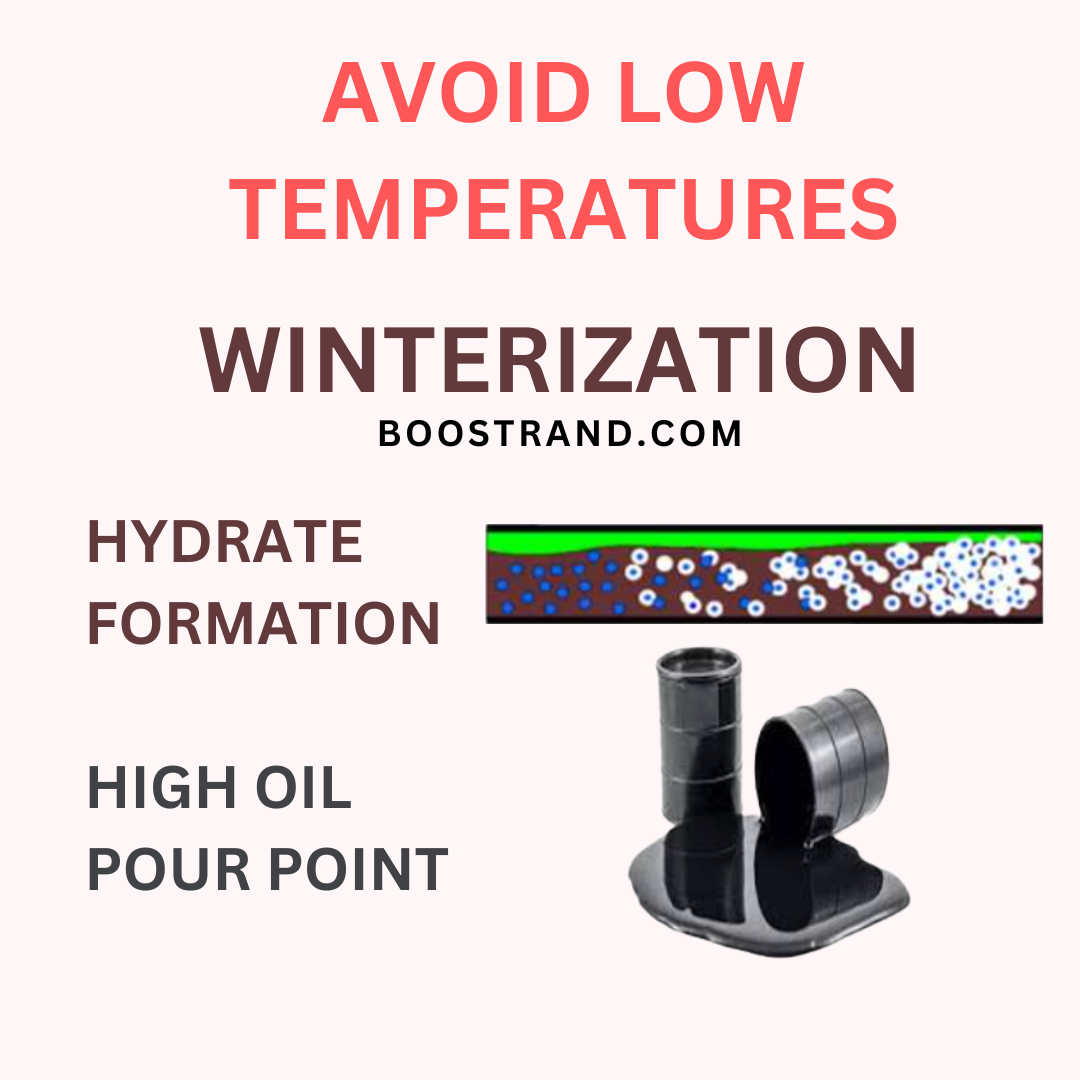
When temperatures drop in the winter, this shall lead to reducing temperature in piping. For air coolers, low temperature air shall drastically reduce the temperature of the fluid and cause overcooling. This shall lead to issues with fluids that are affected with low temperatures. These fluids can be:
- Hydrate Formation: This occurs when water and gas combine under low temperatures and high pressures, forming ice-like solids that can block pipelines.
- High Pour Point: Oil with a high pour point can solidify or become too viscous in cold temperatures, leading to flow issues.
This can lead to the following consequences:
- Solidification in piping and tanks
- High torque on pumps due to the increase in viscosity for high pour point fluids
- Damage to compressor impellers due to hydrate formation
- Formation of a layer preventing heat transfer in heat exchangers
So to avoid these issues, we would need to apply specific measures such as:
- Inject chemicals to prevent hydrate formation or reduce the pour point of the fluid
- Heating the fluid to maintain the fluid temperature above its hydrate formation temperature or pour point. This can be done through steam or electrical tracing of piping and adding heating coils to tanks or vessels.
- Controlling the air cooler's duty to avoid overcooking
So that's it for today. I hope you have a nice weekend. If you have any questions, comments, or suggestions, please reply to this email.
Regards
Mohamad
0 comments