
ANNOUNCEMENT: Sign-up for my new Life Toolkit: Tech, finance, well-being & everything else LinkedIn newsletter to learn more about everyday, practical advice to help you save time, make more money, and live a better life!
Introduction
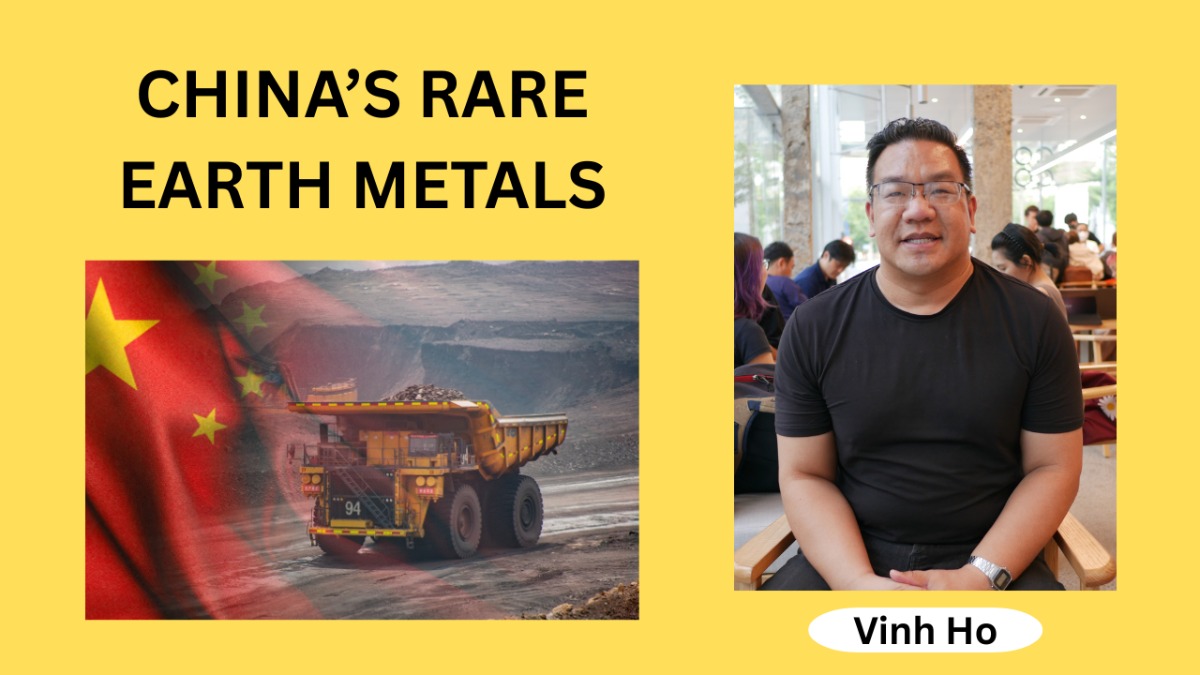
China’s rare earth monopoly has the US scrambling.
What are these metals exactly, and how did China become the world’s largest producer? What products and components are they used in and why are they crucial to national security?
Understand why these once unknown metals are the focal point of the US-China trade war.
What are rare earth metals
There are 17 rare earth elements that include names like scandium (SC), Yttrium (Y), and Lanthanum (La) that make up the whole periodic table.
They are known for their strong magnetic, luminescence, and convertible characteristics often used in manufacturing technology such as automobiles, laptop computers, smartphones, military equipment, and high-tech machinery.
How are they used
Just about every component that uses PCB boards, circuits, and electronic equipment requires rare earth elements which are used in nearly every modern, high-tech industry imaginable.
In particular, magnets able to endure super high heat thresholds are needed in key industry sectors such as EVs, drones, electronics, and the defense industry.
On modern cars, magnets are used in tiny machines that operate all the functions that require any movement, such as adjusting your car seat and windows.
Consider how rare earth elements (REE) are used in everyday products:
Smartphones-REE are used to help speed up processing and provide brighter displays.
EVs-Are used in motors to increase efficiency and promote long distance.
Defense systems radar, missile guidance, and night vision.
How China become the world’s leader in rare earth metals
In the 1980s, ironically, the United States was the largest producer of these minerals, however, over time China eventually came to dominate the industry due to concentrated government funding, lower labor costs, and lax environmental laws.
From the 1960s-1990s, Mountain Pass, located on the California and Nevada borders, was once the location where the US used to supply these crucial elements.
Due to global competition and environmental concerns, the mine went through a spate of openings and closing since the 1990s and has been dormant since the 2010s.
“Rare earths” are actually an oxymoron since the elements aren’t necessarily rare and can be found all over the world; it’s the mining and processing of these elements at large scale is where the added value comes from.
In the 1980s, led by Xu Guangxian, a Columbia University-trained scientist returned to his native China and helped spearhead the government's emphasis on developing the rare earths mining and processing strategy.
As he headed up key government science and technology leadership roles and initiatives, realizing the important geopolitical consequences, he was able to convince the government to increase export controls.
It’s important to note that China not only dominates the production of rare earth elements but the processing, too.
Conclusion
Due to the recent geopolitical developments, rare earth elements have been propelled to the fore-front of US-China relations.
Modern technologies are heavily reliant on REE, including EVs, solar, greentech, and nearly all electronics.
The US military, in developing their missile defense, jets, and sophisticated radar systems too, are reliant on these earth minerals.
As the increase in technological developments continues and society’s consumers rely on them, China’s monopoly on rare earth mining and processing has them holding the cards.
www.InternationalVinh.com
0 comments