
Hello again!
In a departure from my normal newsletter style, this one will be in the form of fiction — a parable called 'The Age of Talent.' Enjoy!
****
The Age of Talent
It was a time of great change, of crisis and rebirth. It was the age that saw a great proliferation of people who possess the Talent. Across the continent, there arose the greatest poets, painters, magicians, musicians, explorers, and inventors. At the same time, many were stricken with malaise or ill humors. Nervous hysterias and strange upheavals of passion gripped nobles and laborers alike. An age of genius; an age of madness. Many called it a plague. Some blamed it on the rise of the Talent.
In ages past, as in the Democracies of Reason in the Ionian Archipelago, those with the Talent were men of great learning. Scholars, philosophers, and pioneers in the art of the civilized magics. It was through their even tempers and reason that society advanced—or so it has been taught. The Talent, as it was understood then, came with sensitivity to magical energies, and granted wise men the ability to play upon the strings of reality as a musician plucks a lyre.
The new Age of Talent, like a plague, spread from Iberia to the Eastern Steppes. With it came destruction and creation, life and death, new understandings and old superstitions. Many searched for the cause of the sudden eruption of Talent. It had once been rare, but was now to be found in one person out of ten. Not only men, as had been thought, but women also. Perhaps the new flying machines had brought the plague, by disturbing the aether in the heavens. Perhaps the new medicinal tinctures and decoctions had deranged the minds of innocent people. Perhaps the plague of Talent had spread as a genuine contagion, through the foul miasma choking the cities which swelled like pustules on scarred land.
But no, in each case these conjectures were investigated, and found wanting. The true cause of the Age of Talent lay elsewhere.
It took a scholar named Sophia Socratia to solve the conundrum. She possessed the Talent, which in her words, was both a gift and a curse. Her idea was as simple as it was unpopular: the Talent had always been there. Its proportion in mankind had not changed. Nor was it purely an affliction or a manifestation of genius. The only thing that had changed was the ability to identify it, name it, understand it.
Those with the Talent varied more than all the species of flowers in all the meadows of the continent, but Sophia identified what joined them. It was the sensitivity to magic itself which could lead to apparent genius or hysteria, to euphoria or malaise. To be so sensitive at all times, so attuned to that which passes by unnoticed, to constantly feel the feather touches of the whispered energies of the cosmos—it was from this one seed that all the dazzling variety could sprout.
A child of accepting and encouraging parents, Sophia's Talent had never made her feel like an outcast or a victim of plague. At times, she struggled to shut out the cacophony of the magical vortices, but her parents gently helped her to quiet them. It was through this rare and fortunate childhood that she determined the cure for the so-called 'plague' of Talent.
It might be decades, or centuries, or a millennium before her cure is embraced, but here it is:
Those with the Talent are often maligned and outcast by peers who expect sameness. As the cities swell, and work consumes our waking lives, the space left for a person sensitive to magical energies shrinks. Not everyone with the Talent will contribute to the great sciences or arts. But our contributions are welcomed even when we are not. Not everyone with the Talent will display their difference openly, because we see what happens to those who do. The estrangement one feels for having a different process of thought, a different balance of humors and tempers, a different response to the assault on our senses—it is no wonder we are thought of as mad, hysterical, contagious! But the hysteria does not rest within us.
The Talent is not chosen or acquired, nor can it be cured through medicine or exorcism. The plague that has spread across the continent has not infected those with the Talent. It is a contagion of unease, intolerance, ignorance, and the only ones who are sick are those who think it is the Talent which must be cured.
****
Thank you for reading! I hope you enjoyed that little tale. If I've done my job right, it shouldn't need any sort of explanation or summary of the moral.
It might not quite fit the classical definition of fable or parable, but those terms are probably the closest ones I have available. I have wanted a way to write about broader things that are cultural and social in nature, rather than stories which focus in very narrowly on individuals. I think shorter, 'parablesque' stories might be a good way of doing that, so please let me know what you think!
I plan to write more and make them freely available, first through this newsletter and later on my website, and it will probably take a long period of experimentation before I can get all the balances right. If it's too vague, it won't feel very impactful; but if it's too specific then it sort of loses its ability to be a parable. How long, how short? How simple, how complex? All of these things are the sort of thing I'll keep my eye on. Anyhow, I hope it was at least mildly interesting.
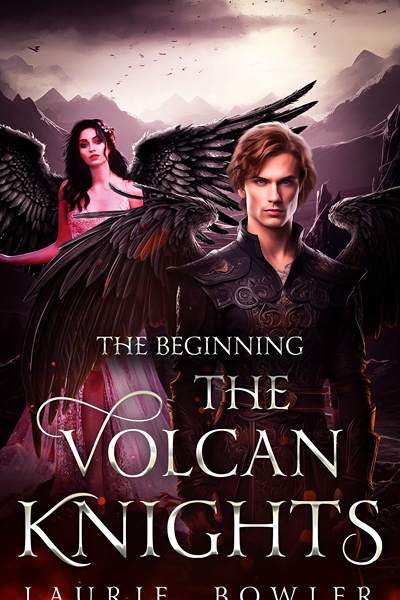
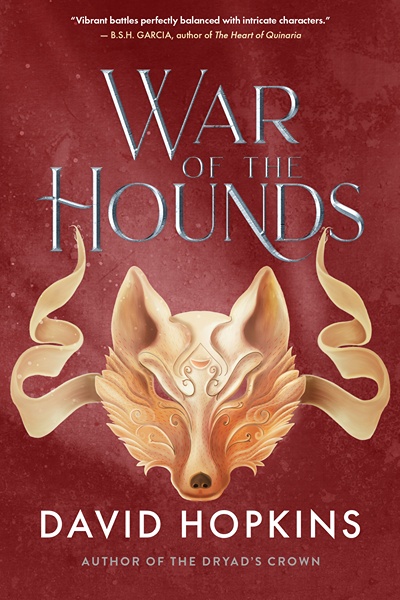
Below, as always, is a short list of books by authors like me that you might enjoy, so be sure to check them out!
Book Recommendations



Thanks for reading
Until next time!
0 comments