
Yesterday, we walked into a childcare center for a live Fruit Snack Streams performance, and what stayed with us wasn’t the show itself, but everything that happened around it.
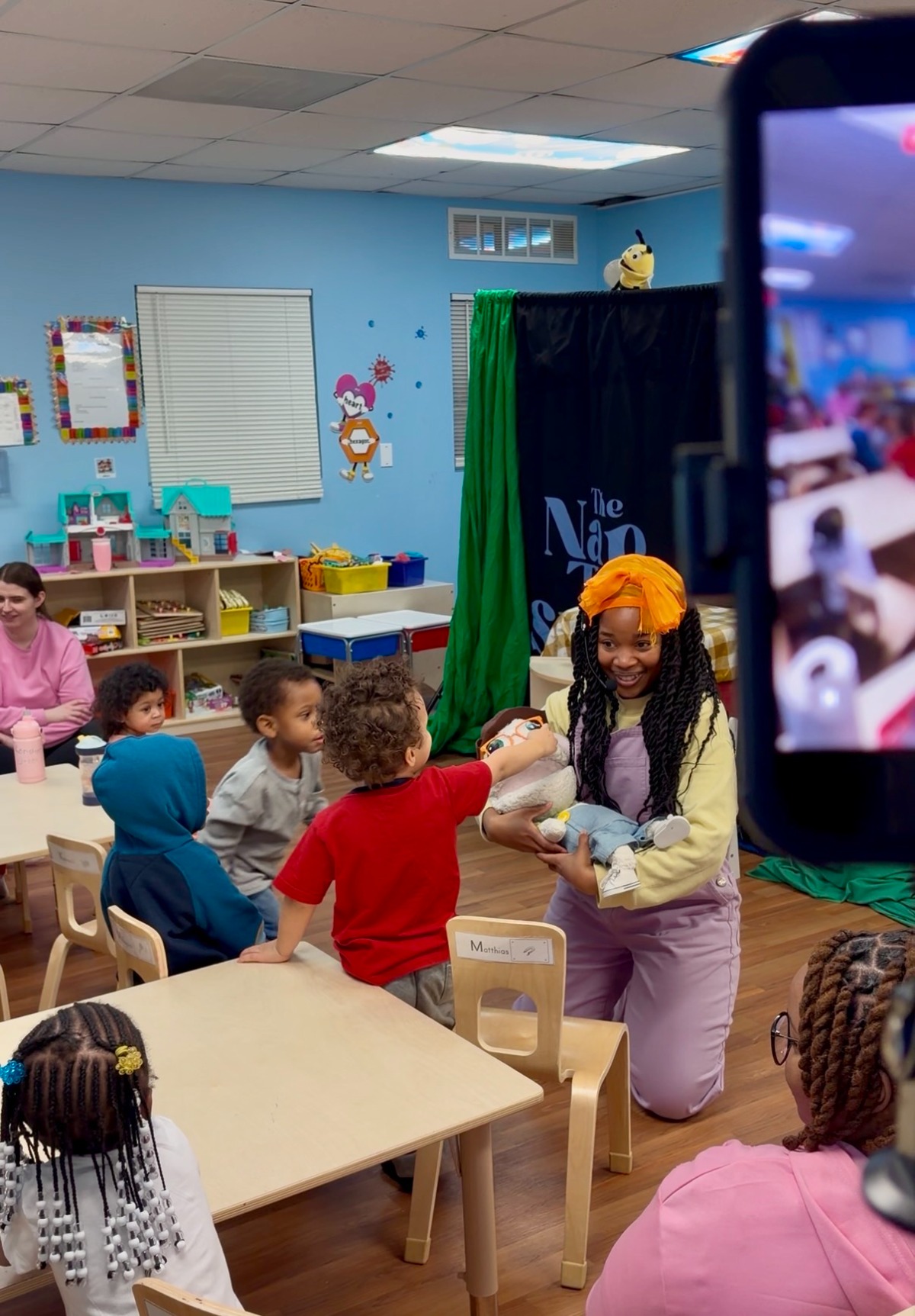
We arrived and were greeted by the Lead Teacher (because the Director got pulled into a classroom). Soon, the lead teacher had to leave us in the lobby too. A single conflict over blocks escalated into a full classroom incident. One child’s dysregulation quickly became many children crying, teachers scrambling, and leadership pulled away to manage parents ("I'm sorry we couldn't answer your last call, we're currently having an incident" — Lead Teacher to a parent on the phone), documentation, and staffing gaps. This is a very normal day in childcare.
What stood out most is that none of this had anything to do with curriculum. No one lacked lesson plans or care. What we witnessed was human nervous systems hitting capacity: young (multiple under 21), often under-trained staff managing intense emotional labor while trying to keep routines on track. When regulation breaks during transitions, everything downstream becomes harder.
During our 30-minute performance, something shifted. Teachers exhaled. The classroom temperature lowered. Regulation returned. For a dependable moment, some of the load was temporarily lifted.
But then, it was time to transition to lunch. I watched the teachers clean tables, place chairs, gently usher kiddos to their seats, prep the food, pour the milk and water, distribute the food and give verbal instructions. One child’s mother came to drop something off. When she left? He was a pile of tears (and screams, can't forget the screams  ). My dad—still in character—stepped in and said “hey, would you like to help us pack up? Come on over here.” To which the kid gladly obliged and was SO happy to help us pack up and be our “special helper.” But if we hadn’t been there? The teachers would have had to stop everything they were doing to get him back on track, THEN back to what they still had to do.
I mean…I’m exhausted just telling you all about it! I couldn’t help but think what a difference it could have made if they had Fruit Snack Streams. So I imagined it:
The Day Re-Imagined with Fruit Snack Streams
Arrival + Free Play (where the block incident began)
What happened:
One child wanted all the blocks. A gentle redirection turned into a full meltdown, which cascaded into a classroom-wide dysregulation spiral.
With FSS:
As free play winds down, the teacher taps the SnackByte Timer for 5 minutes and selects:
- 🎥 “When We Share the Space” (short, interactive video modeling turn-taking)
- ⏱ SnackByte Timer: 5:00 — “Blocks are resting soon”
The host speaks directly to the kids: “If you’re holding something special, take one last look. We’re practicing letting our bodies get ready for what’s next.”
The countdown externalizes the limit.
The boundary is no longer coming from the teacher’s nervous system. It’s coming from the environment (and "the bear on screen who they always believe over me" as one caregiver said to me once 😂).
Result: fewer surprises, fewer power struggles, lower emotional stakes.
The First Big Meltdown (before it multiplies)
What happened:
One child escalated. Another followed. Teachers scrambled. One ended up raising her voice to cut through the noise.
With FSS:
Instead of escalating verbally, a teacher presses play on:
- 🎵 “Big Feelings, Slow Breathing” (movement + breathing song)
- Or 🎥 “Hands on Your Belly” (2-minute parasocial regulation video)
The video does the regulating with the kids: “Put one hand on your belly. Let’s breathe together.”
This matters because:
- The teacher doesn’t have to perform calm while dysregulated
- Regulation becomes shared, not forced
- The moment is slowed before it explodes outward
This is not screen time replacing connection.
This is mediated regulation preserving connection.
Leadership Gets Pulled Away (incident + parent call)
What happened:
Director steps in, answers a parent call, can't tend to desk/office needs, classroom is effectively understaffed.
With FSS:
While leadership is occupied, staff keeps the room stable with:
- 🎵 “Waiting Is Hard (But We Can Do It)” (our instructional SEL song that's a BOP)
- ⏱ SnackByte Timer: 3 minutes
Children are given language for the wait.
Staff isn’t improvising explanations under stress.
The room holds itself just enough.
Staff Fatigue Is Visible
What happened:
After the meltdowns were cooled, we saw the irritated young staff exhausted, snapping at each other. Capacity gone.
With FSS:
This is where the invisible benefit shows up.
Because earlier transitions were smoother:
- Staff hasn’t spent emotional energy firefighting
- Nervous systems aren’t already maxed out
- The day hasn’t stacked stress on stress
Fruit Snack Streams fixes burnout prevents unnecessary depletion.
Transition to Lunch (the hardest part)
What happened:
Kids seated unevenly. Food prep. A parent drops something off. A child melts down.
With FSS:
As lunch prep begins, teachers queue:
- 🎥 “The Lunch Launch Crew”
- ⏱ SnackByte Timer: 5 minutes
When my dad invited the child to help pack up?
FSS replicates that without needing a spare adult: “If you’re waiting, you can help us fuel the lunch rocket. Can you pat your knees with me?”
The Bigger Shift
Nothing about this day required:
- More staff
- Better intentions
- Stronger discipline
- Perfect parents
It required infrastructure that assumes reality:
- Kids melt down (no one dealing with toddlers expects any different)
- Staff are stretched
- Transitions are the danger zone (research shows they are the most high friction moments of the day)
- Capacity is finite
This work matters because childcare is being held together by people pushing past their limits every single day. We’re building Fruit Snack Streams so fewer moments rely solely on burnout and more moments are supported by intention.
Thank you for doing this work alongside us. We see you, and we’re committed to building what the system has been missing.
0 comments