
How to turn Claude into a Coach
I use claude every day and it amazes me what it can do.
But it is terrible at communication. And even worse at giving advice. This applies to all AI models.
I'm working with a client on his offer and he's using claude to help craft it. I'm going to use it as an anonymized real world example. He's already gotten this coaching and it'll help you too.
Here's how to test whether the advice you've gotten from AI is good or not (and what to do about it).
Tell #1: Vague Statements

Fix: Tell Claude which word or phrase isn’t clear and have it explain what it meant and what it wants you to do about it. If the explanation is another abstract statement, ask again until it names an action.
A phrase I use often is, “Be clear, not clever. Clarity above all else.”
Tell #2: Making A Mountain Out Of A Mole Hill


Fix: "The whole thing" is AI trying to emphasize its point instead of giving you the reason it should be highlighted. Tell Claude to drop the phrase, state the point plainly, and explain why it thinks the point deserves emphasis over everything else discussed. It will do one of two things: give a reason or decide it was unnecessary. Verify the reason fits with the purpose of your discussion.
Tell #3: Latching Onto A Single Element
This is similar to #2, but Claude takes the discussion in a distinct direction without verifying you want to focus on it.

Fix: Claude will drift as your chat gets longer. At some point it will pick one of your points and fixate on it. Sometimes it’s clear like the example above, but other times you might not notice for a while. To help with a long chat, put the purpose in your first message on a line labeled "Purpose:" and have Claude restate it and confirm its current advice serves it. Paste the purpose line again every ten or so replies. After you’ve re-pasted your purpose line 6 or 7 times, you should have Claude summarize the chat and start a new one.
Tell #4: Absolute Words

Fix: A subtle problem with LLMs is using absolutes to emphasize a point. This can close off a direction of the discussion accidentally. In my client’s example, it is true that he had never done the specific outcome he was discussing. Claude doesn’t have the insight to say, “Hey you’ve never done this, but you have done these other similar things so emphasize them with your clients.”
When you see a response from Claude with an absolute word such as only, all, never, etc you should ask it to come up with work-arounds.
Tell #5: Metaphorical Phrases

Fix: Tell Claude to stop using metaphors and figures of speech for the rest of the chat. For the metaphor in front of you, decide what it's doing. If it's describing a situation, have Claude say what it's describing, then judge whether that's true of your situation. If it's recommending something, have Claude say what to do instead.
Tell #6: Invents Categories/Distinctions
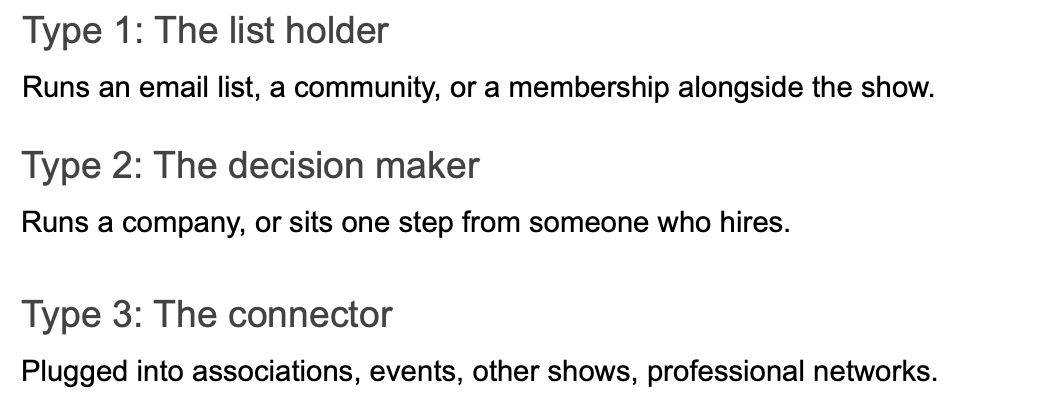
Fix: Ask Claude what would have to be true about your situation for this to be wrong. You'll recognize right away whether those conditions describe you. If they do, the structure doesn't fit, even though it sounds sensible.
The Big Flaw
The biggest issue you’ll run into with any AI when asking for advice is that it can’t connect seemingly unrelated concepts together. It exists in a paradox; it has access to all of human knowledge, but has no idea how it relates to you. This is because AI can’t (yet) navigate ambiguity.
In business, there’s typically only a few wrong possible answers and AI can figure out at least one of them. But there’s thousands of possible right answers and AI is trained to 1) conserve tokens and give you a quick answer, 2) provide generalized knowledge responses, and 3) to stick to the instructions and context given within that chat.
When I’m coaching a client, I gain information about my client (AI can do this), but I have access to all my other clients past and present. I know what’s worked for them in similar situations and I can advise on it.
This doesn’t mean you must have a human coach, but it does mean you need to watch for the LLM tells that can lead you the wrong way. You also have to take control and force AI to go deeper. I do this by asking it a lot of questions to make it use its reasoning capabilities.
A few questions I use:
What's a non-obvious choice we've not discussed?
Are there other concepts you've not considered that could work in this situation?
Is this advice that has been shown to work with similar businesses to mine? Can you verify this?
Can you give me a bold or moonshot approach to this?
Get The Guide
I’ve included a guide on what instructions you need to give Claude (or your preferred LLM) so you can get better advice.
It has instructions that go in your profile. In Claude it’s called “Instructions for Claude” under settings. There’s project level and chat level instructions to deal with the above tells, too.
Paste the instructions in the appropriate place and you’ll immediately get better coaching from AI.
t
0 comments