

Howdy speedgolf family! You're reading This Week in Speedgolf.
Or, in Augusta terms: please silence your phone, whisper respectfully, and prepare for one extremely opinionated take on tournament identity.
Here's what's happening in speedgolf this week.
---
What the Masters got right (and what speedgolf is getting wrong)
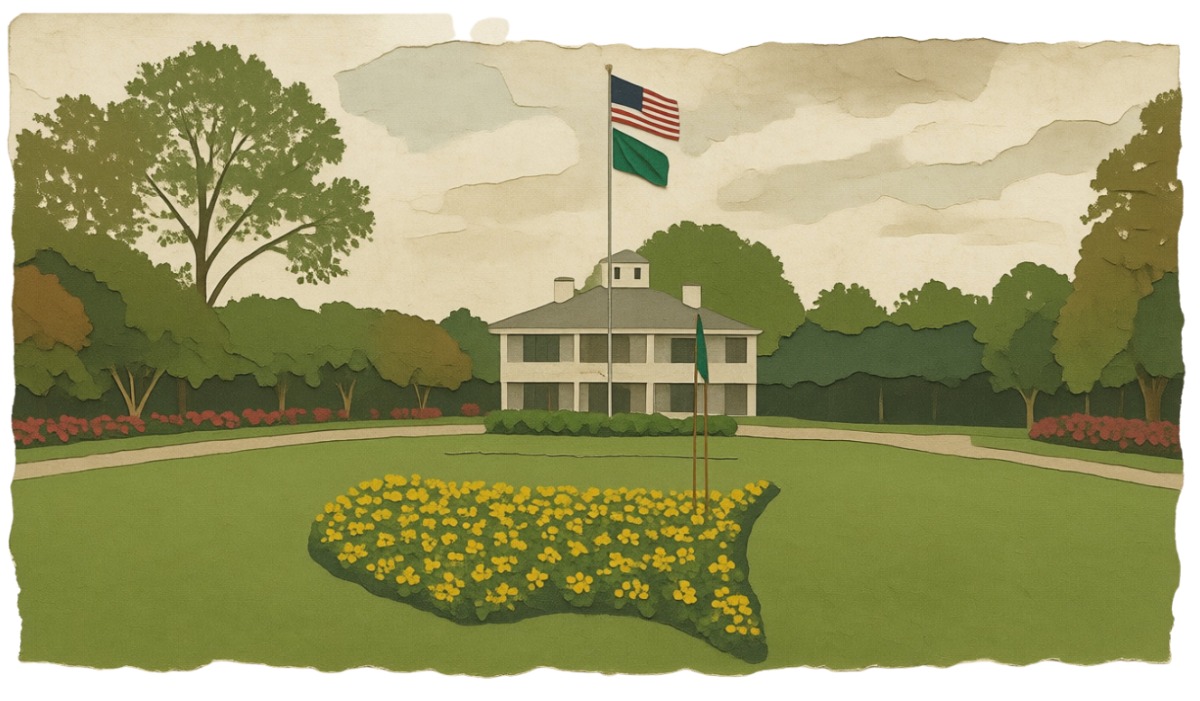
I don't watch much slow golf. But every April, I sit down and watch the Masters. I can't not.
My earliest Masters memory: 1997. I'm sitting with my grandpa. Tiger Woods is 21 years old and annihilating the field. My grandpa squints at the screen and asks, "What's that funny check mark that black boy is wearing on his hat?"
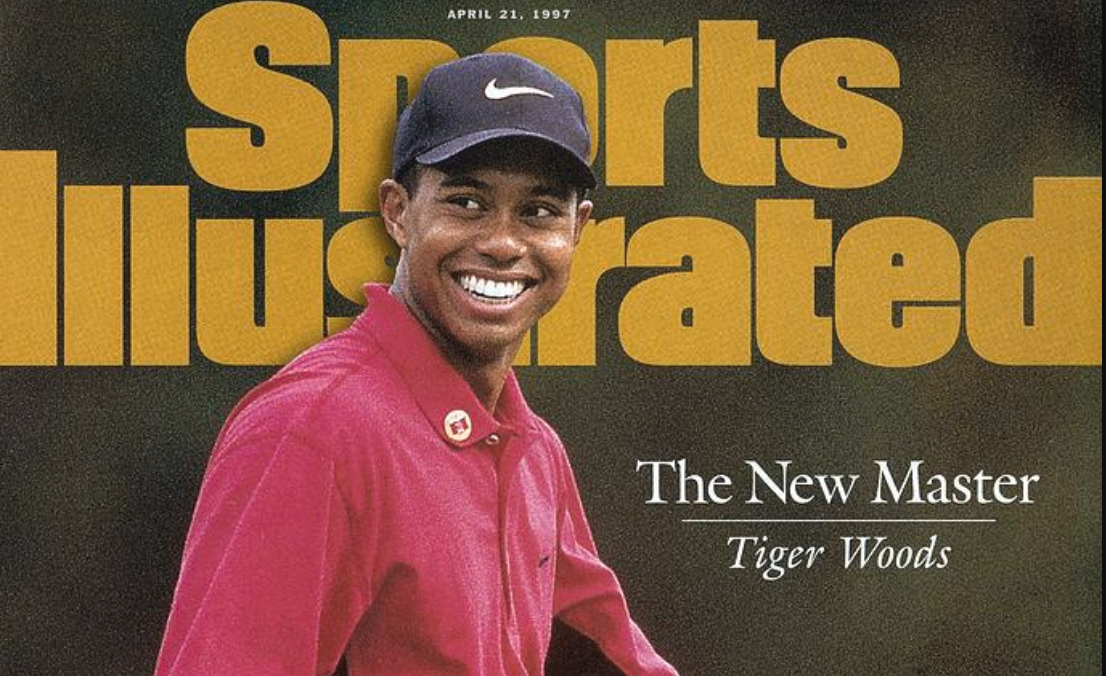
We explained: "Grandpa, that's Nike. He's getting paid $25 million to wear that checkmark."
But $25 million is nothing these days.
The Masters turns down an estimated $250 million per year in potential broadcast revenue. They cap commercial time at four minutes per hour. They sell pimento cheese sandwiches for $1.50 while everything else in America inflates. They do all of this because they can. And they can because, over the course of 90 years, they made a handful of opinionated decisions that compounded into something no amount of money can buy.
Today I want to talk about the Masters, the tournament that could have rivaled the Masters, and what our fledgling sport should learn from the mistakes of the past.
Augusta Wasn't Always Augusta
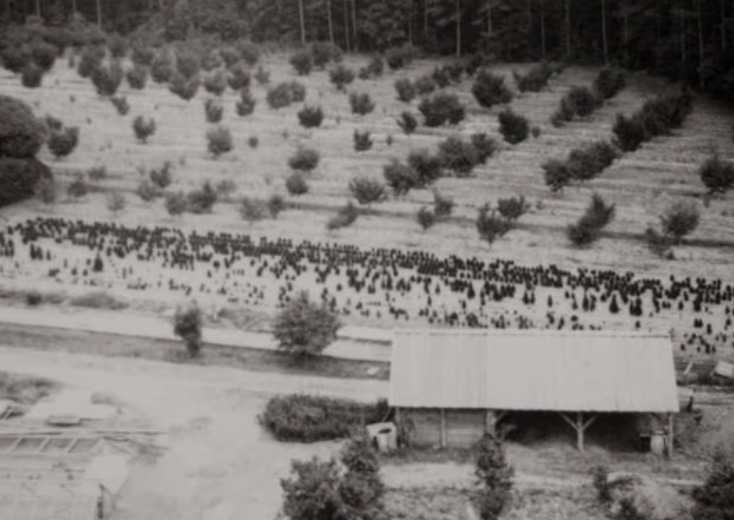
Here's the part they don't put in the montage.
In 1930, Bobby Jones and a Wall Street financier named Clifford Roberts bought a 365-acre commercial nursery in Georgia for $70,000. They wanted to build a golf club. No swimming pool. No tennis courts. Just golf. That's a deliberate choice about what this place is for, made before there was anything to protect.
The early years were a grind. In 1938, forty-two players accepted invitations. Club member Jerry Franklin was begging a local newspaper owner to buy a block of tickets. Walk-up admission was available at the gate on the day of each round, well into the 1950s.
Walk-up tickets. At Augusta. In the 1950s. Think about what you were competing with for entertainment at the time! A black-and-white newsreel? If you were lucky, a circus?
The Masters did not arrive fully formed. So what changed?
The Decisions That Compounded
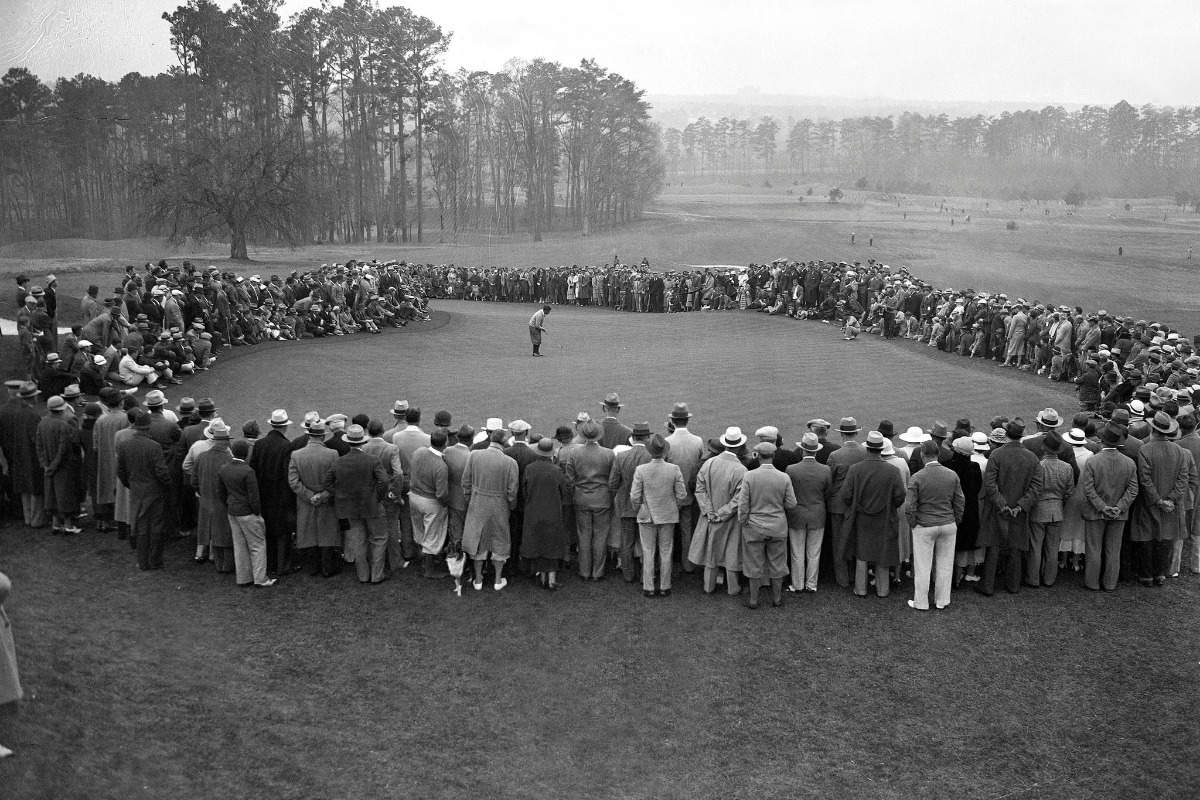
Some of what makes Augusta iconic was designed from day one. Some of it was inherited. And some of it was just smart enough to get out of the way when mythology showed up uninvited.
The course was a nursery, and they never let you forget it. Every hole is named after a tree or shrub found on that hole. Hole 13 is "Azalea." Hole 12 is "Golden Bell." Every time Jim Nantz says a hole name, he's reinforcing the identity of this specific piece of earth. The names aren't descriptive. They're mythological.
They call you a "patron," not a "fan." No cell phones. No running. No cheering when a player makes a mistake. Permanent ban for violations. That word, "patron," does serious work. You're not watching a show. You're participating in something that matters. Your presence is a privilege, and your behavior will reflect that.
The Green Jacket goes back. Champions keep it for one year, then return it to the club. To wear it again, you have to go back to Augusta. The most recognizable trophy in golf is tethered to a specific address in Georgia. No other major does anything like this.
The Champions Dinner pulls every living winner back. Started by Hogan in 1952. The defending champion picks the menu. Augusta becomes the place where golf's greatest players gather, voluntarily, every single year.
The bridges carry the legends' names. You don't just play the 12th hole. You cross the Hogan Bridge. The terrain itself tells you who walked here before you.
"Amen Corner" wasn't even Augusta's idea. Herbert Warren Wind coined it in a 1958 Sports Illustrated article. Augusta didn't name those holes. They just didn't push back. Roberts understood that CBS and Sports Illustrated weren't just distribution channels. They were myth-making partners. The most sophisticated branding move Augusta made was creating the conditions for mythology to grow, then protecting whatever grew.
Then Came Television
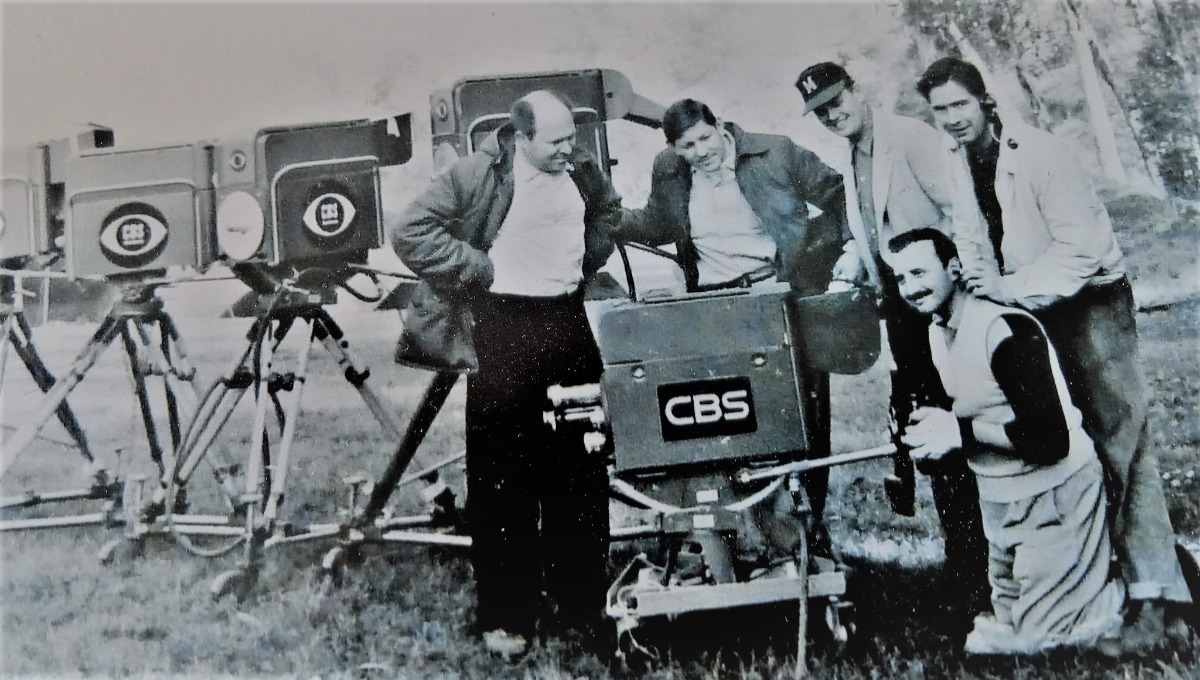
In 1956, the Masters became the first golf tournament ever televised, on CBS.
Roberts didn't just say yes to cameras. He controlled the terms. No mention of prize money on the broadcast. Announcers subject to Augusta's approval. Four minutes of commercials per hour. The club split production costs with CBS to make up for the shortfall in ad revenue!
Read that again. The tournament told the network what it could show, what it could say, and how many ads it could run. CBS said yes because the product was that good.
Augusta didn't just put golf on TV. It shaped how the world saw golf. The format and the broadcast were co-designed. Every golf broadcast since has been, consciously or not, measured against what CBS built at Augusta.
The Western Open: the tournament that had everything and lost it all
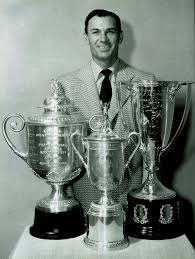
I said it once: the Masters wasn't always the Masters. The Western Open had every ingredient the Masters had. And it still ended up as a car commercial.
Founded in 1899 in Illinois, 35 years before the Masters existed. For most of its life, it was treated by players and press as if it were a major championship. Its winner's list reads like a Hall of Fame induction ceremony: Walter Hagen won it five times. Arnold Palmer, Jack Nicklaus, Tom Watson, Tiger Woods all won it.
In the 1930s, some newspapers ranked it alongside the U.S. Open, the British Open, and the PGA Championship as one of the top five events in the world.
The Western Open had the history. The champions. The prestige. The prize money.
Then, the people in charge made a series of perfectly reasonable decisions that, one by one, dissolved everything.
It never locked down a home. The Western Open was played across 16 different states through 1961. While Augusta was compounding their mythology at one address for three decades, the Western Open was a traveling show with no return address.
Arnold Palmer left it off the list. In 1960, Palmer publicly declared four tournaments as "the majors": the Masters, the U.S. Open, the British Open, and the PGA Championship.
This wasn't an official act by any governing body. It was one charismatic player, at the exact moment television was turning golf into a mass-market product, making a declaration that stuck. Palmer had won the Western Open twice. Didn't matter. The Western Open couldn't recover from being left off that list.
Then came the title sponsors. In 1987, Beatrice Foods became the first title sponsor. The purse hit $1 million. Easy to read as growth. It was the beginning of the end. That same year, the Masters was refusing sponsorship money and paying for its own broadcast production. Same year. Opposite choices.
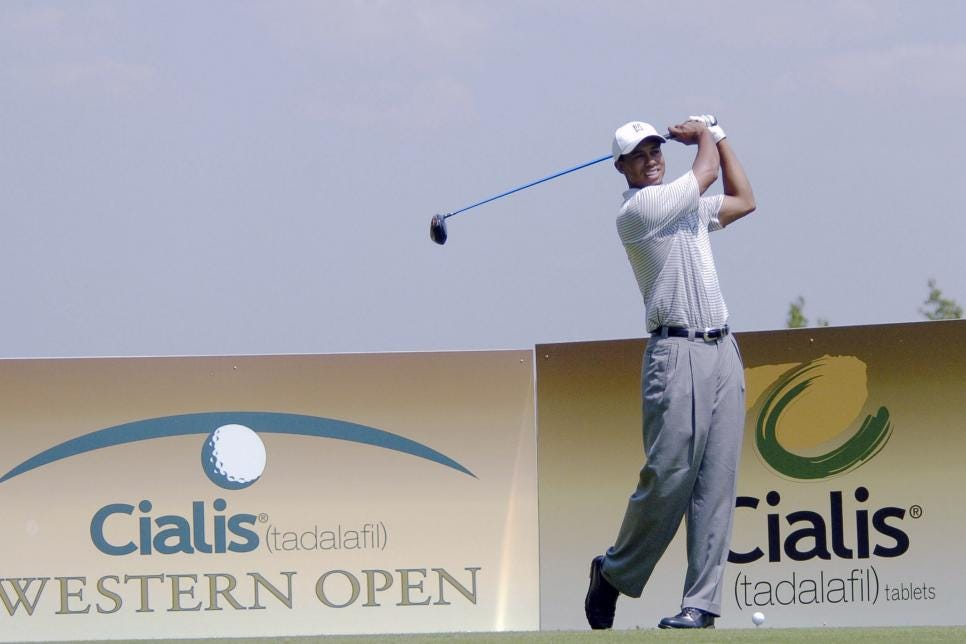
After Beatrice came the carousel: Centel, Sprint, Motorola, Advil, Golf Digest, and then Cialis.
Yes, Cialis. I couldn't make this up if I tried. What's a greater signal of organizational impotence than being sponsored by an impotence medication? That's the equivalent of speedgolf being sponsored by a golf cart company. ("The EZ-GO Speedgolf World Championships" has a nice ring to it, doesn't it?)
Sponsors bought the name. None of them bought the identity. By the end, nobody knew what the Western Open stood for except a different corporate logo every three years.
In 2007, it disappeared entirely. The Western Open was absorbed into the FedEx Cup playoff structure and renamed the BMW Championship. A 108-year-old tournament, with a winners list that would make any major jealous, dissolved. The name vanished. The identity vanished with it.
You could argue that the Western Open died because it couldn't keep up financially. But money doesn't explain the gap. In 2006, the last Western Open paid $900,000 to the winner; the Masters paid ~$1.2 million. Not that far apart. But one was the capstone event of the sport, and the other was about to be renamed after a German car company.
Prize money didn't kill the Western Open. A thousand small surrenders of identity did.
Where Is Speedgolf Right Now?
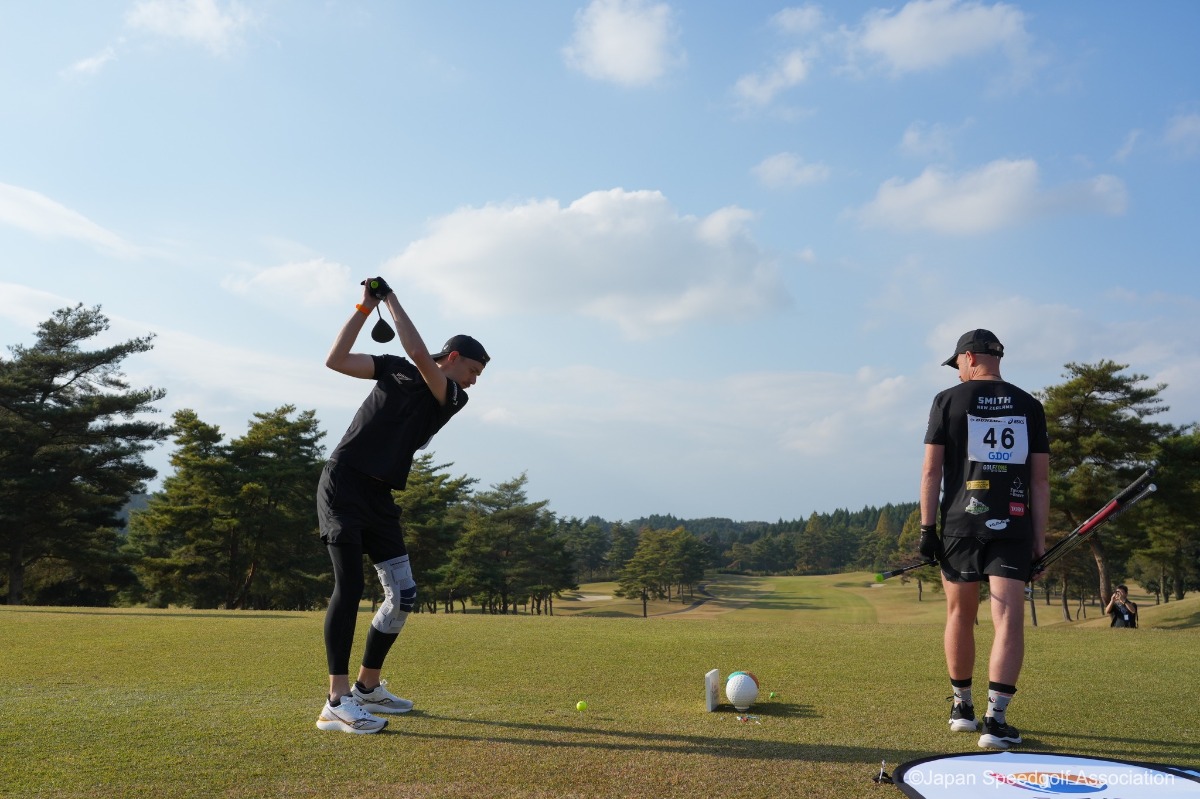
With that little golf history lesson out of the way, it's time for some real talk.
In 2013, the Speedgolf World Championships were held at Bandon Dunes. Big venue. Serious intent. A $50,000 prize purse. It felt like a moment. The sport was ready to take off.
It didn't. Prize purses shrank. The World Championships moved to every two years. The most recent Worlds in Japan had no live coverage and has amassed a grand total of 2,300 views in 11 months.

I'd put speedgolf somewhere between 1934 and 1951 on the Masters timeline. The sport is real. The community is real. The talent is world-class. But the snapshot is less important than the trajectory. The Masters in any given early year was small. But it was always getting incrementally less small.
The question for speedgolf isn't just "where are we?" but "which direction is the line moving?"
Bandon Dunes 2013 might be our Gene Sarazen moment. Sarazen's double eagle in 1935 is the shot that Roberts later said "put the Masters in business." But attendance actually fell the next two years. A galvanizing moment that generated excitement without the infrastructure to compound it. Sound familiar?
Here's what keeps me up at night: speedgolf, right now, has more in common with the Western Open than with the Masters.
No permanent venue. Willing to sell naming rights to the World Championship. No consensus on the canonical format. And a media identity that was, for a few years, dependent on one guy in his basement making YouTube videos. When that guy burned out and stopped, nothing filled the vacuum.
That guy was me. I'm not saying that to be self-important. I'm saying it because it reveals the diagnosis. The Masters would have survived without Frank Chirkinian, the CBS producer who invented modern golf broadcasting. It would've survived without Jim Nantz too.
Speedgolf's broadcast identity didn't survive one guy needing a break. That's not a motivation problem. That's an infrastructure problem.
The format problem... is a problem
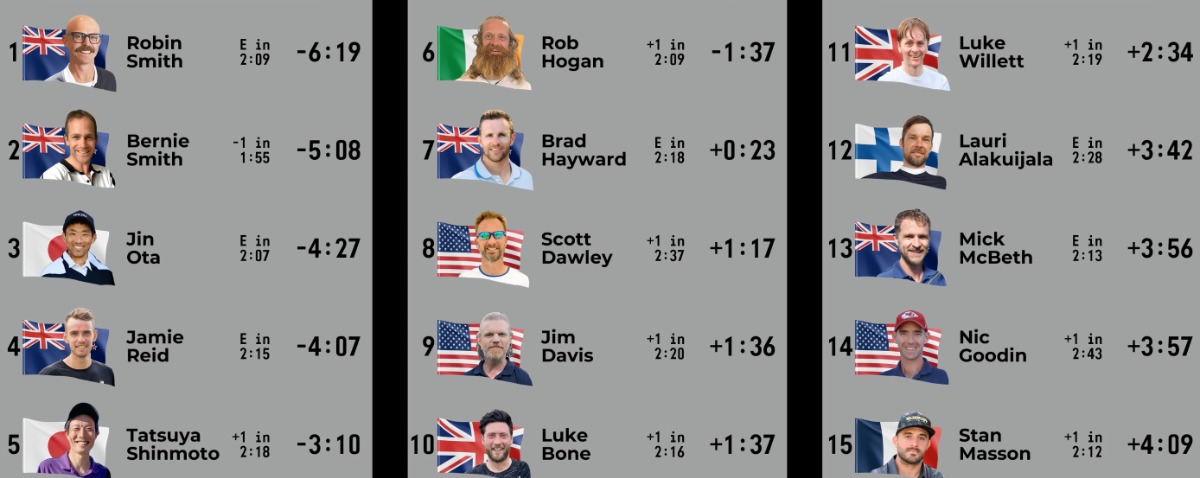
Our default championship format is 36-hole stroke play (strokes plus minutes). Scott Dawley and the ISGA support this format, and they're right that it's the purest test of a speedgolfer's skill. Stroke play leaves no room for error or luck.
It is also, in my opinion, a snooze fest for broadcast purposes.
Can you imagine Jim Nantz leaning into the microphone: "Another par for Robin Smith. Now Carl Palmberg has just 7 holes to make up 46 seconds..." I'm falling asleep just writing that.
Rob Hogan is pushing for Irish-style scoring, where your time is your time, and then you get a minute subtracted for a birdie or a minute added for double bogey or worse. That's easier to communicate to a viewer. But I still don't think it solves the fundamental problem of making speedgolf watchable for someone who doesn't already care.
Long time readers know: I think the only format that televises is head-to-head match play. Two players. Same hole. Birdie beats par. If both make par, fastest to the hole wins. Easy to understand. Plenty of room for trash talk.
But here's the point. It doesn't matter which of us is right. What matters is that the sport's own insiders can't agree on what the canonical format is. If the cameras showed up tomorrow, we wouldn't know what to point them at.
Roberts decided what the Masters was before the world got to define it. We haven't done that yet. And until we do, the broadcast question, the sponsorship question, the growth question all remain unanswerable.
This is the Roberts lesson that matters most. Augusta didn't just put an existing tournament on TV. They shaped the tournament for television. They co-designed the format and the broadcast. Speedgolf hasn't done that. And if we don't start thinking about what the sport looks like as a media product, we are digging our own graves in terms of global attention.
Enjoying This Week in Speedgolf? Why not send it to a friend? Spread the love!
Six decisions we need to make before it's too late
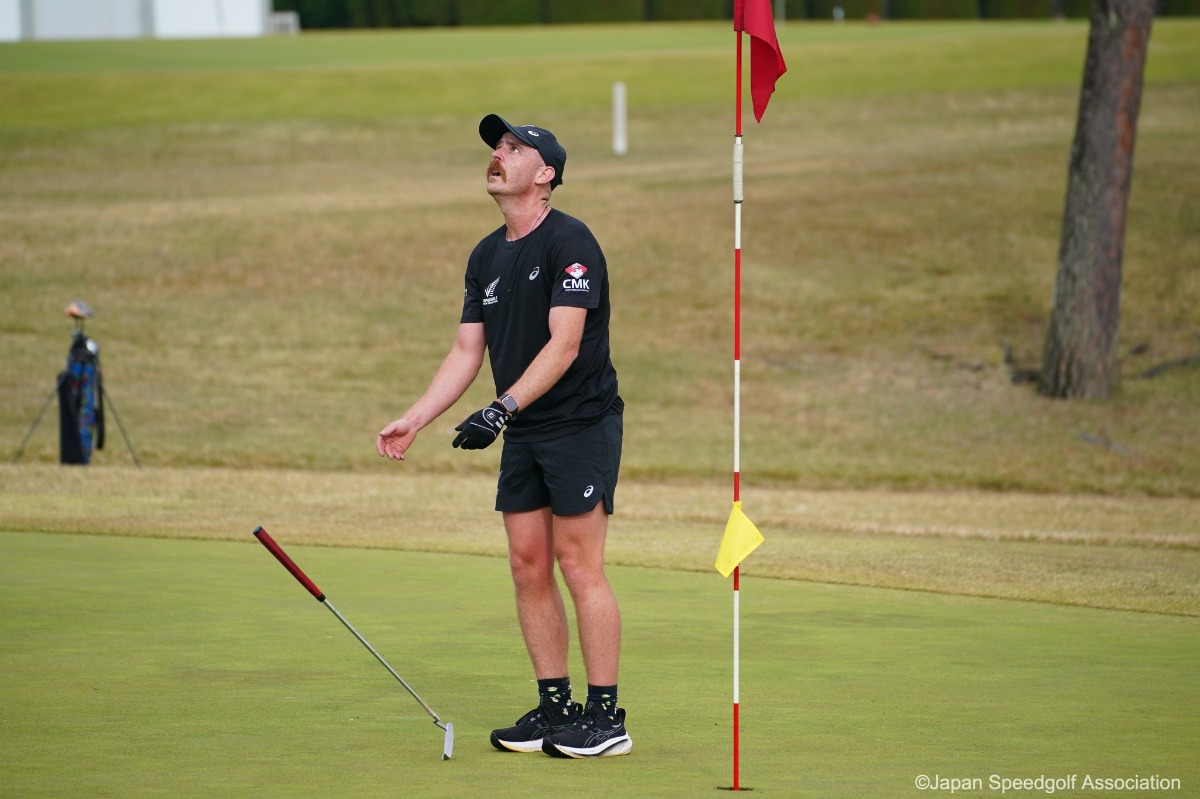
The difference between the Masters and the Western Open wasn't talent or history or prize money. It was a small number of opinionated decisions made early, before there was leverage to protect them. Here are six.
1. Pick a format and defend it.
Resolve the format question. Not in a committee. Not by consensus. Someone with credibility needs to pick the format that best serves the audience, plant a flag, and defend it. Roberts didn't ask golfers what they wanted on television. He told CBS what the Masters was. We need the same energy.
2. Name a venue.
Not for everything. Not permanently. But one event needs to be treated like Augusta. Same course, every year, no rotation, no negotiation. A place that starts doing mythological work.
The World Championships rotate like the Olympics, and that makes sense for a global sport. But the Olympics can absorb the identity cost of changing cities because the brand is overwhelming. Speedgolf's brand isn't there yet.
There are candidates. GlenOaks in Kentucky has the closest look and feel to the Masters of any speedgolf tournament I've attended. Fitzroy in New Zealand is the spiritual home of the sport's most successful nation. The 700 Club in Japan is beautiful and has great history. Which one could be Augusta?
Someone needs to answer that question and commit to the answer.
3. Protect the championship name.
I understand that the 2026 World Championships may carry a title sponsor. I get it. The sport needs money, and organizers would do almost anything to get a sponsor. I respect the hustle. But this is the Beatrice Foods moment. This is 1987 for the Western Open.
You sell the name once and it gets easier to sell it again. Today it's the TORO™️ Speedgolf World Championships. Then it's the Walmart Speedgolf World Championships, then one day it's DraftKings Speedgolf World Championships (exclusively on Peacock), and then nobody remembers what it was called before the logos showed up.
The Masters has never had a title sponsor. They leave $250 million on the table every year to protect the product. I'm not saying speedgolf should turn down money. I'm saying the name of the World Championship should not be for sale. Find another way.
4. Build an artifact.
The title of World Champion is meaningful inside our community. But it resets every cycle. It gets superseded. Rob Hogan can be the most famous speedgolfer alive without ever returning to Bandon Dunes or the 700 Club.
The Green Jacket doesn't reset. It lives at Augusta. It pulls champions back. To wear it, you have to return.
Speedgolf needs something that doesn't reset. An object tethered to a place. A tradition that creates ongoing obligation between the champion and the institution. The record books aren't enough. We need something you can hold in your hands.
5. Someone needs to make the Palmer declaration.
Arnold Palmer naming the four majors wasn't an official act. It was one credible voice making a public statement that stuck. Who in speedgolf has the credibility to define what this sport is and who it's for?
Here's the declaration I'd make if anyone's listening: speedgolf is the sport for people who love golf, love running, and are starving for an experience that can't be replicated on a screen.
In a world where nearly 100% of knowledge work happens behind glass, there is a growing hunger for outdoor experiences with good friends where you break a sweat. Speedgolf is a natural counterweight to the always-online life. That's a powerful identity. Nobody has claimed it yet.
6. Build the media architecture.
Not "post more content."
Not "someone should make videos."
A structural answer to the question: who owns the broadcast identity of the sport, and what does that look like when any single person steps away?
When I was making tournament broadcast videos on YouTube, I was the de facto media infrastructure for speedgolf in the U.S. When I burned out and stopped, there was nothing. No institution picked it up. No organization had a plan. The sport's media identity collapsed because it was never built to survive one person's bad couple of months.
The Masters would survive without any single producer, any single announcer, any single writer. That's not because Augusta is rich. It's because Roberts built the media relationship as an institutional asset, not a personal one.
Speedgolf needs to do the same, and it needs to start now, before the next person with a camera and goodwill burns out too.
The Fork

Speedgolf doesn't need to win the attention war that Grant Horvat and the YouTube golf guys are fighting. That's a fight for passive viewers, and honestly, the production quality those guys achieve with tight turnarounds is staggering. We're not going to out-content them.
But we don't need to. The Masters didn't need mass viewership to become the Masters. It needed the right people watching.
The tailwinds are real. The talent is world-class. The community has something that money can't manufacture: people who genuinely love this thing and keep showing up. New Zealand speedgolf is humming. The World Championships this year in New Zealand could be a genuine inflection point.
But the Western Open had great players too. It had history. It had prestige. It had prize money. And it made a series of perfectly reasonable decisions, each of which made sense in isolation, that collectively turned a 108-year-old institution into a footnote.
The path to becoming the Masters is right there. It requires a few opinionated decisions, made now, before there's leverage to protect them. The path to becoming the Western Open is also right there. It requires nothing. Just keep doing what we're doing.
The fork isn't labeled. It never is.
---
Upcoming speedgolf
Looking for tournaments? Looking for casual speedgolf? Speedgolf Directory is where you find them.
---
Thanks for reading
Hit 'Reply' and tell me what you think. I read every reply.
Adam
---
Adam Lorton
📆 Find your next event → https://speedgolfdirectory.com
👕 Buy Merch → https://speedgolf.baby/store
🍎 Subscribe → https://youtube.com/@SpeedgolfBaby
❤️ Follow → https://www.instagram.com/speedgolf.baby
⛳ Grow the game → https://playspeedgolf.com
0 comments