
Hey 💜
Can you believe we’ve been sharing, learning, and raising awareness for 29 days? As we near the end of Lupus Awareness Month, I want to thank you for walking this path with me. It has been deeply empowering to reflect, research, and reconnect with the reasons behind my passion for this cause.
Over the past two days, we explored Systemic Lupus Erythematosus (SLE) and Cutaneous Lupus Erythematosus (CLE). Today, we’re covering another important form: Drug-Induced Lupus (DIL).
What Is Drug-Induced Lupus (DIL)?

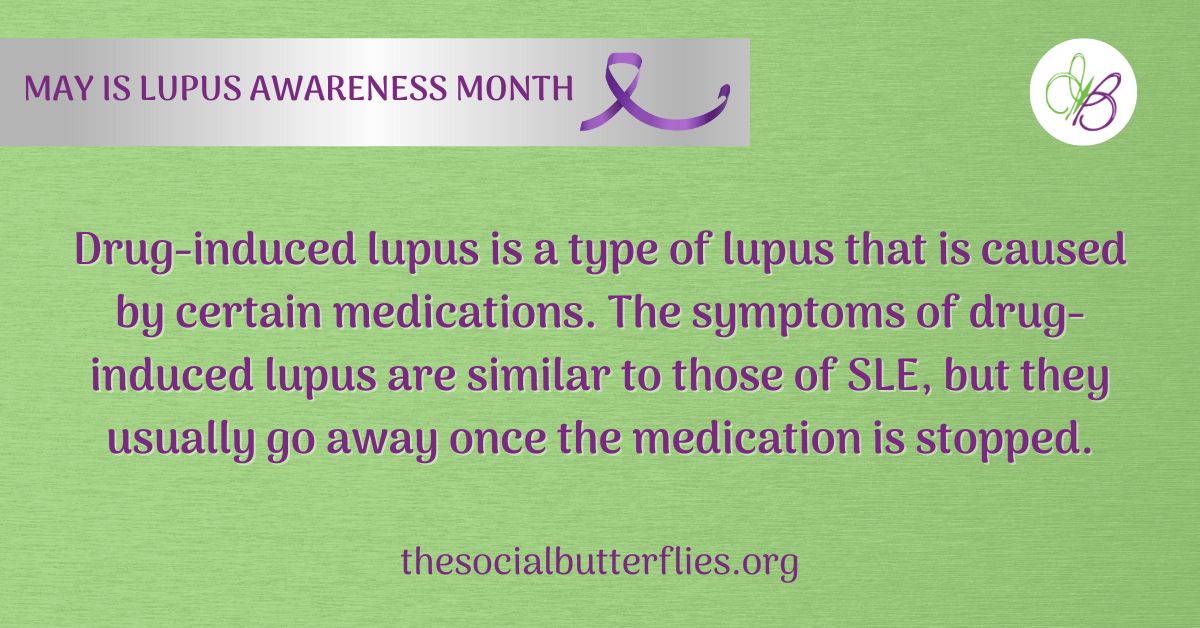
Drug-induced lupus is a lupus-like condition triggered by certain medications. While it shares many similarities with SLE, DIL is temporary and often resolves once the medication is stopped. It’s important because symptoms can mimic SLE, and a proper diagnosis is crucial for receiving the right treatment.

Similarities Between DIL and SLE:
- Both conditions can cause joint pain, muscle aches, fatigue, fever, and inflammation.
- Some laboratory findings, such as positive ANA (antinuclear antibodies), may be present in both.
Key Differences:
- DIL usually comes on after months or even years of taking a medication.
- Symptoms tend to be milder and less likely to involve organs like the kidneys or brain.
- Stopping the triggering medication often leads to full recovery.
How Do Doctors Diagnose DIL?

Diagnosing DIL can be tricky since symptoms overlap with SLE. Doctors typically look at:
- Medical history, especially long-term medication use
- Blood tests to identify autoantibodies (e.g., antihistone antibodies)
- Whether symptoms improve after stopping the medication
This is where understanding the cause makes a significant difference, so let’s discuss medications.
Common Medications That May Cause DIL

Doctors have identified several medications that can trigger Drug-Induced Lupus. Not everyone who takes these drugs will develop DIL, but they’re linked to a higher risk.
- Hydralazine: A medication used to treat high blood pressure. It’s believed to trigger lupus-like symptoms by affecting immune function in genetically susceptible individuals.
- Procainamide: Used to treat heart rhythm problems. This drug may alter how the immune system recognizes the body’s own tissues.
- Isoniazid: An antibiotic used for tuberculosis. It’s thought to interfere with enzymes that regulate the immune system.
- Anti-TNF Agents (like infliximab, etanercept, adalimumab): These medications are used to treat autoimmune conditions like rheumatoid arthritis. They block a substance called tumor necrosis factor (TNF), which helps control inflammation. While helpful, altering the immune response in this way may sometimes trigger lupus-like reactions.
Education is powerful, and so is action.
We’ve raised $3,072.55 so far—just under $2,000 left to meet our $5,000 goal. Let’s finish strong!
This is why raising funds for lupus research and advocacy means so much. Learning about conditions like DIL empowers patients to ask more informed questions and make better decisions. Your support—whether through reading, sharing, or donating—helps create hope and better outcomes.
👉🏽 You can still donate or share the campaign here: https://linke.to/2025lupuswalk
Thank you for your continued presence, your support, and your heart.
xoxo,
Jowanna
📌 Instagram: @socialbutterfliesforcauses
📌 Facebook: Social Butterflies for Causes
0 comments