
Friends,
Welcome to the new year! I know, it's been 2569 for over a month, but the last newsletter I sent out was at winter solstice, and... I think like a lot of us I'm only now emerging from the tumult of the holiday season / overwhelming frightening news / ordinary busyness / plus I got sick for a bit. So here we are in February. The lunar new year (of the Yang Fire Horse) is 10 days away, so I'm comforted by the narrative that we're still just approaching the end of the year, and the global temporal personality is still in the waning and settling phase before something new arises.
There is so much going on, it's hard to know where to start. But I can start with the gratitude that although I know how much is happening in communities I care about all over the world, including of course over this past month in Minnesota, my immediate world is well. My family, local and Dhamma communities, and the expansive forest and river ecosystem I'm blessed to live immersed in—I can feel in all these rings of my being a coherence and settledness that is sometimes a stark contrast to the news of the greater world, and very often a profound refuge from it.
But yeah, the news can feel overwhelming. I think this is a very specific form of dukkha—suffering, but we could also extend Marx's word "alienation" to encompass this—unique to our technological moment. How should I understand the teaching that suffering arises conditioned by wanting things to be other than they are, when I have access to specific stories of horror and misery all over the globe—a well of potential distress that is functionally bottomless?
When the Buddha talked about understanding the painful things of this world that are inevitable without giving into delusion and grasping, he specifically named birth, aging, sickness, and death, getting what we didn't want, loss of what we love, and not getting what we want (SN 56.11). It's all framed in the register of the personal, or at most familial—loss of loved ones, for instance. Dukkha is not framed in the early discourses around being distressed that there is corruption, violence, and misery out there in the larger world. When the Buddha mentions things like this it's in the context of recognizing the evils of war, crime, and injustice, but when he talks about those he mostly talks about how they are wrong, and how rulers should avoid them. He doesn't talk about ordinary practitioners suffering simply because those things exist. Generalized compassion for all beings is there, but as an impersonal exalted state, not a specific antidote to the suffering of knowing that it's dreadful out there for folks we barely know.
So we have this very particular technological situation that gives rise to a very specific kind of dukkha. We can think of this as "clairvoyance without equanimity." The Buddha was supposedly clairvoyant—he could see what was happening for people far away from him. Presumably this means he could, if he chose to, eavesdrop on the Greco-Persian Wars (499-479 BCE), or the wars of the end of the Spring and Autumn Period in China (770-481 BCE), or the wars surrounding the coalescing of the early Zapotec empire (starting ~700 BCE) in what's now Oaxaca. He could have seen people fighting and dying all over the world, as is always the case, not just in historically-recorded wars but in famine, sickness, and everything else.
We never hear reports of him doing this, and we never hear reports of him talking about specific cultures beyond South Asia, which he called Jambudvīpa, Rose Apple Island, though he does describe and occasionally visit the immaterial realms: heavens, hells, etc. But let's say for the sake of argument that he could see what was happening globally if he wanted to. He has access to evidence of terrible pain and violence happening nearly everywhere, but it doesn't overwhelm him. He has equanimity and wisdom, and understands that it is the nature of greed, hatred, and delusion to manifest as violence, cruelty, and injustice whenever they are not uprooted through insight. So whatever he sees with his cosmic vision, including in the hell and ghost realms, he holds in compassion with a heart free from clinging.
I have nowhere near his amount of equanimity or wisdom. But I do have something like clairvoyance, outsourced to the powerful collective mind we call the Internet. The detail I can know about the specific suffering of a five-year-old in ICE custody, or the trafficking of young girls thousands of miles from me, or Ukrainians suffering through a deadly winter attack, or people starving on a beach in Gaza, or countless other examples, is heart-rending, but also overwhelming. How do I practice with this much terrible information?
There is a famous paper by utilitarian ethicist Peter Singer, "Famine, Affluence, and Morality" (1971), that compares the moral obligation we would feel to save the life of a child drowning in a pond next to us to the moral obligation we should feel toward people dying of famine on the other side of the world. He argues that proximity doesn't matter in the moral equation, nor the possibility that other people might step into help instead of us. He understands that in a situation when we are aware of a kind of deadly suffering we have the power to ease, we have a moral obligation to do so. What happens to this argument when my awareness of the deadly suffering being currently experienced compounds to this point? The more powerful the media I have access to, the more suffering I can be aware of. This can compound my moral responsibility to the point of overwhelm and collapse.
This is part of the practice challenge we face when we relate to global news alerting us to the countless horrors happening out there. But the calculus is nowhere near as linear as Singer makes it out to be. He is essentially right that we should feel a moral obligation to act in service of the reduction of others' suffering. But what if we're aware of so much more suffering than before, AND we have a modicum of insight into the conditions that give rise to this suffering, namely greed, hatred, and delusion, which the Buddha tells us—because he saw this with his clairvoyance—have no perceivable beginning. So famine, war, and political violence aren't crises per say—temporary bad things that happen periodically but can be ended. They're the very fabric of existence. They are saṃsāra, the wandering.
So our technological clairvoyance tells us now in greater detail than ever before how pervasive the effects of greed, hatred, and delusion are in our world. And our insight or confidence in the Buddha's vision tells us that these are not aberrations in a world that is fundamentally good but the very nature of a world that is always a mixture of good and bad. Our challenge then becomes not just convincing ourselves to offer some of what we have in service of harm reduction, but figuring out how to live with the nervous system (but you could also say soul) impact of being reminded every day how little security, ease, and protection there is anywhere in the world.
The challenge the Dhamma sets us is to figure out how to be well in a world that is profoundly unwell, and which will always be profoundly unwell no matter how much money and time we pour into harm reduction. Paradoxically, us being well as we engage with the world is the only way to be effective in our engagement for more than a few minutes. If we want to continue the work of harm reduction—and I think we must, for our own integrity as much as for the well-being of others—we have to embody at least some of the Buddha's equanimity and wisdom. Our path must be to stabilize our hearts as much, and as quickly, as we can while the world shakes and burns all around us. While we do this—because we can't wait till after—we do whatever we can in our power to organize, respond, resist, and help those we can help.
There's always a balance between engagement and renunciation, and it's the renunciate side that protects us from overwhelm and despair. If tracking the news contributes to your overwhelm, know that you can take a break from it without needing to feel guilty that you are abandoning those who are suffering today. Just as it's wise for activists to focus on one core issue and trust that others are focusing on other issues, it is equally wise for each of us to focus on our own specialization in the world—including seemingly non-engaged specializations like meditation, listening to trees, playing with children—and trust that others are maintaining the resistance. This is not the deluded relying-on-others-to-solve-the-problem that Singer correctly deconstructs as a kind of delusion, this is more like a V of geese migrating, taking turns leading and following, drafting on each other's momentum, and each swinging into the lead when it is their turn, and when they can.
Rest into the unfathomable complexity of the conditioned world. It is not ours to control, to master, or to save. It is ours to inhabit, and to love, and the more ease and wisdom we can bring to our inner life in this world, the better it goes for everyone out there.
With mettā,
Sean
- Lots of talks & meditations here. We started the year going back to the basics of the Buddha's first teaching, so you'll see here the reflections from Solstice and the new year through the start of our look at the Middle Way and Four Noble Truths. All talks are on the website and YT channel.
- The teaching schedule is updated, with guest talks and the April Queer Mettā Retreat with the GBF now listed.
Satsang, Tue 12.16.25
Reflections as we approach winter solstice. I talk about ecosystem cycles, colonial trauma, Celtic practice, and a way to understand the Buddha as seeking a lost indigeneity and how we might bring a resistance to consumer urban culture into our practice.
Meditation: Arising & Passing Breath
Talk: Solstice, Animism, Remembering Indigeneity
Satsang, Tue 12.23.25
What do we have or grow faith in as we develop the path? What does it really mean to feel the refuges of Buddha, Dhamma, and Sangha. Some reflections on faith and the Triple Gem as we near the end of the year.
Meditation: Qualities of the Triple Gem
Talk: Faith, the Triple Gem, Refuge
Satsang, Tue 12.30.25
A mini talk on the Middle Way as we enter 2026 / 2569. (Mostly we did a Sangha council this evening, so not much of a talk.)
Meditation: Awareness of Things Passing
Talk: Starting the New Year With the Middle Way
Satsang, Tue 1.6.26
Starting off Buddhist year 2569, I tell some of the story of the Buddha's search, looking at his rose-apple tree intuition of the Middle Way between the sensual indulgence of his wealthy upbringing and the bodily mortification of his ascetic years. Told the story of Sujātā and her offering that opened the Middle Way, how it involved an ancient river spirit in the form of a nāga king, forest and grass spirits, and all the beings who were part of Gotama finding the way.
Meditation: Mindfulness of the Body
Talk: Gotama Intuits the Middle Way
Satsang, Tue 1.13.26
We continue looking at the Middle Way, focusing on our relationship to comfort, and how we can understand craving in a culture so deeply addicted to comfort and the avoidance of discomfort.
Meditation: Sitting in the Middle Way
Talk: The Middle Way is the Entire Dhamma
Satsang, Tue 1.20.26
Reflections on the first two Noble Truths as expressions of the Middle Way. Talked about the pervasiveness of comfort and fear of discomfort, especially in consumer-centered post-industrial societies, and how this can warp our ability to understand dukkha (suffering, pain, dissatisfaction), making it seem entirely psychological rather than an intervention into every moment of our sensory life.
Talk: The Noble Truths as the Middle Way
Satsang, Tue 1.27.26
A short talk on bringing the wisdom of our practice to the moment we're in, grieving the murders of Renee Good and Alex Pretti in Minneapolis.
Meditation: Feel, Relax, Feel—Body Scan
Talk: Reflections in a Moment of Collective Calamity
Upcoming Teaching
- Feb 22, 10:30am, Sunday Meditation & Talk, Gay Buddhist Fellowship
- Feb 25, 6pm, Wednesday Meditation & Talk, Rick Hanson's Group
All Is Full of Love: Mettā, Healing, and Inner Joy
Spring Retreat, Vajrapani Institute, April 15-19, 2026
with the SF Gay Buddhist Fellowship
Welcoming queer folk of all genders.
Mettā (lovingkindness) practice transforms our relationship with ourselves and the world around us. Through the cultivation of lovingkindness, the heart learns to soften where it has been most defended, to meet all experience with tenderness, and that the wish for our own and others’ happiness becomes a doorway to both healing and deep joy. This retreat offers dedicated time to explore mettā as both a gentle refuge and a radical practice of opening to what is always already true.
In this five day (four night) predominantly silent mettā retreat we will sit and walk in meditation together, chant, eat, and be in connection with nature and each other. The emphasis will be on deepening our practice of mettā, both as the basis of concentration and as a healing for the heart and spirit. We will practice wise action in relationship—with ourselves, each other, our community, and the wider world.
This year, we invite GBF members, friends, and queer Sangha of all genders to join us. Held at the beautiful forest temple of Vajrapani Institute, we will work with classical mettā meditation practices in stillness, walking, gentle Yoga, eating, and throughout the activities of the day. With significant time for questions and Dharma discussion, the retreat aims to support both beginners and experienced students to deepen their practice within a supportive spiritual community.
Join us in spiritual friendship.
We need community, and safe spaces for spiritual practice, now more than ever if we are to find strength and wisdom to act in service of collective well-being. In an age of dislocation, isolation, and overwhelm, coming together with sincere practitioners and seekers of true peace may be one of the most radical things we can do.
Our saṅgha—spiritual community—is an ongoing group of practitioners from around the world who gather weekly on Tuesday nights and monthly for a Friday morning book club.
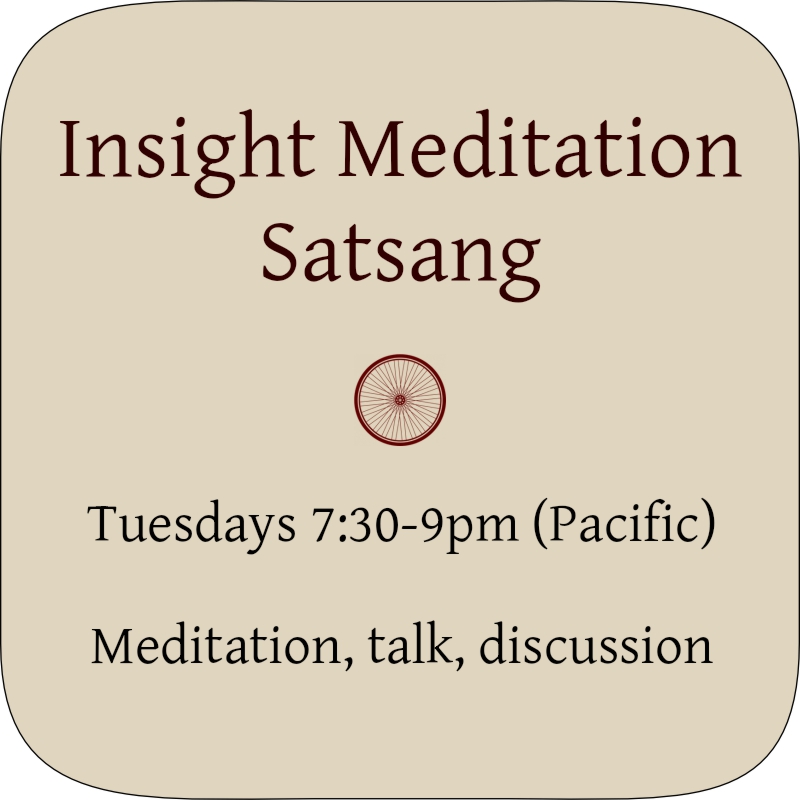
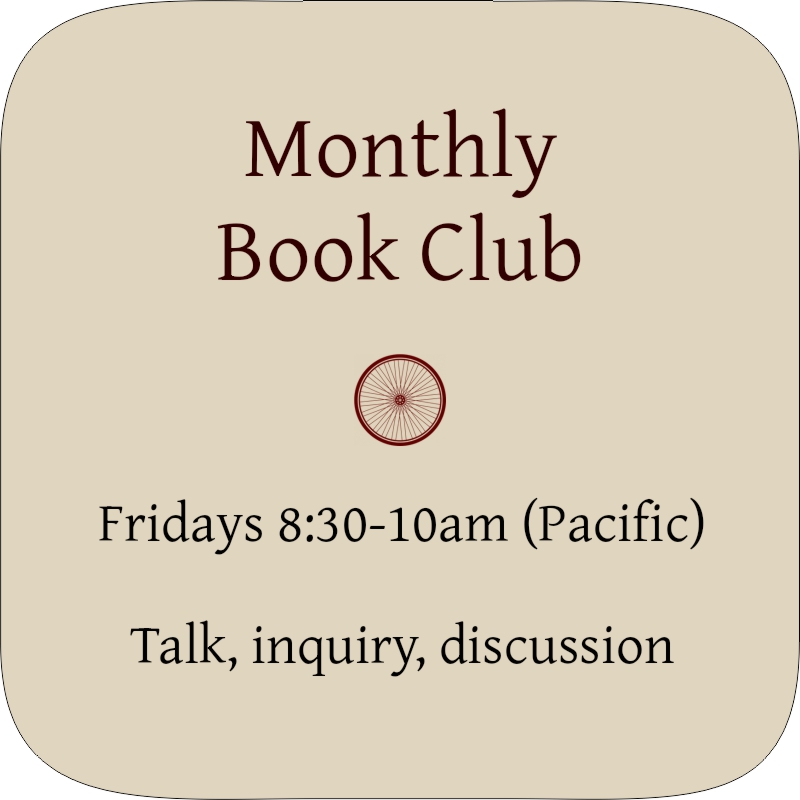
All are welcome, and we offer Saṅgha access always on Gift Economy (dāna), with accessibility and inclusivity our core commitment.
Enjoy a Free Meditation Course
Setting Out on the Path: 30 Days to Begin or Renew Your Practice aims to get you back on the cushion in a way that’s pleasurable, sustainable, and nourishing for your path.
0 comments