
Tonight at Satsang, June 9
It's Not Your Fault (Or Is It?)
Formal equanimity practice hinges on the teaching of kamma, which means action, but more precisely "action that has ethical weight and has an impact for the doer." This is why the phrase emphasizes how we are the owners of our own actions and that our actions are what we inherit, or carry forward through time. We do have agency—we make choices, and we form intentions to act differently than our impulses and reactivity try to demand of us.
At the same time, our choices are conditioned, arising out of the available material of the past, other people's actions, the environment, and all the choices we've made up to this point. The thing that makes this not terman ism is that conditions are not causes. If the past were a cause, our choices would be caused by what has already happened, inevitable, not malleable. Because the past is only a condition, there is this strange gap where we can resist the momentum of conditions and do something new.
The heart of wise effort in all its forms is learning to resist conditions and impulses that might lead us into habitual bad choices, coming up with actions that are not our nervous system's first choice. Understood in this way, the entirety of our practice is a kind of renunciation. Moment by moment we resist impulses that we know don't lead to peace, and by acting on wiser intentions, create the possibility that future better conditions will make future choices easier. To whatever degree you've managed to make a habit of kindness, focus, wise choices around eating, speaking, thinking, and all the rest, you can know that your practice is growing stronger.
Tonight we'll look at the teachings on kamma, and what they suggest for how we think about our own agency, choices, and intentions.
Coming Out of Freeze & Erotic Contact With the World
Excerpt From Satsang, May 26, 2026
So many of us come into our adult life wounded in so many ways by the world, by our families, by all of the conditions that affect us, that we have to first come out of freeze before we can do further spiritual work.
One of the reasons why compassion and joy can be challenging is that there's overwhelm or freeze in the nervous system. I see the world and it's too much—endless moments of pleasure and pain, day after day. I sense pleasure and I fall into lust, fantasy, craving, wanting, greed. I sense the painful and I fall into fear, hatred, anger, ill will. These reactivities are difficult to bear.
The nervous system's response, when it can't really bear those reactions in itself, is to go into freeze. To shut down, to become numb to the world. For so long I wanted something I couldn't have, and I just shut down. Often this happens very early in childhood. Or I feared something I couldn't escape from, so I shut down.
We come to spiritual practice seeking meaning, but also seeking aliveness. And before we can find peace, we have to come into healthy responsivity, which is really healthy activation. I have to come out of freeze, which means I have to come through the painful not-getting-what-I-wanted that landed me there. I have to process fear and anger, process lust and wanting. Only when I do will I be able to contact the world in its full eros. And we have to come into a kind of wild, erotic contact with the world if we want to be free in relation to it. I mean that not sexually, but as a sensate intimacy with how intense the world is. We become more porous, more sensitive, more vital as we come into contact with both its terrors and its delights.
I know that freeze has begun to melt when I can actually feel the beautiful and the ugly hit me in a certain way. If you're not really susceptible to beauty, there's work to do. You can't go right to equanimity. You have to feel more, because there's going to be freeze in the system. I have to unfreeze, come into mobility, feel more, not less. And then from feeling, we work through the afflicted feelings until we feel safer in the presence of both the pleasurable and the painful. Only then, in the presence of the pleasurable and the painful, we won't habitually obsess about them. It's just pleasure. Just pain. Not a problem.
Meditation: Equanimity in the Body
Talk: Equanimity ≠ Balance: Eros, Responsivity, and Deep Aliveness
Upcoming at the Book Club
The Verses of the Elder Nuns (Therīgāthā)
Next session: June 26, 8:30-10am PT
The new Book Club series is focusing on the verses and stories of the Elder Nuns, the Therīgāthā, using Susan Murcott's beautiful book First Buddhist Women alongside the Sutta Central translations. Murcott is a wonderful feminist scholar and translator, and we're reading her stories and commentary alongside the verses themselves, and some relevant other discourses about the first bhikkhunīs.
The book club is included in Saṅgha membership and it's a lovely, smaller gathering. The reading is usually light, and no worries if you don't get to it. We do a short meditation, I talk through a text, and we have time for discussion and sharing. All Saṅgha members are welcome at the book club, and dropping in is fine.
This month's reading is about ascetic women in the early Saṅgha, starting with Bhadda Kundalakesa, who defeated all comers in Dharma debate, and was ordained by the Buddha with the rare direct ordination, "Come, Bhadda."
Join us in spiritual friendship.
We need community, and safe spaces for spiritual practice, now more than ever if we are to find strength and wisdom to act in service of collective well-being. In an age of dislocation, isolation, and overwhelm, coming together with sincere Dhamma friends may be one of the most radical things we can do.
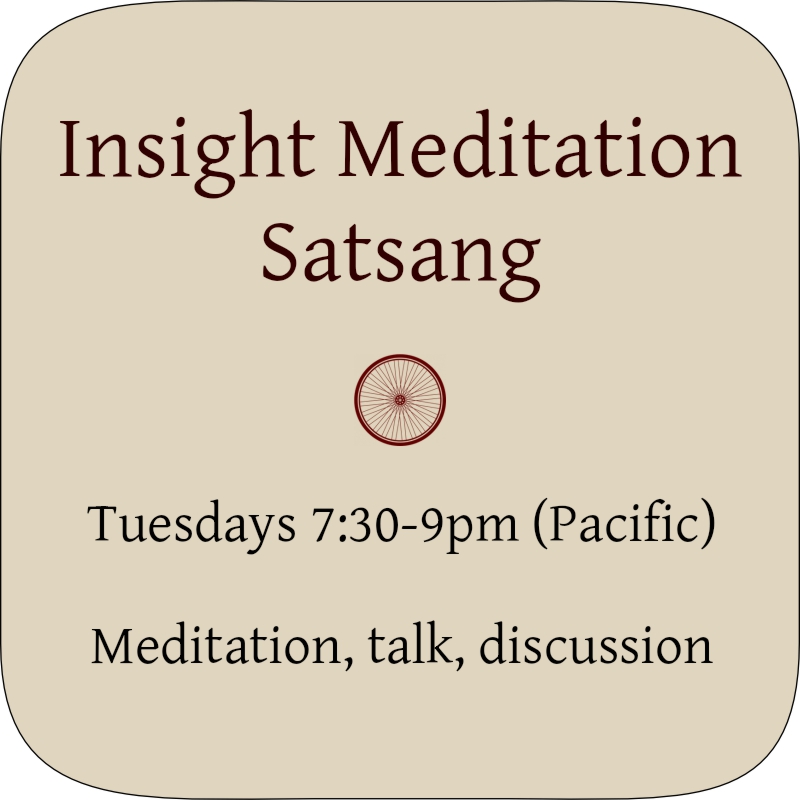
Our saṅgha—spiritual community—is an ongoing group of practitioners from around the world. We gather online weekly on Tuesday nights, monthly for a Friday morning book club, and offer a yearly in-person retreat.

All are welcome, and we offer Saṅgha access always on Gift Economy (dāna), with accessibility and inclusivity our core commitment.
0 comments