

Fall Retreat is coming up in 3 weeks!
Wed - Sun, Nov 13-17, 2024
Join us in the refuge of silence to explore the wisdom of the Heart Sūtra and be nourished by steady, supported practice in Saṅgha.
From Satsang, Tue 10.22.24
"No Eye, No Ear... So, Disembodied?"
After announcing the emptiness of the khandha/skanda (aspects/aggregates) at the beginning of the Heart Sūtra, the text moves quickly through the basic categories of the Buddha's teaching, negating the real existence of each in turn. It begins with the 6 senses (5 physical + mind) and their activities, then dependent origination, the four Noble Truths, and liberation.
In some ways, the negation of the senses can hit hardest for us. The implacable rhythm of the "no" in the text striking at the heart of that we most cherish. "No eye, no ear, no nose, no tongue, no body, no mind. No seeing, no hearing, no smelling, no tasting, no touching, no thinking." some translations string all the sense words together with just one "no" at the beginning, but the Sanskrit text spells it out. "No... no... no... no... no... no."
Alongside the Dharma, I teach posture and breath Yoga, and somatics, and like many contemporary teachers I think the lion's share of what I'm teaching is basic embodiment: how to get out of the painful habit of perpetual distraction and fantasy and into the direct lived experience of being a body in the natural world. Does this teaching of emptiness contradict embodiment as the foundation of our practice??
I think not at all, in fact I think it supports embodiment in a very deep way. Because what is "emptiness" after all? It's the insight that nothing is stably defined by the concepts and words we smother it in. There is no "self" in the body or mind, no object in the thing or other person. There isn't really another person at all, except conceptually and conventionally.
Realizing emptiness—making it real in direct experience, and not just a concept—undercuts the inherited cultural concepts we use for recognition and mapping of the world. The "eye" and "seeing" are not neutral, objective descriptions of reality—they are a conceptual framework based in materialism and the way we have been taught to think about the relationship between bodies and their environments. There are other ways to conceive of experience, including not conceiving at all!
The Perfection of Wisdom—the goddess Prajñāpāramitā—is a meditation based in setting aside conceptual thought in favor of an awareness that participates with the world without any kind of conceptual constriction arising internally. This is totally not easy, even as it conceptually undercuts even the categories of ease or difficulty. The main thing the text anticipates we will likely feel when confronted with these ideas is fear.
Our practice of embodiment I think is both a wonderful antidote to fear, and the primary practice that grows a foundation for understanding emptiness in a direct and pragmatic way.
We look at embodiment practice and how to keep embodiment from becoming a narrative about the body, and cultivating instead a more liberating eros that avoids the traps of conceptualization and taking refuge in cultural norms.
Meditation: Embodiment Through the Senses
Talk: No Eye, No Ear... So, Disembodied?
Teaching Schedule
Walking the Buddha’s Path: Meditation, Relationality, and Getting Well in an Unwell World
5 Weds, Oct 23 – Nov 20, 2024 | 9-11am PT, 12-2pm ET | New York Insight
Fall Retreat 2024
Opening to the Perfection of Wisdom
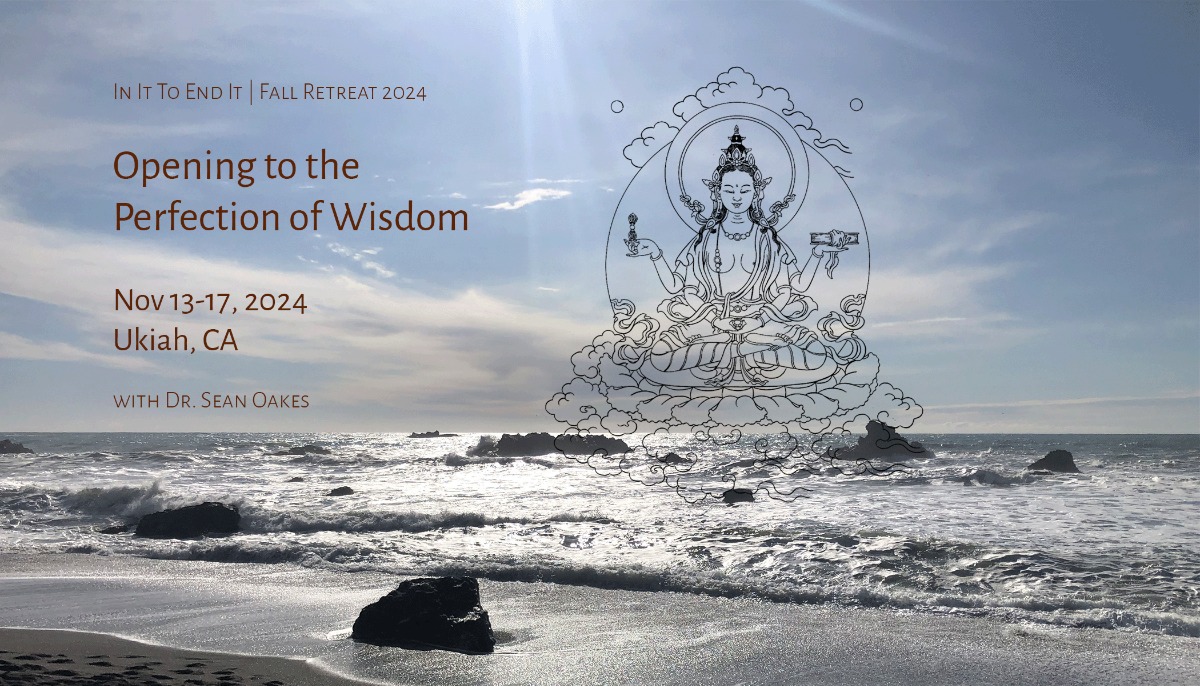
Wed, Nov 13 - Sun, Nov 17 (4 nights)
Ukiah, CA
We have been exploring the Perfection of Wisdom teachings in the Tuesday evening Satsang, and will bring this thread of practice and inquiry into the fall retreat, our first in-person gathering since the pandemic. This will be a traditional silent retreat, giving ourselves to the practices of meditation, chanting, and Dharma inquiry. We will practice with the beloved short summary text of the Prajñāpāramitā literature known as the Heart of the Teachings on the Perfection of Wisdom, or Heart Sūtra.
Dāna & Volunteering
Our ability to offer as much as we can in this beautiful tradition of gift economy depends on your support. If you have the means to support our Saṅgha financially, please do so. Your gifts make scholarships possible for those with less resources to attend retreat, support our preservation of the teaching archive on YouTube and a podcast (coming soon!), and make it possible for us to offer everything we do as accessibly as possible.
In addition to monetary gifts, consider the gift of your time as a volunteer for the Saṅgha. Volunteer work, called sevā, or "service," is a powerful and subtle practice that builds community, creates connection, and helps make the Saṅgha a spiritual home, not just a venue for teaching events. We are expanding our volunteer group, and looking for help with a number of administrative projects, including visual design, website maintenance, retreat management, and outreach. Email us if you're interested in volunteering.
Ongoing Saṅgha Spaces
Tuesdays 7:30-9pm (Pacific), weekly
Meditation, talk, discussion
Book Club: Read the Dīgha Nikāya, the Long Discourses of the Buddha
Fridays 8:30-10am (Pacific), monthly
Talk, inquiry, discussion
Saṅgha Facebook group
Recordings, discussion, Q & A
All are welcome
May our practice be of benefit to all.
0 comments