4 ways investors lose money (that aren't market crashes)
May 12, 2026 12:31 am
Hi ,
Building on what I shared previously, here's another angle I often think about when reviewing portfolios.
Most people, when they think about losing money, think about market crashes.
But in my experience, investors often lose money in 4 other ways, and these are the ones that tend to get overlooked.
1. Mistakes that are hard to reverse
Taking too much risk close to when you need the money. Selling during a downturn because there was no cash buffer. Not fully understanding what you owned.
The real cost isn't just the loss. It's the years spent recovering from it.
2. Incomplete ideas that sound true
"Just invest long term." "Dividends are safe." "Property always goes up." "Bonds are low risk."
These aren't always wrong. But without context, your timeline, liquidity needs, and risk tolerance. They can lead you somewhere you didn't intend.
3. Emotions at the wrong time
People don't usually lose money because they lack knowledge.
They lose it because investing gets emotional at exactly the wrong moments. Rising markets make risk feel smaller. Falling markets make long-term plans feel impossible.
Rules matter. Because if there's no rule before the fall, the decision gets made during it.
4. No plan for uncertainty
A portfolio that only works if one outcome happens is fragile. Markets shift in multiple directions at once — rates, inflation, earnings, geopolitics.
A well-structured portfolio doesn't need perfect predictions. It's built to hold up across different environments.
So the better first question isn't always "What should I buy?"
Sometimes it's "What risks am I actually exposed to right now?"
Which brings me to this.
These two portfolios ended the same 6-month period at similar returns.
Portfolio A at 9.14%, Portfolio B at 8.29%.
Same destination.
Very different ride.
Portfolio B dropped nearly -5% in late March. Portfolio A dropped but still positive.
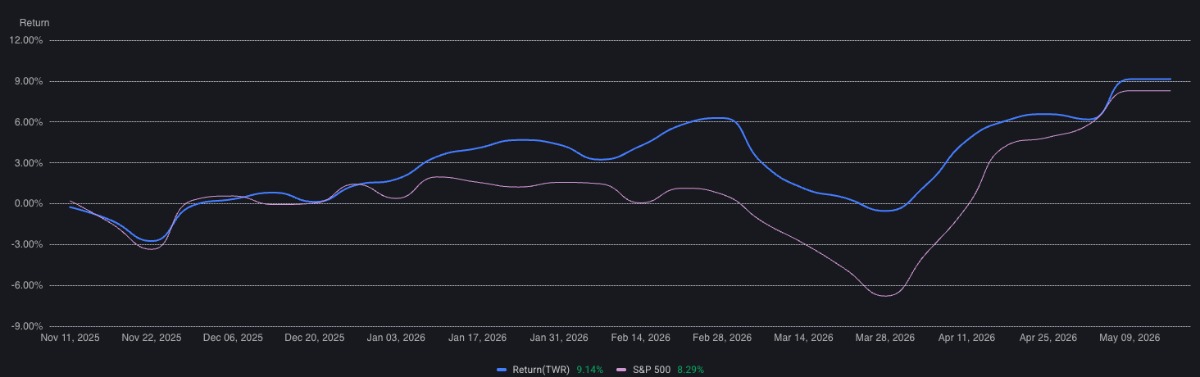
Both recovered. But ask yourself honestly, if you were in Portfolio B in late March, would you have stayed the course?
Or would fear have taken over?
That's the real risk. Not just the drawdown.
But whether you can hold through it.
Most people, given the choice, pick A. Not for the slightly higher return — but for the peace of mind.
That's what good portfolio construction is really protecting.
Not just your returns. Your ability to stay invested.
If you would like to take a look at where your portfolio sits, I am happy to go through it with you.
Warm regards,
Zest