Market Update: Why 2026 May Feel More Volatile
May 13, 2026 4:34 am
Hi ,
I wanted to share a quick market update with you because 2026 is shaping up to be a year where investors may need to be more patient and disciplined.
Right now, markets are being pulled in two directions.
On one hand, AI optimism is still supporting equity markets.
On the other hand, oil prices, inflation concerns, higher bond yields, and geopolitical risks are creating more uncertainty underneath the surface.
The key point is this:
Markets are no longer trading on a simple “soft landing” story.
There are now a few major events that investors will likely be watching closely over the next few months:
1. A possible new Fed Chair
Kevin Warsh has been confirmed to the Federal Reserve Board and is widely seen as a potential successor to Jerome Powell.
Markets will be watching closely because any change in Fed leadership can affect expectations around interest rates, inflation policy, and central bank independence.
2. Spring 2026: Active campaigning for Republican primaries
As the 2026 midterm election cycle heats up, President Trump and the White House are expected to actively campaign for Republican candidates.
This may increase political headlines and policy uncertainty, especially around taxes, spending, trade, regulation, and the direction of the U.S. economy.
3. 3 November 2026: U.S. Midterm Election
Midterm election years often come with more market noise.
Historically, the first half of a midterm year can be more volatile, with markets gaining little ground as investors wait for more political clarity.
Some analysts have described 2026 as potentially following a “jump, slump, and pump” pattern:
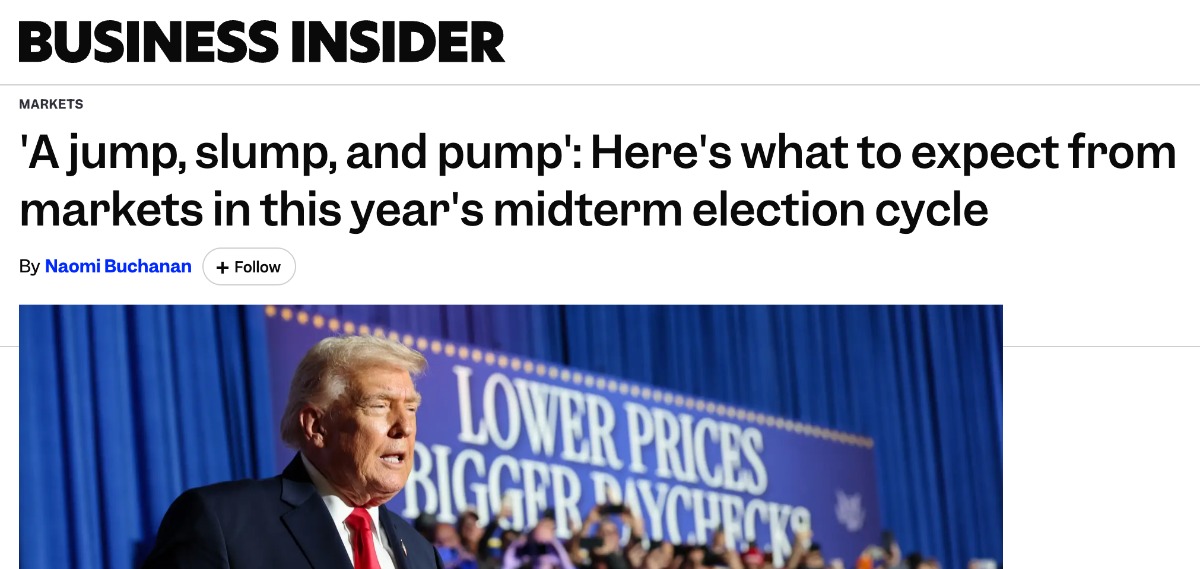
A strong start to the year.
Followed by volatility before the election.
Then a possible year-end recovery once the election result becomes clearer.
Of course, this is not a guarantee.
But it is a useful reminder that markets do not move in a straight line, especially when politics, inflation, oil prices, and interest rates are all moving at the same time.
From a portfolio perspective, the focus should not be on reacting to every headline.
The focus should be on asking:
Is the portfolio built to handle different market conditions?
- Higher oil prices can affect inflation.
- Higher inflation can affect bond yields.
- Higher bond yields can affect growth stocks.
- And political uncertainty can increase short-term volatility.
This is why portfolio structure matters.
A well-diversified portfolio should not only be built for good markets.
It should also be able to go through periods of uncertainty without forcing poor decisions.
For now, I will continue to monitor the key risks closely, especially inflation, bond yields, oil prices, credit markets, and equity market leadership.
As always, the goal is not to predict every market move.
The goal is to keep your portfolio positioned with discipline, patience, and resilience.
Warm regards,
Zest