A Personal Reflection on Time as we Step into 2026
Jan 08, 2026 5:22 am
Happy 2026 to you and yours!
When I landed in Canada, almost 40 years ago with my family, I was quite young and still puzzled by the new constructs of time as I observed them on this continent. It was quite a contrast from the calendar I observed while living in the Middle East.
Did you know that there are many different times celebrated as a 'New Year' that is celebrated by peoples and cultures around the world?
What this knowing brings to mind is a deeper reflection:
- What does time mean?
- What or whom established this idea of time?
- How has our present day culture been shaped by the collective agreement to this concept of time? What does 'time' revolve around?
- What does our society's concept of time tell us about our culture's values?
- And how does this compare to how other cultures around the world mark time?
Across cultures, “New Year” is not a single moment but a reflection of what a people consider sacred: the sun, the moon, the land, ancestors, or divine time.
Below is a clear, grounded map of the major New Year moments around the world, organized by calendar logic, culture, and origin.
🌞 1. Gregorian New Year — January 1

Who: Most of the modern world
Calendar: Gregorian (solar)
Established by: Pope Gregory XIII (1582), refining the Julian calendar
Meaning & worldview:
- Time as linear and standardized
- Emphasis on progress, goals, resolutions
- Closely tied to commerce, governance, and global synchronization
Cultural tone:
Celebration, fireworks, reflection, resolution-making
🧭 This is a civic and administrative New Year more than a cosmological one.
🌑 2. Lunar New Year (Chinese New Year) — Jan/Feb

Who: Chinese, Korean, Vietnamese, and many East Asian cultures
Calendar: Lunisolar
Origins: Ancient Chinese cosmology (over 3,000 years old)
Meaning & worldview:
- Renewal through cycles, not linear time
- Alignment with heaven, earth, and ancestors
- Each year carries a distinct energetic quality (zodiac animals)
Cultural tone:
Ancestral honoring, family reunions, purification, blessings
🧭 Time is alive, cyclical, and relational.
🌙 3. Islamic New Year — Hijri Calendar

Who: Muslims worldwide
Calendar: Purely lunar (354 days)
Established: 622 CE (Hijra of Prophet Muhammad from Mecca to Medina)
Meaning & worldview:
- Time governed by divine rhythm, not seasons
- Emphasis on spiritual remembrance, not celebration
- New Year marks moral and spiritual migration
Cultural tone:
Quiet reflection, prayer, remembrance
🧭 Time is sacred submission, not human control.
🌸 4. Persian New Year — Nowruz (Spring Equinox)
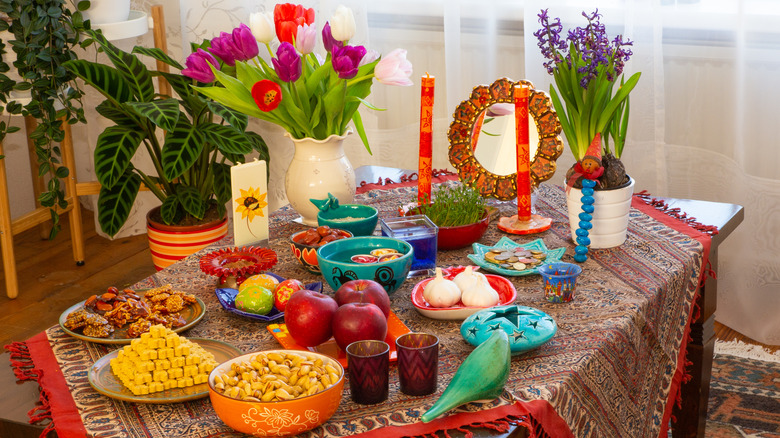
Who: Persian/Iranian, Kurdish, Afghan, Central Asian cultures
Calendar: Solar (astronomically precise)
Origins: Zoroastrianism (over 3,000 years old)
Meaning & worldview:
- New Year begins at exact astronomical balance
- Renewal of life, light, and order
- Strong moral dimension: truth, harmony, renewal
Cultural tone:
Nature-based rituals, symbolic tables (Haft-Seen), family
🧭 Time begins when light and darkness are equal.
🌾 5. Vedic / Hindu New Years (Multiple Dates)

Who: Hindu cultures across India and Nepal
Calendar: Lunisolar (varies by region)
Origins: Ancient Vedic cosmology (thousands of years BCE)
Examples:
- Ugadi (Andhra/Karnataka)
- Gudi Padwa (Maharashtra)
- Vaisakhi (Punjab)
- Diwali (financial/spiritual New Year in some traditions)
Meaning & worldview:
- Time as cosmic intelligence
- Each region aligns with planetary, seasonal, and spiritual markers
🧭 There is no single New Year — only right timing.
🌕 6. Jewish New Year — Rosh Hashanah
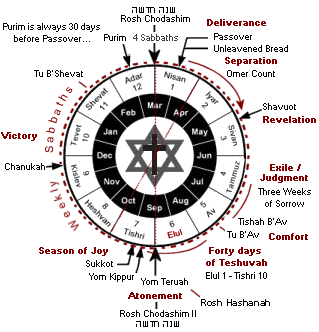
Who: Jewish people worldwide
Calendar: Lunisolar
Origins: Biblical tradition (creation-centered)
Meaning & worldview:
- New Year as judgment, remembrance, and return
- Time is ethical and relational
- Beginning of a 10-day introspective cycle
Cultural tone:
Prayer, repentance, sweetness, responsibility
🧭 Time listens to the heart.
🌍 7. Indigenous & Earth-Based New Years

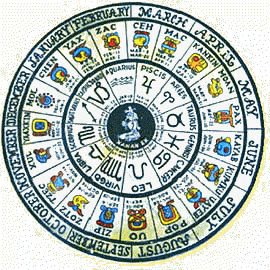
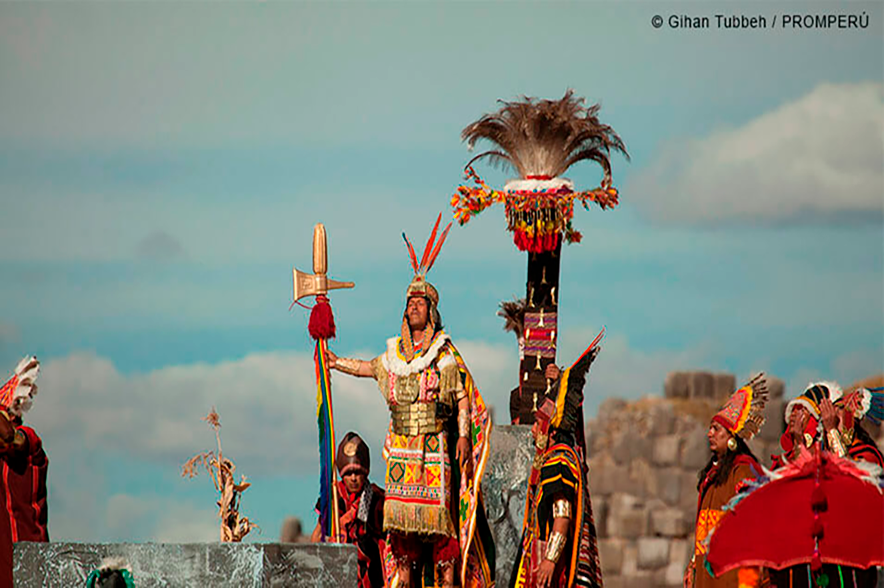
Who: Indigenous cultures worldwide (Mayan, Inca, Celtic, many others)
Calendar: Solar, lunar, ecological
Origins: Place-based ancestral knowledge
Markers include:
- Solstices (winter/summer)
- Equinoxes
- First harvest
- First rains
- Animal migrations
Meaning & worldview:
- Time arises from land, sky, and life
- Humans follow nature, not calendars
🧭 The Earth decides when time turns.
🧠 A Helpful Way to See It All
| New Year Type. What Resets? Authority of Time |
| Gregorian | Administration | Human systems |
| Lunar | Family & ancestry | Moon |
| Islamic | Spiritual orientation | God |
| Persian | Life & balance | Cosmos |
| Hindu | Cosmic order | Planetary intelligence |
| Jewish | Moral alignment | Divine relationship |
| Indigenous | Life cycles | Earth |
🌱 A contemplative insight for your New Year
You might ask yourself:
- Which New Year speaks to my nervous system?
- Which one aligns me with nature, not obligation?
- Do I want a new year of goals — or of coherence?
What if time wasn't a rigid construct? Yes, we utilize time in order to navigate this world at times and show up for meetings and appointments and such, but what if we start to step out of those systems that bind us to the clock? Or these systems simply fall apart and become obsolete? What would our lives look like and how would we function? What would become our focus?
So this was a reflection of time for us recently that we wanted to share with you. Our collective agreement to anything, including time, makes it more rigid and concrete. And as this seems to be a period in humanity's history where we are questioning many things, perhaps our idea or consensus on 'time' can be one of them.
It's time for a higher vision,
Téa & Jason
inspirelife.earth