🛑 How to bypass 2026 spam filters and ensure your emails actually get read.
Jan 15, 2026 1:20 am
Have you ever spent hours crafting the perfect email, hit "send" with excitement, and then... noticed an embarrassingly low open rate?
It’s a frustrating feeling, I know. But the truth is, in 2026, you aren’t being ignored—your message is being "arrested" before it even arrives.
Providers like Gmail and Outlook are now using ruthless Artificial Intelligence. If your technical infrastructure isn’t flawless or if your content follows old patterns, you’ll end up in the SPAM graveyard without even realizing it.
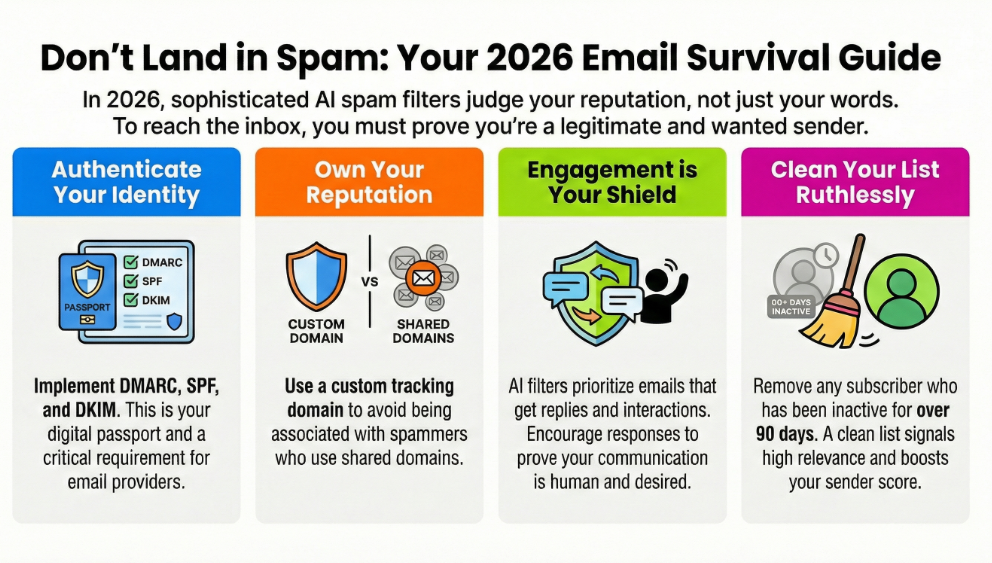
I’ve just published a new guide on the blog that serves as a true "survival manual" for anyone doing business online today: "15 Essential Tips to Stay Out of the SPAM Folder."
🔍 Here is a sneak peek of what you’ll find inside:
- Your Digital "Identity Card": Why you are a suspect to any server without SPF, DKIM, and DMARC (and how to fix them now).
- The New Marketing Currency: Why your reply rate is now more important than your click-through rate, and how to boost it.
- Content Hygiene: The secret ratio between text and images that AI filters analyze to decide your fate.
- The 90-Day Rule: How to handle "ghost subscribers" to prevent them from sinking your entire domain's reputation.
Don't let your hard work vanish into the void. Learn how to navigate the new rules of deliverability and reclaim the attention you deserve.
Read the full Video Training here:
👉 [VIDEO TRAINING: 15 TIPS TO AVOID SPAM]
P.S. Now that you have all the information, the next step is to take action. Choose the tools best suited to your business and start building your online presence with a winning strategy.
🔥 Join a FREE Marketing platform like and create your web marketing strategies today!
🚀 Systeme
🚀 Professional Graphics for E-commerce and Online Business
🔥 Best Hosting Services for Business Online
🔥 Best Video Editing Software
For your Success,
Thomas Davies
