Feisty Deeds: The Subversive history of tea-rooms
Apr 22, 2026 4:01 pm
Introducing Barb Ristine
Author of "The Tearoom" in Feisty Deeds II
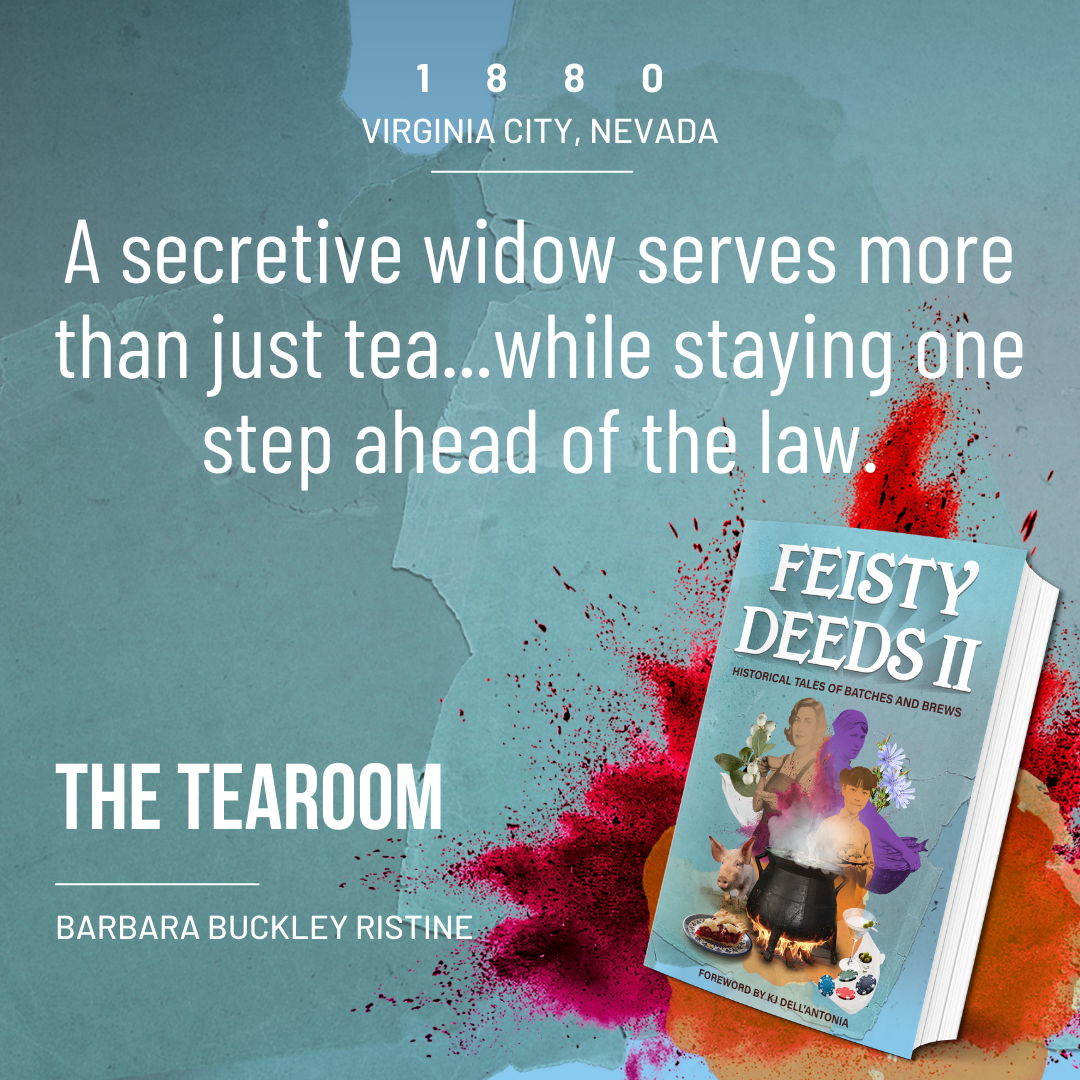
When I set out to write “The Tearoom”, I knew I wanted to write about a nineteenth-century woman helping other women within the constraints of Victorian society. Hattie Ferguson appears to be a British widow who has moved to the silver mining boomtown of Virginia City, Nevada in the 1880s. Hattie is known for her herbal teas and tinctures, but her hidden past could land her in prison.
Hattie needed a respectable occupation to protect her identity, so I made her the proprietress of a tearoom. What could be more innocent or proper? I didn’t realize just how subversive a tearoom could be in the 1880s.
Tea parties began in Britain in the early 1800s as private gatherings in homes to give middle-
class women the chance for social interaction. The practice soon spread to America. Many an important discussion was held over a cup of tea, leading to the founding of charities and societies, and even political movements.
In 1848, Lucretia Mott and Elizabeth Cady Stanton got together for tea with a few friends in upstate New York. From that tea party came the idea for the Seneca Falls Convention, the first ever held to discuss the rights of women.
Today, we think of tearooms as quaint, cozy places to enjoy tea, cakes, and scones piled high with clotted cream. It’s a place to escape into a romanticized fantasy of Victorian and Edwardian society. But in the mid-nineteenth century, tearooms were the center of a progressive movement. They represented economic and social freedom for women, places where discussions of women’s suffrage, temperance, and politics could be freely held.
In the 1800s, respectable women could not enter taverns or restaurants unaccompanied by a man. Those establishments catered to men and alcohol flowed freely. Any woman who entered such a place risked her reputation, as well as possible assault.
wikimedia commons
The first commercial tearooms appeared in England in the 1860s, but the innovation soon spread to the United States. Many of these establishments were simply a part of a house or farm set up to serve tea, sandwiches, and cakes. Most were owned and staffed by women. A tearoom was an acceptable way for a middle-class woman to earn money. Many a widow or housewife opened her business to supplement a meagre income. These tearooms provided a safe public space for women to gather, and the menu selections were simple and inexpensive, unlike restaurants. More importantly, no alcohol was served.
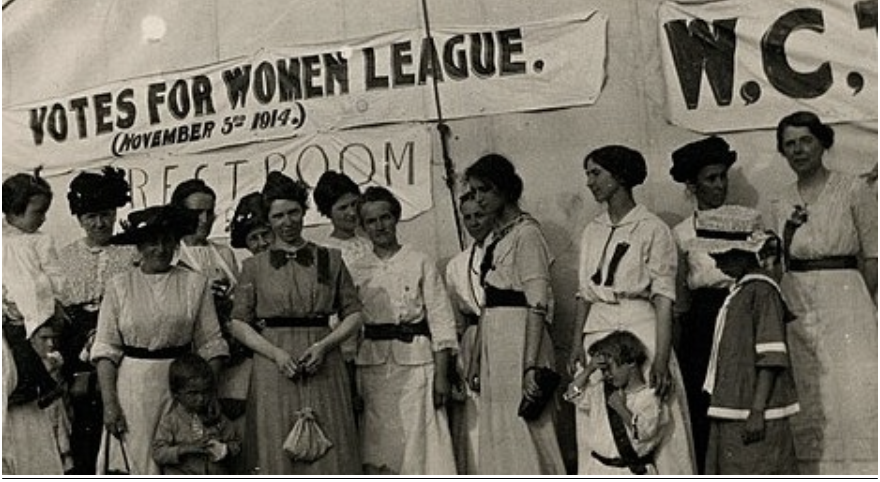
The popularity of tearooms grew among women as they realized the liberty to gather and converse freely without male scrutiny. By the late nineteenth and early twentieth centuries, tearooms became entwined with some of the major progressive political movements in both Britain and America. Votes for women and the temperance movement were the most prominent campaigns to take hold in the tearoom movement. The Women’s Suffrage Party operated rooms for fundraising and recruitment, and the Women’s Christian Temperance Union established so-called “T-Rooms” to promote their campaign to ban alcohol.
Once women obtained the vote in 1919 and Prohibition was enacted, the political nature of the tearooms started to wane, but they remained popular places for women to frequent. Working women enjoyed reasonably priced lunches, while women of leisure enjoyed a pick-me-up after a busy day of shopping. As automobiles became more popular and accessible to women, tearooms proliferated along country roadways, often selling homemade preserves, baked goods, and antiques, in addition to food.
The economic opportunities for women in running tearooms were profitable enough that by the 1910s-1920s, an industry grew to teach women how to run these businesses. There were training courses in tearoom management, recipe books, and even magazines devoted to the business.
During the Depression, tearooms started to decline in number. In major metropolitan areas, some reinvented themselves as “gypsy” tearooms, with a more Bohemian atmosphere and tea leaf readings. You could have a cup of tea, a sandwich, and have your fortune told for the bargain price of twenty-five cents!
But eventually, American women had more independence and less leisure time, and the tearooms faded away. A revival of afternoon “high tea” came in the late 1980s, when hotels like the Helmsley Palace in New York promoted it as an elegant pause, an alternate to afternoon cocktails. And now, thanks to popular culture and shows like “Bridgerton,” afternoon tea is popular once again.
The next time you visit a cozy tea shop, remember—there’s a whole feminist history behind that cup of tea.
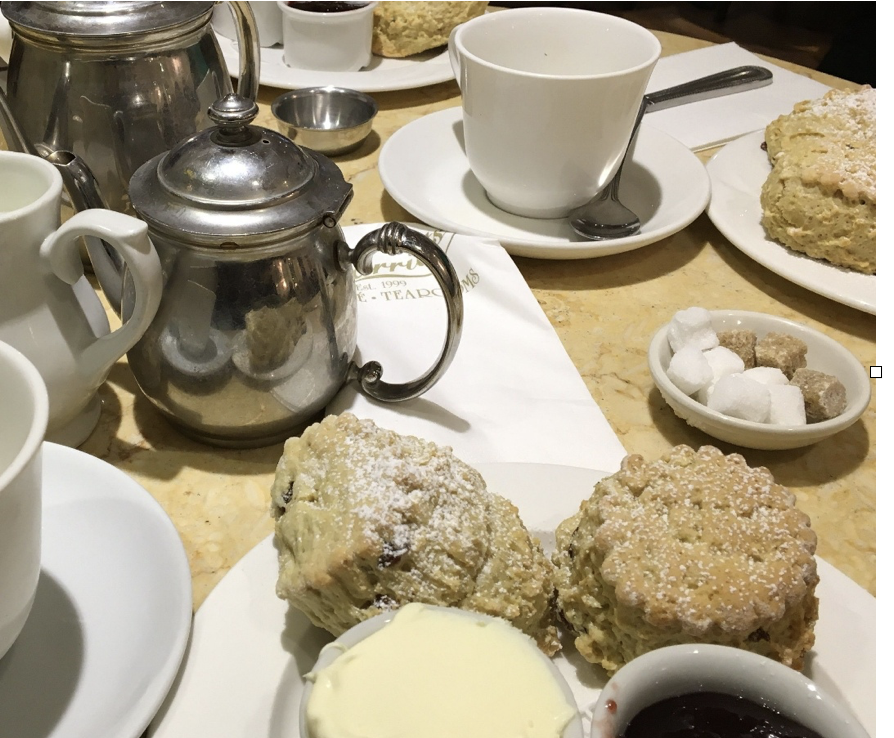
photo credit: Barb Ristine
Learn more about what Barb is writing, including a link to her Substack Postcards from the Past!
It’s been a long, cold winter for many of us, but Spring is in the air (or at least on the calendar). With flowers and sunshine comes Mother’s Day, and Feisty Deeds II: Historical Tales of Batches and Brews is an ideal gift for a mother, a grandmother, an aunt, a daughter, a daughter-in-law, a friend. Order your copies now, alert your friends, and be ready with presents for the season!
Get Barb's story and 24 more at: