Mazal tov/Mabrouk to the Ambassador of HM The King of Morocco to the United States of America, the Hon. Youssef Amrani, for organizing a momentous and meaningful Hanukkah Party at the Moroccan Embassy in Washington, D.C., featuring Magen David Sephardic Congregation’s Rabbi Col. Ari Soussan, Ph.D. MDSC’s Former President Sammy Ymar as well as his son and incoming President Bernard Suissa were in attendance.
Click here to dedicate a future issue in honor or memory of a loved one
Subscribe ◊ Upcoming Events ◊ ASF Sephardi Shop ◊ Donate ◊ Sephardi Ideas Monthly ◊ ASF Sephardi House ◊ Archive
The Sephardi World Weekly is made possible by Daniel Yifrach, Rachel Sally, Professor Rifka Cook, Maria Gabriela Borrego Medina, Rachel Amar, Deborah Arellano, & ASF VP Gwen Zuares!
FEATURE: An ancient groove, renewed, for Hanukkah: R’ David Bouzaglo’s “My Faithful People”
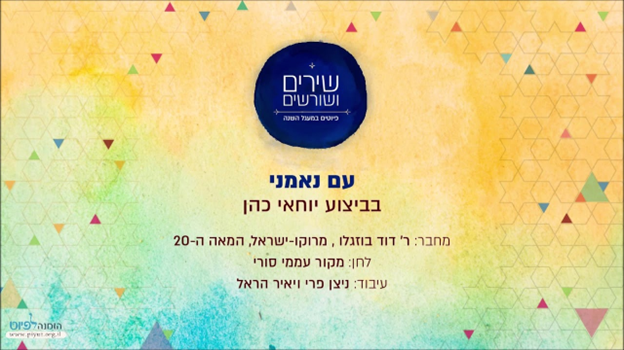
Am Ne’emanai (“My Faithful People”), is a modern Moroccan piyyut composed for Hanukkah by Rabbi David Bouzaglo (1903-1975) that blends biblical allusion with a maqam-based melodic structure (Rast Suznak) and is dedicated to praising God’s miracles and the steadfast faithfulness of Israel. In this recording, the piyyut is moved by an insistent groove featuring Yochai Cohen’s vocals integrated into a mixed ensemble of violin, percussion, drums, winds, electric guitar, electric saz, bass, and keyboards.
Casablanca-born R’ David Bouzaglo was the preeminent 20th‑century Moroccan paytan, famed for his mastery of Andalusian modes and for original piyyutim composed in Hebrew and Judeo‑Arabic. After immigrating to Israel in 1965 and losing his eyesight, R’ Bouzaglo continued to compose and perform, becoming a foundational voice in Israel’s Sephardi–Mizrahi liturgical revival. His works, including Am Ne’emanai, are now re‑interpreted by artists such as Cohen and the ensemble assembled for the Shirim ve‑Shorashim (“Songs and Roots”) project of Israel’s Ministry of Education.
Am Ne’emanai casts the Jewish people as those who respond to divine miracles with loyalty and song, framing Hanukkah as an ongoing drama of faith, rededication, and trust in God’s providence rather than a merely historical episode located in the distant past. Bouzaglo writes, for example, “With My faithful people I shall perform a wonder, I will cause a horn to sprout for My treasured nation, to light a candle for the dedication of My altar,” intertwining the Hasmonean struggle, the rededication of the Temple, and the future messianic triumph of light over darkness into a single piyyut whose singing becomes an act of communal memory and spiritual recommitment, especially when set in a rich, groove‑oriented arrangement that connects Maghrebi and Middle Eastern heritage with contemporary Israeli sound.
“The Cookbook That Became a Legend”
By Esther Levy Chehebar, Tablet Magazine
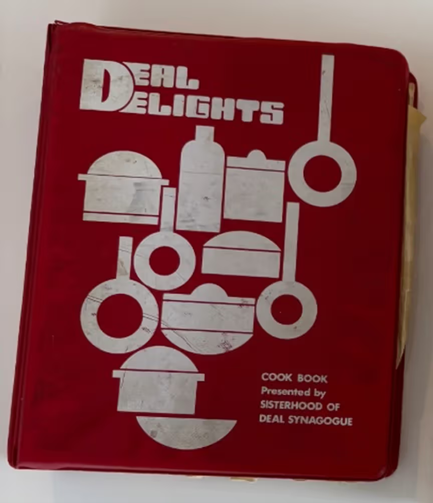
Deal Delights: Cook Book Presented by the Sisterhood of Deal Synagogue (Photo courtesy of the author/Tablet)
Esther Chehebar is the author of the novel Sisters of Fortune, a book that in the words of one reviewer gives Syrian Jewish culture “the Jane Austen treatment.” A member of the Syrian Jewish community of Brooklyn, Chehebar recently explored the stories behind Deal Delights: Cook book presented by Sisterhood of Deal Synagogue (sic) in a Tablet Magazine essay:
The “Red Cookbook,” as it’s casually called, is not just a guide to Syrian Jewish cooking. In fact, I almost always fall into hyperbole when explaining what this text means to us. It’s a kitchen staple, much like salt or oil. It tells the story of our community, which immigrated to America from Aleppo and Damascus in the early- to mid-20th century.
Chehebar reasons that the “key to the cookbook’s mythology is its ‘friendliness.’” She was given a copy of the “Red Cookbook” in the first year of her marriage by her mother, who explained, “It’s grandma’s cooking for dummies.”
To get the inside story, Chehebar turned to Poopa Dweck, “whose parents left Aleppo on honeymoon in 1947, never to return.” Poopa comes from a long line of Syrian cooks
and has established herself as an authority of sorts on the culinary customs and history of Brooklyn’s thriving Syrian Jewish community. Her 2007 cookbook, Aromas of Aleppo: The Legendary Cuisine of Syrian Jews, won the National Jewish Book Award that same year. But before she was an author, Dweck was one of 30 or so families planting roots in Deal, a sleepy town on the Jersey Shore. “I was pregnant with my first daughter [in 1976], and I just remember feeling this sense of urgency. I was so worried that we weren’t going to preserve the recipes of the older generations. Nothing was written down.” She called a meeting in the Deal shul.
Women from the community contributed recipes, and soon “they sold hundreds, then thousands, and then tens of thousands of copies.” But good luck finding a copy today, “Save for a couple of limited reprintings, Deal Delights has been largely out of print for more than two decades.”
FEATURE: Sisters of Fortune: If Jane Austen Grew Up on Ocean Parkway
By Moishele Alfonso, Forward
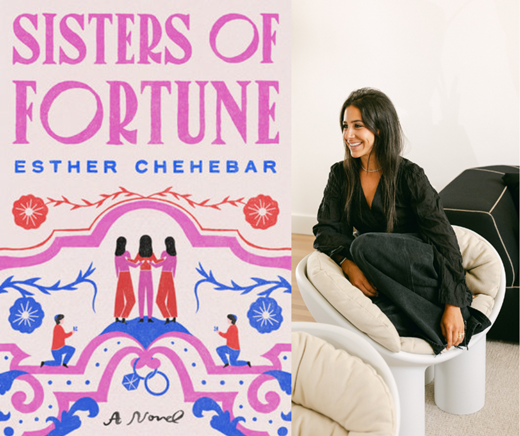
Esther Chehebar and the cover of her novel, Sisters of Fortune
Esther Chehebar chats about her debut novel, Sisters of Fortune, a story eight years in the making, with Judith Rosenbaum, CEO of the Jewish Women’s Archive.
In Sisters of Fortune, three sisters search for love, navigate the ups and downs of young womanhood, and try to find their place both within and beyond their tight-knit Syrian Jewish community in Brooklyn. Originally written from the perspective of “Fortune,” the middle sister poised to marry a young Syrian Jewish man, Chehebar added layers of depth by including the perspectives of Fortune’s two other sisters living under the same roof.
In the novel, Fortune picks up a copy of Jane Austen’s Pride and Prejudice. Asked by Rosenbaum if she was influenced by the classic 19th c. novel, Chehebar answers that while “nobody explores relationships or the politics of marriage like Jane Austen,” she wanted to put a “fresh spin” on Austen’s vision by bringing it to Ocean Parkway, Brooklyn.
~~~~~~~
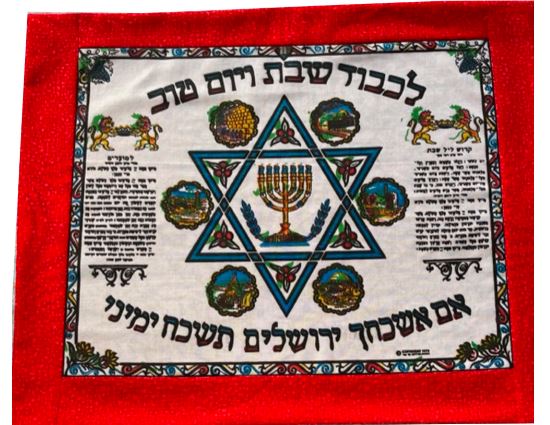
Matzah and Flour: Recipes from the History of the Sephardic Jews
A collection of 125 meticulously crafted recipes showcasing the enduring flavors that define Sephardic culinary heritage.
Matzah and Flour: Recipes from the History of the Sephardic Jews offers a tantalizing exploration of the central role of matzah and flour in Sephardic cuisine. Journey through centuries of tradition as flour, from various grains like chickpea, corn, and barley, intertwines with cultural narratives and religious observance. Delve into the symbolism of matzah, from its origins in the Exodus story to its embodiment of resilience and identity. Each of this cookbook’s thoughtfully prepared recipes is a testament to the transformative power of flour in Sephardic culinary heritage. From savory delicacies to sweet delights, these timeless flavors have sustained Sephardic families through history. Matzah and Flour is a celebration of tradition, history, and the enduring legacy of Sephardic Jewish cuisine.
~~~~~~~
Upcoming Events or Opportunities
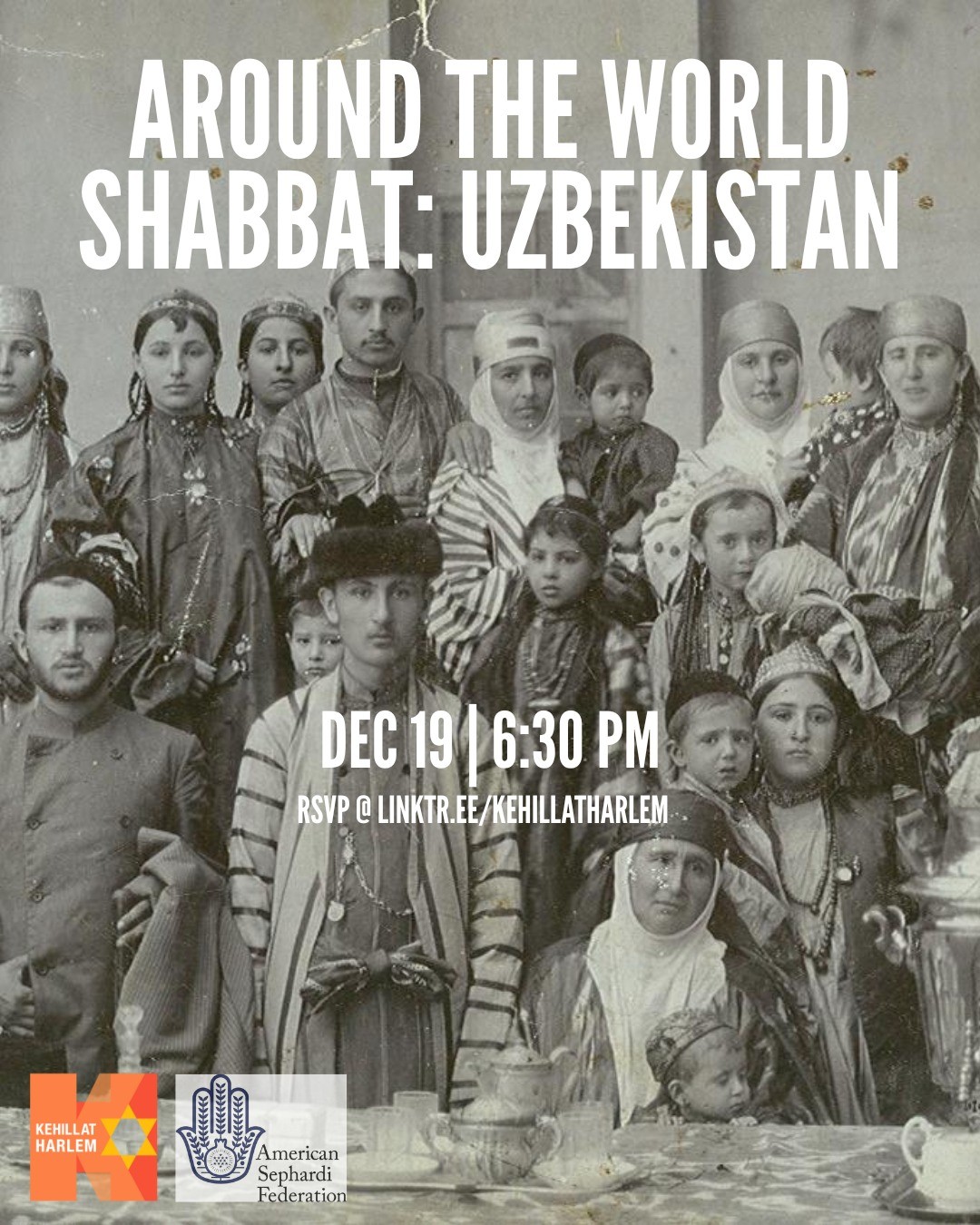
Our friends at Kehillat Harlem in partnership with the American Sephardi Federation present:
Around the World Shabbat: Uzbekistan
Friday, 19 December at 6:30PM EST
In-Person @ Kehillat Harlem
2248 Adam Clayton Powell Jr Blvd, NYC
Sign-up Now!
Tickets: $25-$36
~~~~~~~
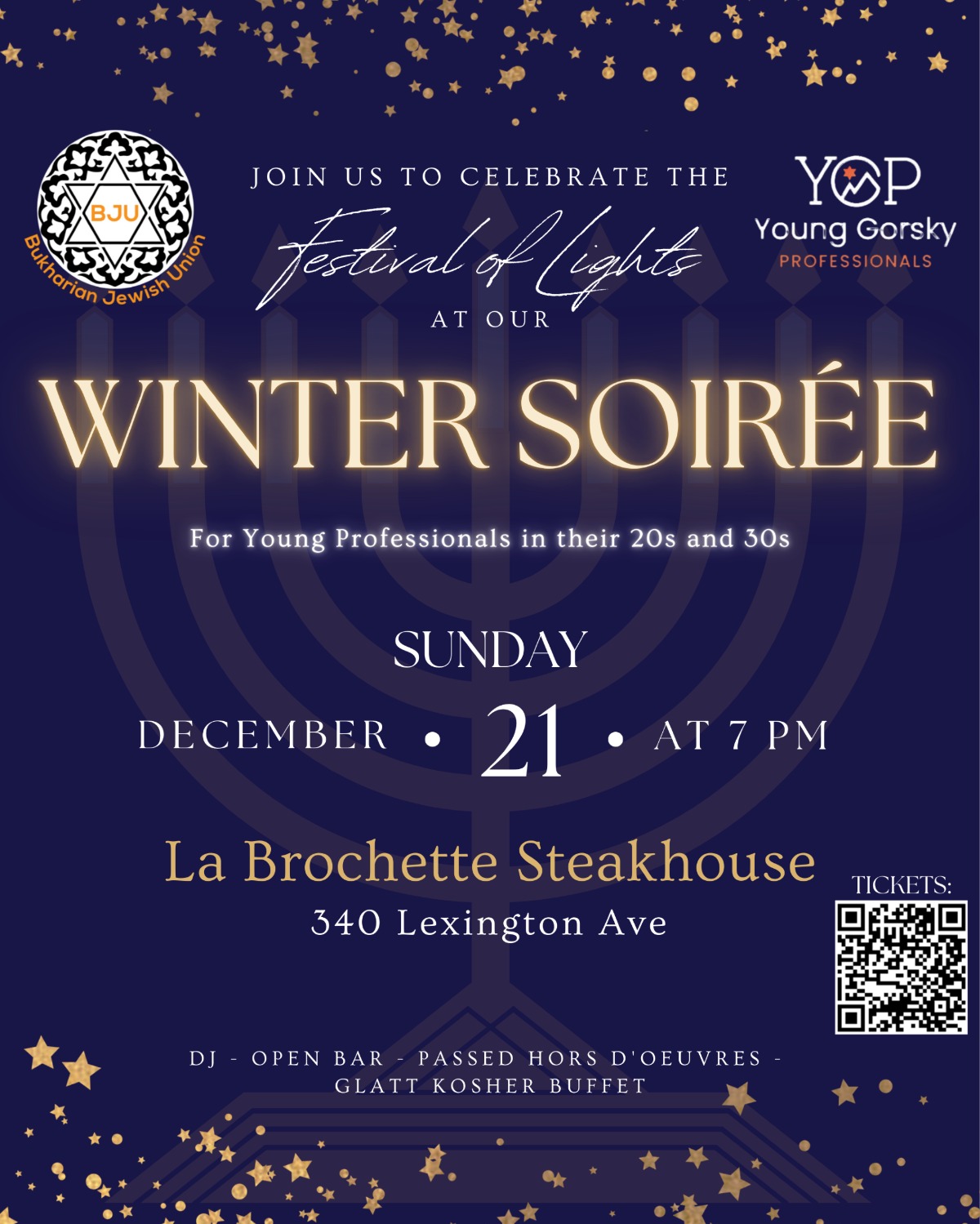
Our friends at the Bukharian Jewish Union and Young Gorsky Professionals present:
Winter Soirée
“Join us for our Winter Soirée — an elevated evening celebrating the Festival of Lights for Bukharian and Gorsky Young Professionals.
Enjoy an upscale evening in the heart of the city as we celebrate the spirit of Hanukkah with great music, warm ambiance, and exceptional company. This is the perfect opportunity to meet new people, reconnect with friends, and enjoy a sophisticated night designed for our community.”
Sunday, 21 December 7:00-10:00PM EST
In-Person @ 340 Lexington Ave, NYC
This event is for young adults in their 20s and 30s. All guests must be 21+.
The event will feature a DJ, passed hors d’oeuvres, a full glatt kosher buffet, and an open bar. Dress code is cocktail party attire.
Sign-up Now!
Tickets: $105
~~~~~~~
Our friends at Qesher in partnership with the American Sephardi Federation present:
Jewish Salonica, the Sephardi Metropolis
“As Sephardi Jews settled throughout the Ottoman Empire, Salonica—Thessaloniki, now Greece’s second-largest city—grew into a vital center of Jewish life and culture, earning titles such as “Madre de Israel” (“Mother of Israel”) and the “Jerusalem of the Balkans.” For several centuries, it stood as one of the largest and most influential Sephardi cities in the world, offering refuge to Jews from Spain, Portugal, and many parts of the Mediterranean.
This vibrant city became one of the great centers of the Jewish Diaspora, developing a rich cultural heritage whose influence endures today. We will trace the history of this remarkable community from its early development to the present, exploring the traditions and distinctive qualities that made Salonica an indispensable chapter in the story of the Jewish people.”
Sunday, 28 December at 3:00PM EST
Live on Zoom
Sign-up Now!
Tickets: $18
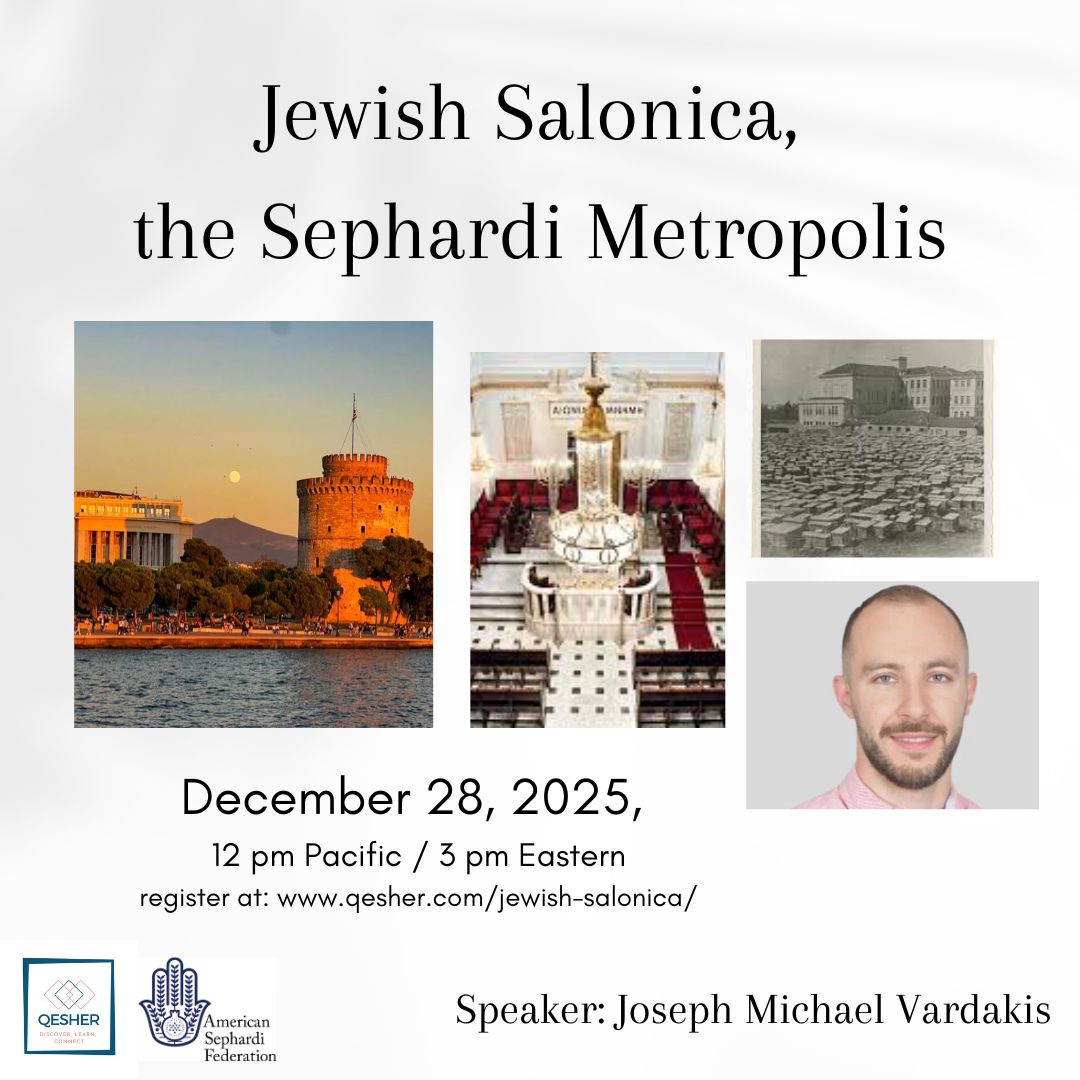
About the speaker:
“Joseph Michael Vardakis was born in Athens, Greece. He holds a B.A. in Psychology and an M.A. in Psychobiology, and he is currently completing his M.Sc. in Clinical Psychology. He has lived and studied in the UK, South Africa, and Israel, and he now resides in Athens.
Joseph has served as a student counsellor for the Ministry of Aliyah and Integration in Israel and has worked in an educational setting within the Jewish community of South Africa before beginning his academic studies. In his spare time, he offers themed tours in Athens, including visits to sites of Jewish interest.”
~~~~~~~
The American Sephardi Federation with the Sephardic Foundation on Aging proudly presents:
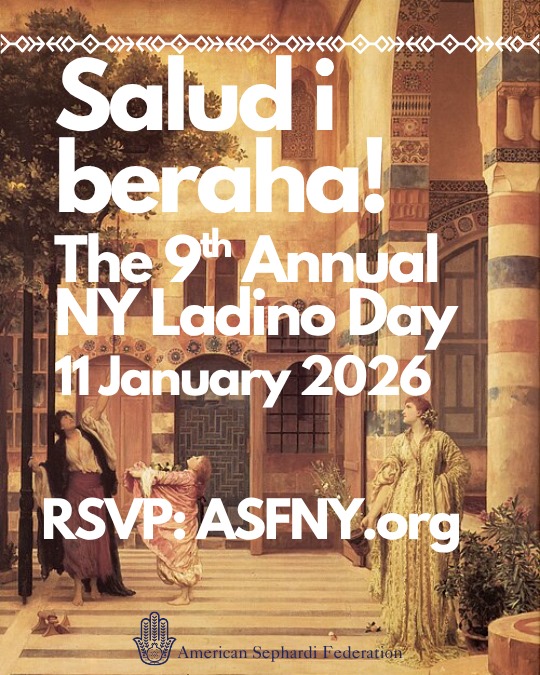
Salud i beraha: The 9th Annual NY Ladino Day!
Curated by Jane Mushabac and Bryan Kirschen
Tales and Variations in Ladino with Joe Halio
Tu Ke Bivas: An Illustrated Talk by artist Becky Behar
A Panel of Movers and Shakers of Ladino, with Lily Henley, Yinnon Sanders, and Aaron Shapiro
Fortuna, Brazilian Star of Ladino Song
with Guest Artist Frank London on Trumpet, and Alex Parke on Clarinet, Shoko Nagai on Piano, Satoshi Takeishi on Percussion, and Brian Glassman on Bass
Sunday, 11 January 2:00-5:00PM EST
In-Person @ the Center for Jewish History
15 W 16th Street, New York City
Sign-up Now!
$26 General Admission
(Admission to Ladino Day)
$36 Friend of NY Ladino Day
(Includes a copy of the book: The Historic Synagogues of Turkey, and admission to Ladino Day)
$56 VIP Friend of NY Ladino Day
(Includes VIP reception prior to the program (1:00-1:45PM), a copy of the book: The Historic Synagogues of Turkey, and VIP seating at Ladino Day)
Since 2013, Ladino Day programs have been held around the world to honor Ladino, also known as Judeo-Spanish. January 11th marks New York’s 9th Annual Ladino Day hosted by the American Sephardi Federation.
Ladino is a bridge to many cultures. A variety of Spanish, it has absorbed words from Hebrew, Turkish, Arabic, French, Greek, and Portuguese. The mother tongue of Jews in the Ottoman Empire for 500 years, Ladino became the home language of Sephardim worldwide. While the number of Ladino speakers has sharply declined, distinguished Ladino Day programs like ours celebrate and preserve a vibrant language and heritage. These programs are, as Aviya Kushner has written in the Forward, “Why Ladino Will Rise Again.”
Postcard: Frederic Leighton’s “Old Damascus: Jew’s Quarter (Gathering Lemons),” c.1873-1874
Co-sponsors:
The American Ladino League, and Shearith Israel League Foundation, Cliff Russo, and Foundation for the Advancement of Sephardic Studies and Culture.
Please support New York Ladino Day with a generous, tax-deductible contribution to ASF so we can continue to cultivate and advocate, preserve and promote, as well as educate and empower!
Sponsorship opportunities available:
~~~~~~~
Our friends at 14th Street Y in partnership with the American Sephardi Federation present:
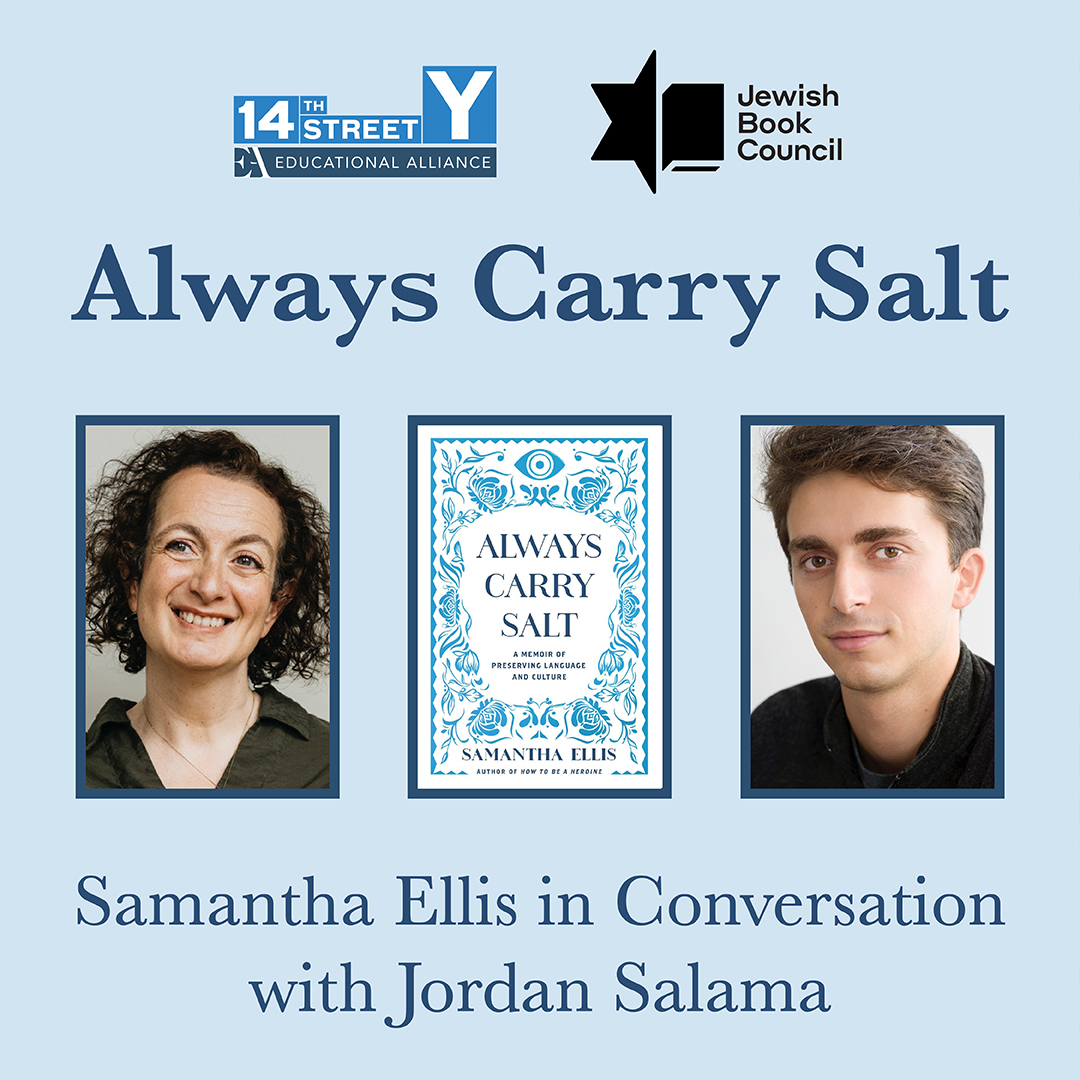
Always Carry Salt
“Join acclaimed authors Samantha Ellis and Jordan Salama as they discuss Ellis's powerful new memoir Always Carry Salt. In this moving meditation on language and resilience, Ellis - the daughter of Iraqi Jewish refugees - sets out to reclaim her fading mother tongue, Judeo-Iraqi Arabic. Along the way, Ellis uncovers a fascinating and largely forgotten world of ancestral recipes, family lore, and ancient artifacts.”
Thursday, 15 January 7:00-9:00PM EST
In-Person @ 14th Street Y
344 East 14th Street, NYC
Sign-up Now!
Tickets: $1 General Admission
About the Event:
“This event is presented in partnership with the Jewish Book Council and cosponsored by the American Sephardi Federation, Be’chol Lashon, HUC Jewish Language Project, Kanisse, Sephardic Brotherhood, and Sephardic Mizrahi Q Network.
Samantha Ellis is the author of How to be a Heroine and Take Courage. Her plays include How to Date a Feminist, Cling to me Like Ivy and Operation Magic Carpet. Her journalism has appeared in the Guardian, the TLS, the Spectator, and Literary Review. She lives in London, where Always Carry Salt was published as Chopping Onions on My Heart.
Jordan Salama is a regular contributor to The New Yorker and National Geographic. His first book, Every Day the River Changes, about a journey down Colombia’s Río Magdalena, was named a Kirkus Reviews Best Book of 2021. Most recently, he is the author of Stranger in the Desert (2024), an intergenerational family story tracing his search for the legacy of his great-grandfather, a Syrian traveling salesman in the Andes.”
~~~~~~~
Our friends at HUC Jewish Language Project in partnership with the American Sephardi Federation present:
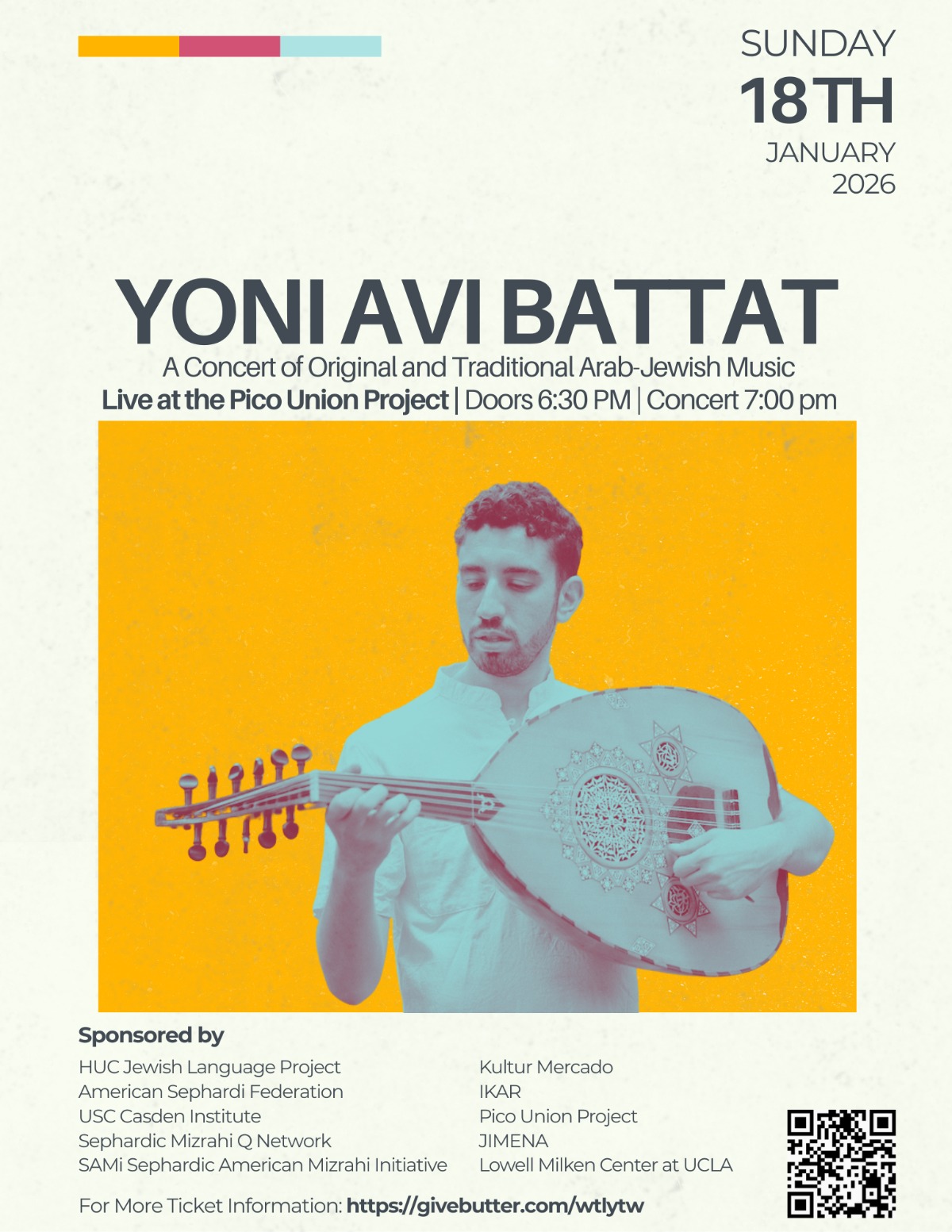
Fragments: The Yoni Avi Battat Ensemble
Live at Pico Union Project
A Concert of Original and Traditional Arab-Jewish Music
“Join us for an unforgettable live concert with multi-instrumentalist, vocalist, and composer Yoni Avi Battat.
Battat’s music bridges Jewish traditions from across the globe with contemporary improvisation. Drawing on his roots in Iraqi and Eastern European Jewish heritage, Battat weaves together sounds of the Middle East, North Africa, and Eastern Europe, blending them seamlessly with jazz, classical, and folk influences.
This performance will draw largely from his 2022 album, Fragments and focus on music and sounds of Middle Eastern life.
With Battat on oud and through his warm and expressive voice, Yoni takes audiences on a journey through centuries of migration, memory, and re-imagined tradition.
His performances are both celebratory and contemplative—rich with stories of resilience, joy, and cultural connection. Come experience a night of music that transcends borders and invites us into a shared space of beauty and belonging.”
Yoni’s ensemble features:
Yoni Avi Battat, oud/vocals
Eylem Basaldi, violin
Jim Grippo, qanun
Janie Cowan, bass
Jamie Papish, percussion
Sunday, 18 January at 6:30PM PST
@1153 Valencia St, Los Angeles, CA 90015
Sign-up Now!
Tickets: $25-$36
Sample Yoni’s music with tracks “Adon Olam,” and “Vapor”.
Co-sponsors:
Pico Union Project, USC Casden Institute, Kultur Mercado, IKAR, Lowell Milken Center for Music of American Jewish Experience at UCLA's Herb Alpert School of Music, JIMENA, American Sephardi Federation, Sephardic Mizrahi Q Network, and SAMi Sephardic American Mizrahi Initiative.