Coach -
The best quarterback work happens before practice starts.
Seth Parr, head coach at Anna High School in Texas, runs his quarterbacks through a pre-practice routine that builds the habits most coaches try to fix during team periods. By the time his guys get to 11-on-11, the mechanics are already there.
This week, we're breaking down two drills from that routine: his inside zone replace concept for training RPO fakes, and his typewriter progression for pocket movement. Both are designed to make quarterbacks process faster and move with intention without needing a full offense around them.
RPO: Training the Fake That Actually Matters
Video: Quarterback and Running Back
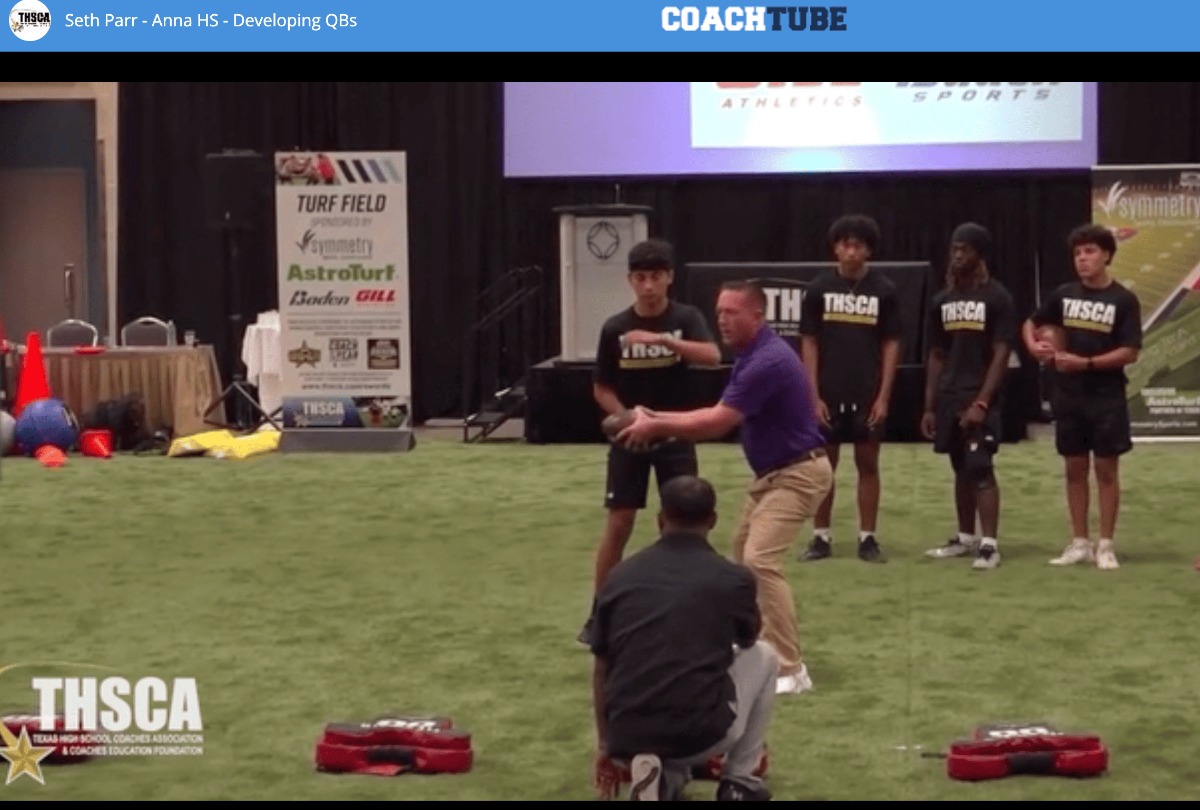
Seth Parr's RPO drill starts with a simple premise: the fake after the handoff is just as important as the read before it.
His base inside zone concept puts the quarterback in a jump position. Front foot points at the center's butt. The mesh with the running back is always forward, meaning the back is coming through behind the quarterback, not beside him.
The read itself is straightforward. Parr teaches his quarterbacks to watch for grass and leverage. If the defender covers the throwing lane and leverages the point, it's no throw. Turn the ball and hand it off. The quarterback isn't guessing. He's seeing whether he has a window or not.
But here's where the drill gets specific.
Parr runs a "replace" tag on inside zone tag. A receiver sits about four yards downfield. After the quarterback hands the ball off, he doesn't just turn and watch the play. He fakes a throw, hard, to that receiver.
The purpose is to hold the outside linebacker. If the fake is sharp enough, you might keep that linebacker from filling the cutback lane. It's a small thing, but it's the kind of detail that turns a four-yard gain into a first down.
His coaching point: quarterbacks get lazy with this. They'll hand off and then go through the motions. Glance at the receiver, drop the arm, move on. That's not going to hold anybody. The fake has to look like a throw that's coming.
So Parr makes them walk it out, stay on their feet, and finish the motion. Every rep.
The drill sequence is simple: quarterback gets the signal, calls the play out loud, takes the snap, jumps into the mesh, makes the read, hands off, and fakes the throw.
One more detail: during these pre-practice reps, it's always a handoff. The quarterbacks aren't pulling the ball because there's no read key. They're training the fake. Parr tells them not to pull it—hand it off and execute the fake. The read training comes later. This is about building the habit so the fake is automatic when it counts.
Typewriter Drills: Training Pocket Movement With Progressions Built In
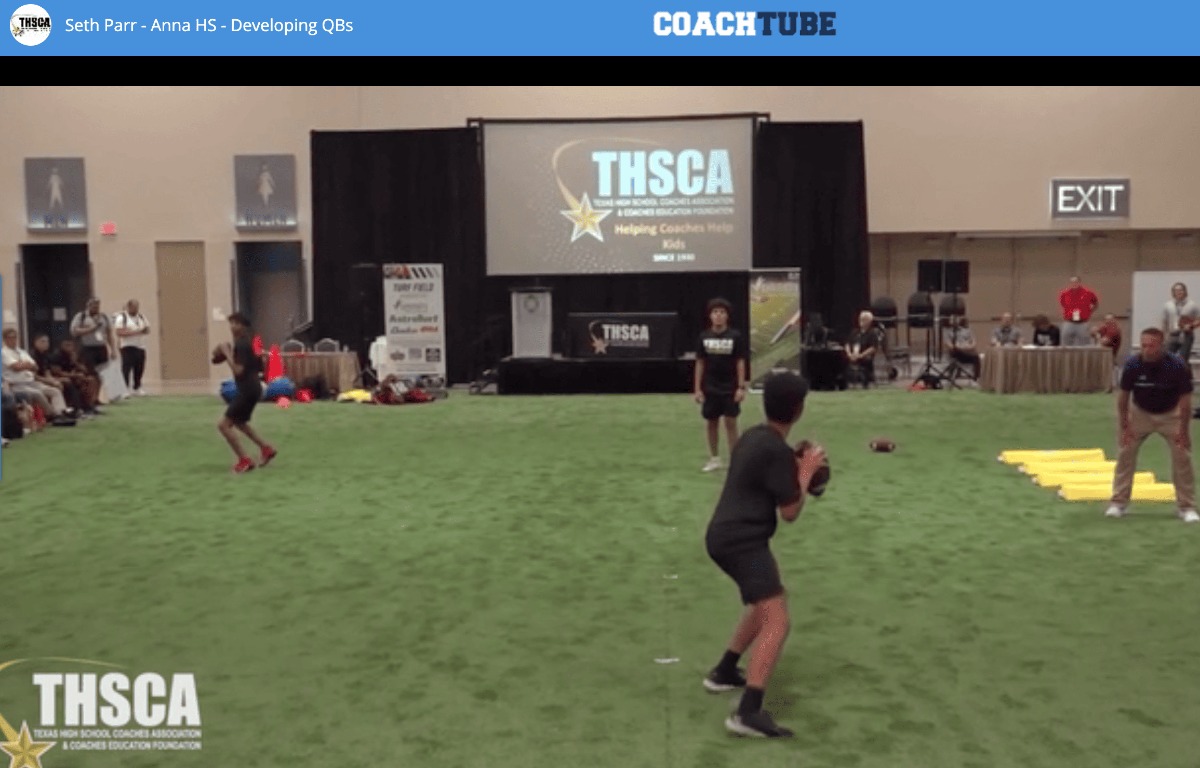
Parr's pocket movement drill is called the typewriter series, and it solves a problem most quarterback drills ignore: how do you train footwork and progression reads at the same time?
The premise is that quarterbacks only have about a yard to work with inside the pocket. The typewriter drills train quarterbacks to move efficiently within that space while keeping their eyes on the field.
Typewriter one is vertical movement. Up and back within the pocket, toe-heel footwork, maintaining a wide base throughout.
But Parr doesn't let his quarterbacks do this silently.
They have to call out the progression for whatever play is called. If the play is 63, they're saying "check down, slant, return" as they move. The footwork is happening, but the mental processing is happening at the same time.
Parr's reasoning is simple: if they're saying it, they know it. If they're not saying it, they don't know it. And that's a problem you want to find in pre-practice, not in the fourth quarter.
The stance is specific. Parr wants an open batting stance with shoulders slightly open. His thinking is that a closed stance limits the quarterback's vision to one side of the field. Slightly open lets him see the whole field and pull the ball down to run if he needs to.
Posture matters too. Parr wants his quarterbacks to sit down about two inches—not lean forward, not stick their butt out. If they're leaning over, they're off balance. If they're too upright, they're not ready to move. Two inches of knee bend, wide base, shoulders open.
Typewriter two is lateral movement. Side to side within the pocket, pushing off the back foot. The back foot is always loaded—that's where the power comes from to move in either direction.
The same progression calling applies. If the play is 63 left, the quarterback is calling out the progression while moving laterally. Feet are working, mouth is working, eyes are tracking an imaginary field.
Common Mistakes
Parr watches for two common mistakes. First, feet getting too narrow. Quarterbacks will start wide and gradually bring their feet together as they focus on the upper body. That makes them easier to knock down. He stops them and resets the base.
Second, leaning forward. When quarterbacks focus on their arm action or their reads, they tend to hunch over. Parr wants them tall, sitting down just enough to stay athletic.
Progression
The drill builds. Once they've done typewriter one (up and back) and typewriter two (side to side), they're ready to start moving like a quarterback in a real pocket—combining vertical and lateral movement while processing the play.
The key is that all of this happens before team periods. By the time Parr's quarterbacks get to 11-on-11, the footwork patterns are trained, the progressions are automatic, and the stance is consistent. They're not thinking about where their feet go. They're thinking about where the ball goes.
Two drills, one goal: build the habits before they're tested.
Parr's inside zone replace drill trains quarterbacks to execute sharp fakes after the handoff. The kind of detail that holds a linebacker for an extra half-second and opens a cutback lane.
His typewriter series trains pocket movement and progression reads simultaneously, so the mental and physical processing happen together.
Both drills happen in pre-practice. Both are designed to make the work in team periods cleaner because the fundamentals are already there.
If you want to see Coach Parr run these drills with actual quarterbacks and watch how he coaches the details in real time, check out his full clinic: Developing QBs.
Always be growing,
Coaches Clinic Community of Coaches Helping Coaches
Upcoming Clinics:
Passing Game Mastery Clinic March 7th
Hog O-Line Clinic Match 16th
0 comments