Coach -
This week's match-up is #15 Michigan vs. #18 Oklahoma, and we have coaching insight to share from each staff.
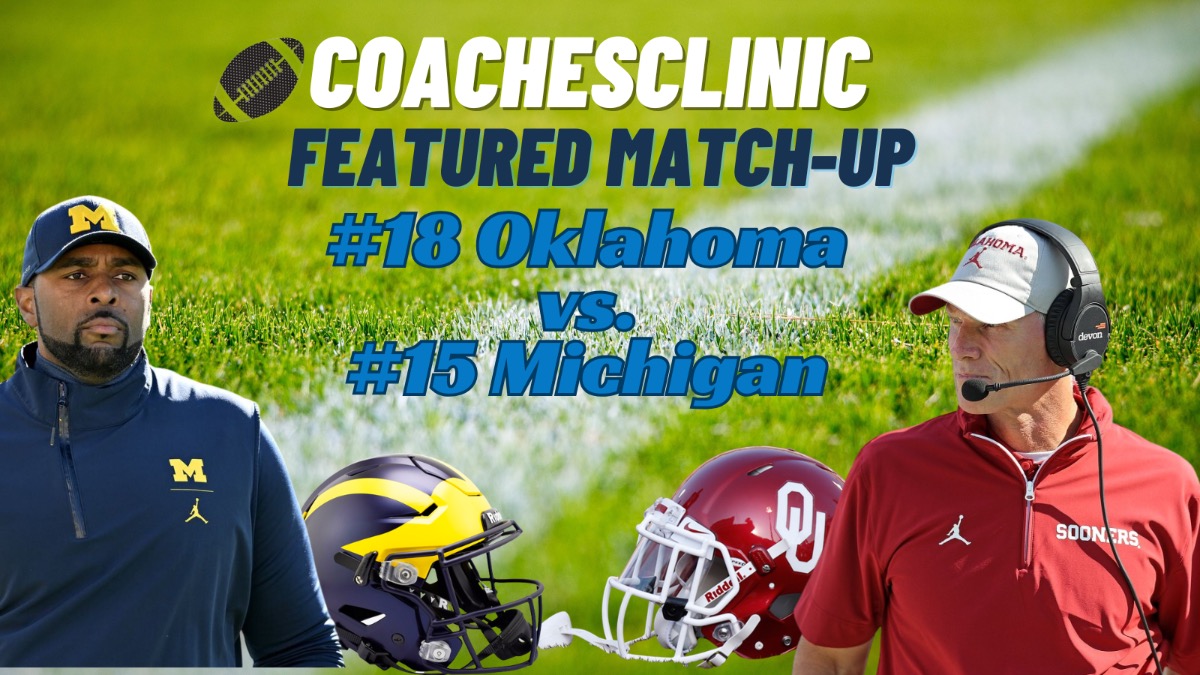
When #15 Michigan takes on #18 Oklahoma this Saturday, the game won’t just be about talent—it will be about how each team processes information and reacts under pressure.
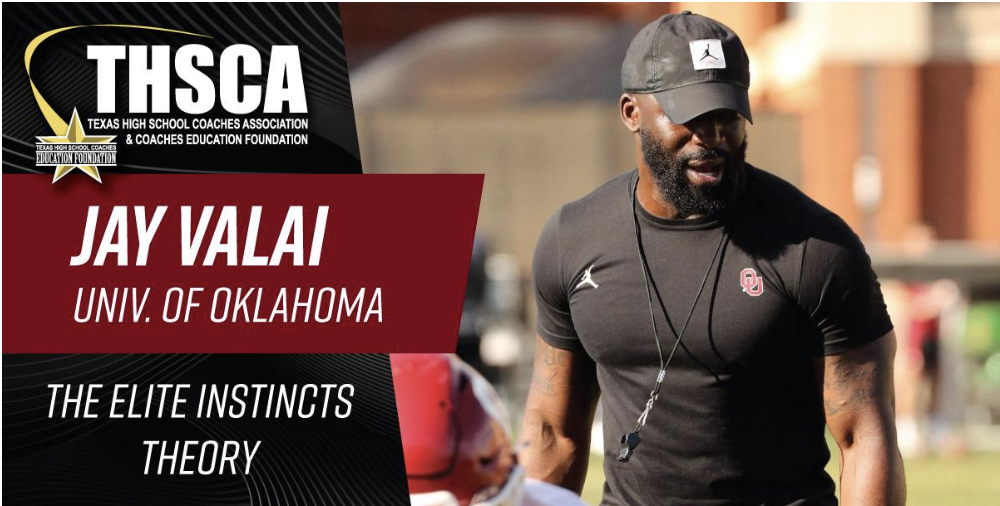
On one sideline, Oklahoma’s defensive backs coach Jay Valai has built his Elite Instinct Theory, training defenders to read and react with precision. On the other, Michigan quarterbacks coach
Josh Sinagoga is sharpening his QBs’ ability to gather and apply information through shifts, motions, and pre-snap manipulation. The collision of these two philosophies may very well decide the outcome.
Oklahoma: Elite Instinct Theory on Defense
Valai insists that instincts are teachable. His defensive philosophy is built on a four-step progression:
- Pre-Snap Context Clues – Down-and-distance, formations, stance indicators, and field position.
- Post-Snap Key Triggers – Receiver releases, quarterback drops, and route deletions.
- Efficiency in Transitional Movement – No wasted steps, fluid hips, and balance on the balls of the feet.
- Finishing the Moment – Tackling, pass breakups, and turnovers at the “moment of truth.”
His defenders are trained to be disruptive by reading keys early, transitioning smoothly, and closing with violence. Against Michigan’s motion-heavy looks, their ability to diagnose fast and avoid hesitation will be critical.
Michigan: Information Gathering on Offense
Josh Sinagoga takes the opposite side of the chess match. His quarterbacks are taught to weaponize shifts and motions as a way of gathering intel:
- Motion Across the Formation: Reveals man vs. zone, rotation indicators, and coverage structure.
- Exit Motions & Reloads: Shifting from empty to loaded sets forces defenses to declare responsibilities.
- Stack & Bunch Motions: Stress communication, creating opportunities for mismatches and confusion.
In Sinagoga’s system, every motion is more than window dressing—it’s an information tool designed to simplify the QB’s progression and create leverage.

The Chess Match
This game will pit Valai’s instincts vs. Sinagoga’s information:
- Michigan will test Oklahoma’s communication and discipline with constant shifts and motions, hoping to force hesitation.
- Oklahoma’s secondary will rely on instinctual recognition and efficient transitions, aiming to disguise coverages and punish late reads.
- Michigan’s QB play will hinge on whether their pre-snap reads hold up post-snap, especially against Valai’s emphasis on “route deletion” and disguise.
- Oklahoma’s defensive success will depend on turning those “moments of truth” into turnovers when Michigan takes calculated risks.
Keys to Watch
- First Quarter Adjustments: Who wins the opening script—Michigan’s offensive disguises or Oklahoma’s defensive recognition?
- Third Down Efficiency: Michigan wants to steal easy conversions with motions and mismatches; Oklahoma wants to use instincts to eliminate quick throws.
- Turnover Margin: In a game of top-20 teams, the side that capitalizes on “the moment of truth” will hold the edge.
Conclusion
Saturday’s matchup is more than Michigan vs. Oklahoma—it’s information vs. instincts. If Sinagoga’s QBs can decode and attack cleanly, Michigan will control the tempo. But if Valai’s defense anticipates, disguises, and finishes at the moment of truth, Oklahoma could flip the script.
The winner will be the side that not only prepares best during the week but processes fastest when the lights come on.
-Coach Grabowski & The CoachesClinic Team
Clinics from Each Staff:
Oklahoma:
Game Week Process and Hot Pressures
The Elite Instincts Theory - Jay Valai
Michigan:
Sherrone Moore - Coaching Transition and Two Back Run Game
Gap schemes - Teaching Progression and Attacking Defenses - Sherrone Moore
Quarterback Development Pre/Post Snap - Josh Sinagoga
Winning & Developing Elite Specialists - Garrett Clawson
Winning 4th Down: Punt vs. Punt Return - Garrett Clawson
0 comments