Coach -
Sometimes the play doesn't matter as much as the read structure underneath it.
Three coaches. Three offensive systems. One shared principle: isolate a defender, read his reaction, and take what he gives you. If he steps up, throw it. If he widens, hand it off. If he sits, you've already won.
Dontavius Smith turns his quick game stick concept into a full RPO with a mike-to-alley read. Rudy Alvarez layers RPOs into his Run and Shoot offense by keying a defender and reading the space behind him. Tony Demeo builds his hitch combos around the same idea: read one linebacker, and the play calls itself.
Different plays. Different formations. Same decision tree.
Smith's Stick RPO: Mike to Alley
Video: Dontavius Smith - Stick RPO
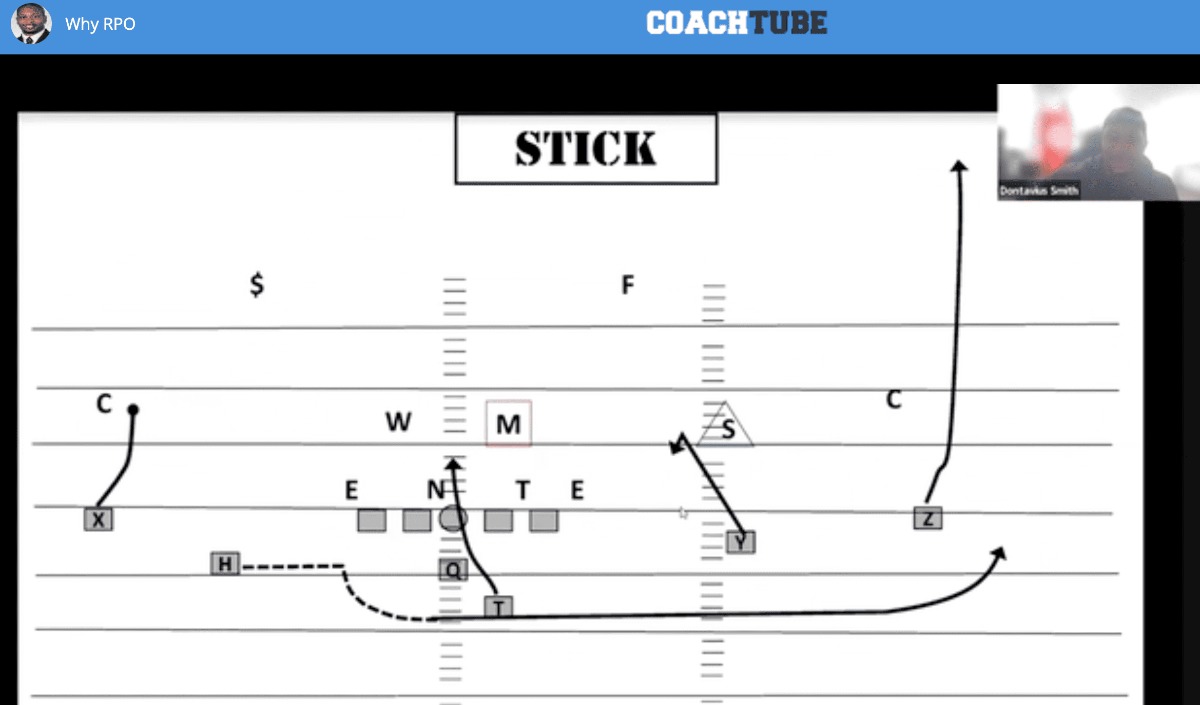
Smith starts with his base stick concept out of 2x2, then shows how to convert it into an RPO by building to 3x1 through motion.
The read starts at the mike linebacker. If the mike bumps out of the box with the motion, it's a give. True run game. Power. If the mike stays, it's what Smith calls a "yes," and the QB's eyes shift to the alley defender on the snap. Is the alley sitting or widening for the swing? That single reaction tells the QB everything.
The coaching point Smith hammers: stick the ball in the belly every time, even when the QB knows it's a pull. On film, he shows several reps where the defense brings pressure or plays cloud cover three, and the alley opens up. Pull, throw, puncture. Four or five more yards.
Smith walks through the full route assignments, the motion game that stresses the mike pre-snap, and an access throw that turns this concept into a downfield explosive in the clip above.
Alvarez's Run and Shoot RPOs: Key a Defender, Read the Space
Video: Rudy Alvarez - RPOs in the Run and Shoot
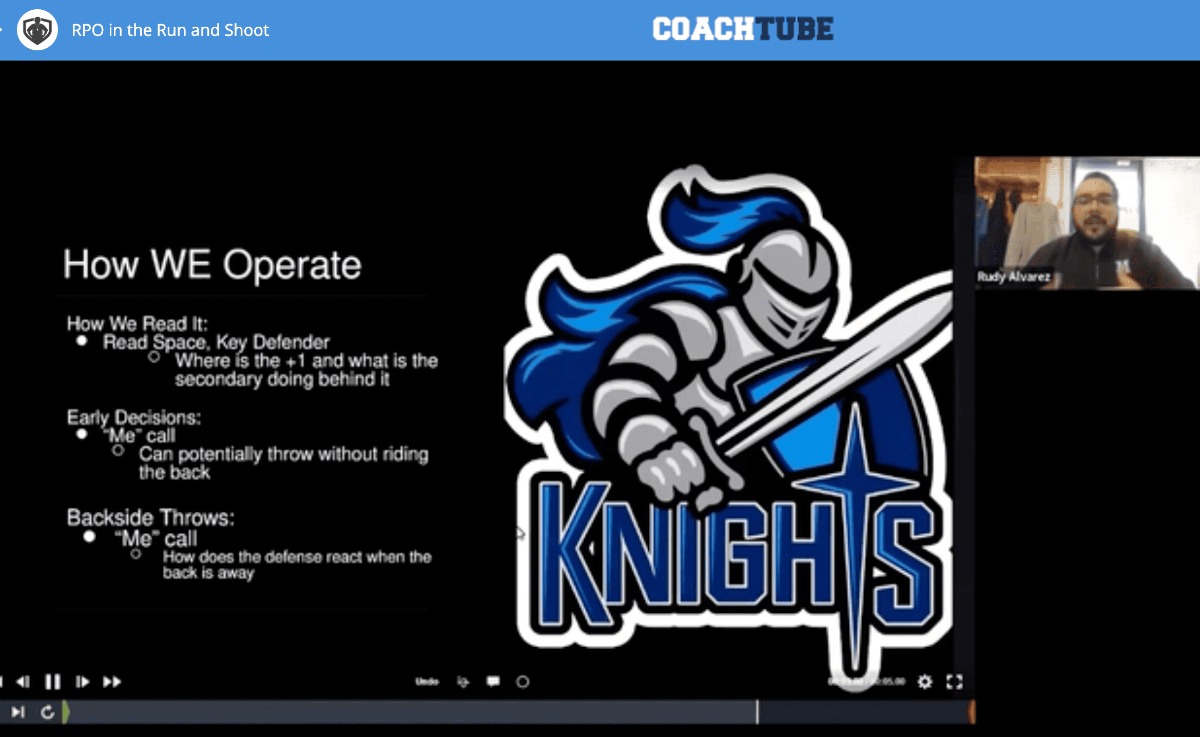
Alvarez runs a Run and Shoot base at Austin McCallum. This year his staff noticed a gap: they were either running the ball or running their shoot concepts, and there wasn't enough connection between the two. Adding RPOs bridged that gap. They rushed for over 2,500 yards.
His read structure is what separates a clean RPO from a pick-six. Alvarez teaches his quarterbacks to key a defender but read the space behind him. He calls it narrow vision to wide vision: lock onto the key, but see the full picture developing in the secondary.
The key, usually the nickel or outside linebacker, tells the QB to give or pull. But behind the key, the safeties are doing something too. If they're still in their pedal, the throw is safe. If a safety is rolling down to cover the space the key vacated, you're outnumbered. Give the ball and live with the run.
Alvarez has been on the wrong end of that read. He talks about it in the clip, along with his me call technique for managing the running back's fake on clear throw reads, and how he plans to expand RPOs across his entire shoot system.
Demeo's Hitch Combos: Quick Game With a Built-In Escape
Video: Tony Demeo - Hitch Combos
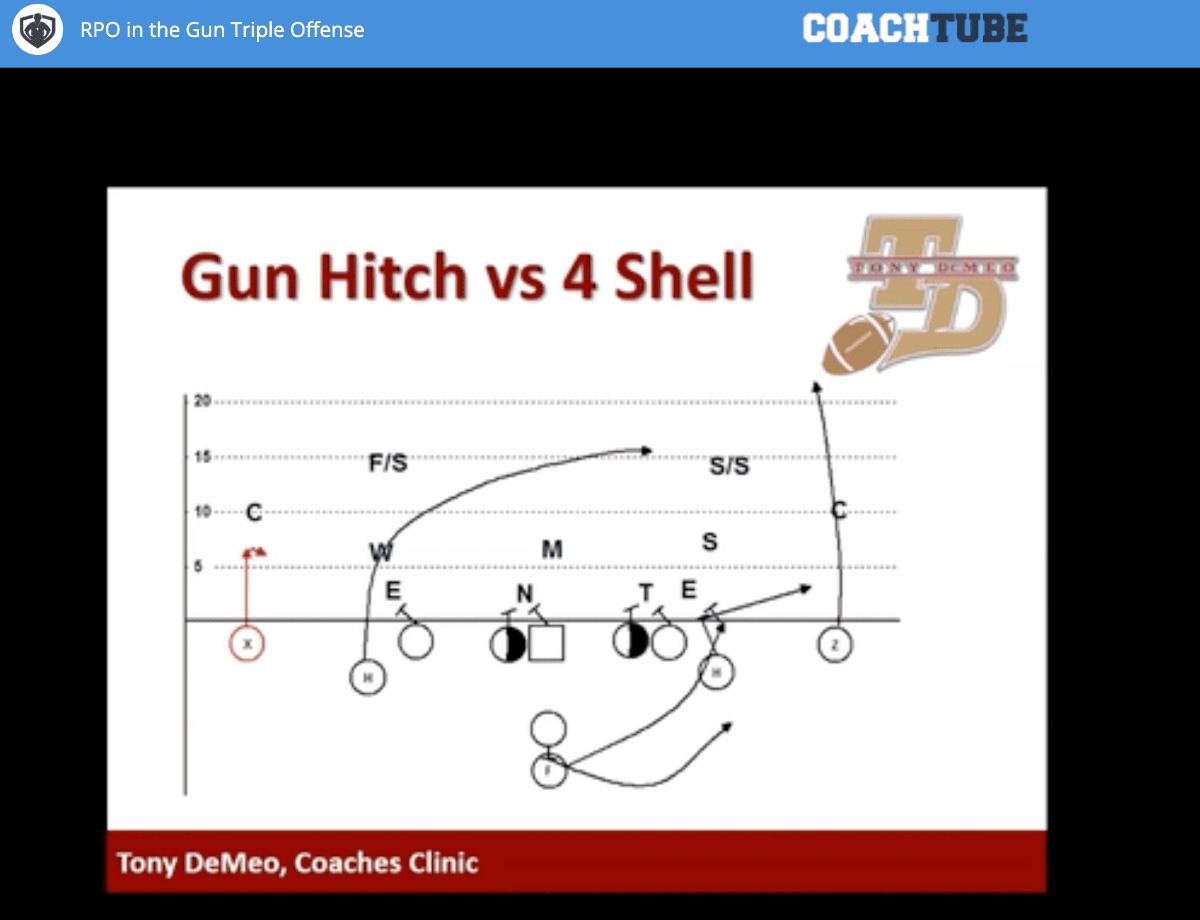
Demeo's hitch combo is a low-risk, high-percentage concept with two layers: the hitch as the core throw and the boot as the escape. It's not an RPO but another way to protect the run.
The QB's first throw is the hitch. Demeo is direct about it: when in doubt, throw the hitch. If it's there, deliver it. Period.
If the hitch isn't open, the QB boots opposite and works a progression on the move: the slam and slide in the flat, the over route coming across the field, or the QB tucks it with the tailback as a lead blocker.
Demeo makes the point that this is better than sprint out, and he's specific about why. When he ran sprint out, he could never solve the blocking. Reach everybody and the backside gave him problems. Turn back on everybody and the front-side linebackers scraped to become second contain. The boot off the hitch action solved both. He never got second-contained on this play.
He also shows how jump motion and jet motion open up easy hitch throws by forcing the defense into a tradeoff they can't win. Demeo covers the full route structure, trips variations, and several more formation adjustments in the clip above.
Three systems. Three completely different offensive identities. But every one of them builds around the same idea: find one defender who has to choose between two responsibilities, read his choice, and take the other one.
The specific play matters less than the structure underneath it. If your quarterback knows which defender to read, and he knows what each reaction tells him, the concept works.
Always be growing,
Coaches Clinic Community of Coaches Helping Coaches
P.S. Each of these clips is part of a full clinic.
Smith's course covers his complete RPO system, including third-level access throws. Alvarez delves deeper into first-, second-, and third-level RPOs within the Run and Shoot framework. Demeo's clinic covers the full Gun Triple offense: the triple option, hitch combos, formation variations, and how every piece connects.
Link: Dontavius Smith - Stick RPO
0 comments