Coach -
Tempo is one of the hardest things to simulate in practice. You can script looks, you can script periods, but the reality is that offenses and defenses never feel the stress of tempo until game day—unless you deliberately build it into your practice structure.
Baylor offensive coordinator Jake Spavital solves this with what he calls an “unrealistic drill.” It’s not about perfect looks or even clean execution. It’s about straining players to process, communicate, and operate at a pace faster than anything they’ll see on Saturday.
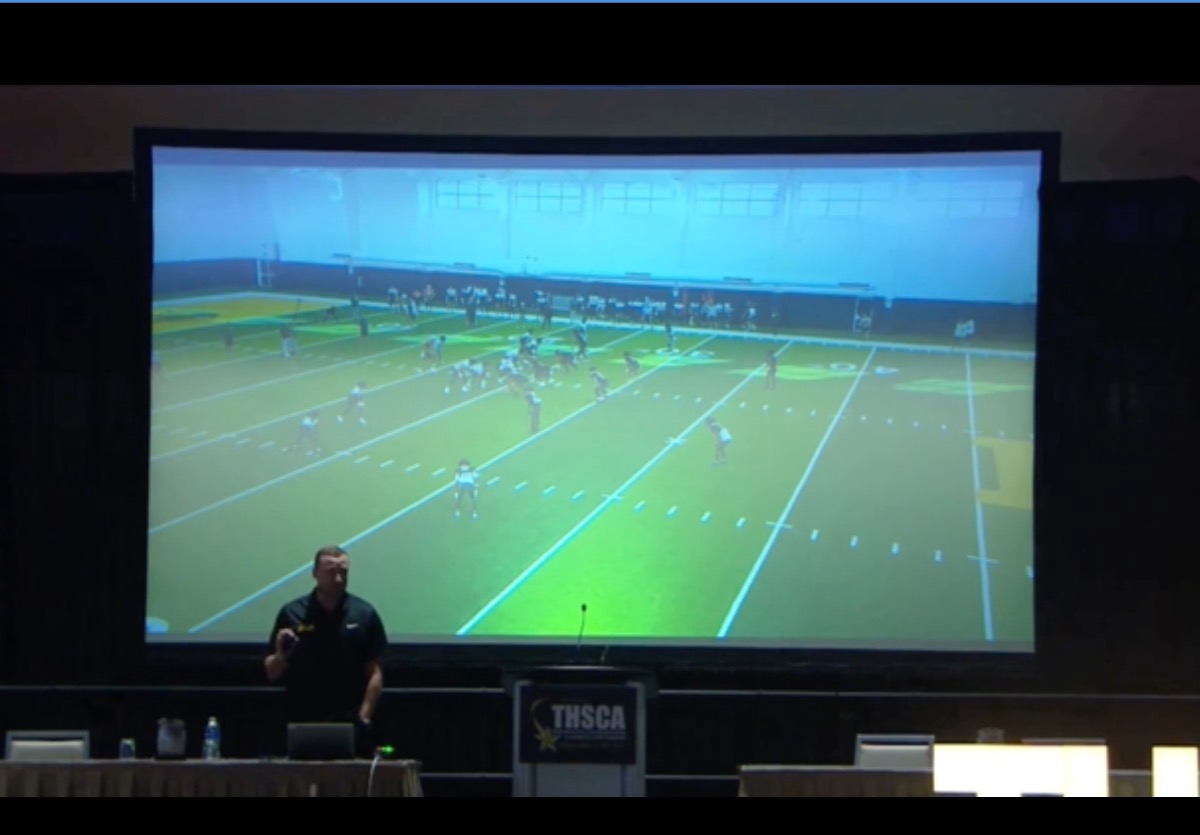
How the Drill Works
- Timing: The drill kicks off practice on Tuesdays and Thursdays, immediately after stretch.
- Structure: Five sets of good-on-good football—offense vs. defense with no scout team.
- Play Calling: Spavital calls game plan plays, not just generic tempo concepts. Players get live reps on installs while under tempo stress.
- Ball Spotting: The ball is intentionally placed quickly, often in unrealistic spots (wrong hash, middle of the field, etc.). Offense has to adapt.
- Rules: No substitutions. Everyone lines up and plays as fast as possible.
Spavital doesn’t care if the play matches the coverage. For example, he may call a single-high beater against quarters. The point isn’t the look—it’s teaching the quarterback to work through progressions and receivers to find grass within the structure of the concept.
What It Teaches
- Adaptability - Players stop looking for the “perfect picture.” Defenses are changing fronts, rolling coverages, and adjusting alignments. This drill forces the offense to make their points and play the call.
- Communication Under Stress - Without substitutions or clean hash placements, communication becomes non-negotiable. Everyone has to echo the formation, get lined up, and execute—fast.
- Game-Speed Reps for the Game Plan - Since Spavital uses that week’s plays, the offense gets live, good-on-good reps of actual calls they’ll use on Saturday. Players see both correct and incorrect looks, and they must execute regardless.
- Tempo Conditioning - The period isn’t just about X’s and O’s. It builds the conditioning needed to play at pace. When game tempo feels slower than practice, the offense gains confidence and rhythm.
Why You Should Steal It
You don’t need Baylor’s personnel to use this drill. Any program can structure a five-play, no-substitution, full-speed period into practice. The key isn’t the scheme—it’s the stress.
- Use game plan calls so players double their reps.
- Don’t fix hash marks or ball spots—make them find the ball and line up.
- Keep it short but intense: five plays is plenty if the pace is demanding.
- Rotate it in twice a week to keep the edge without overloading players.
Takeaways
Tempo isn’t about how fast you call plays—it’s about how fast your players can process, communicate, and adapt. By building “unrealistic” periods into practice, you train your offense to thrive in chaos.
Or, as Spavital puts it: “Just play fast, make your points, and execute to the best of your ability.”
Always be growing!
Coach Grabowski
0 comments