Coach -
Texas State’s offense isn’t just putting up numbers — it’s redefining tempo and tactical precision. Under offensive coordinator Landon Keopple, the Bobcats have climbed to #9 nationally in total offense (487.9 yards per game) and #11 in rushing (230.7 yards per game). Their rise isn’t built on gimmicks or gadget plays — it’s built on movement, clarity, and controlled chaos.
Creating Confusion for the Defense, Not the Offense
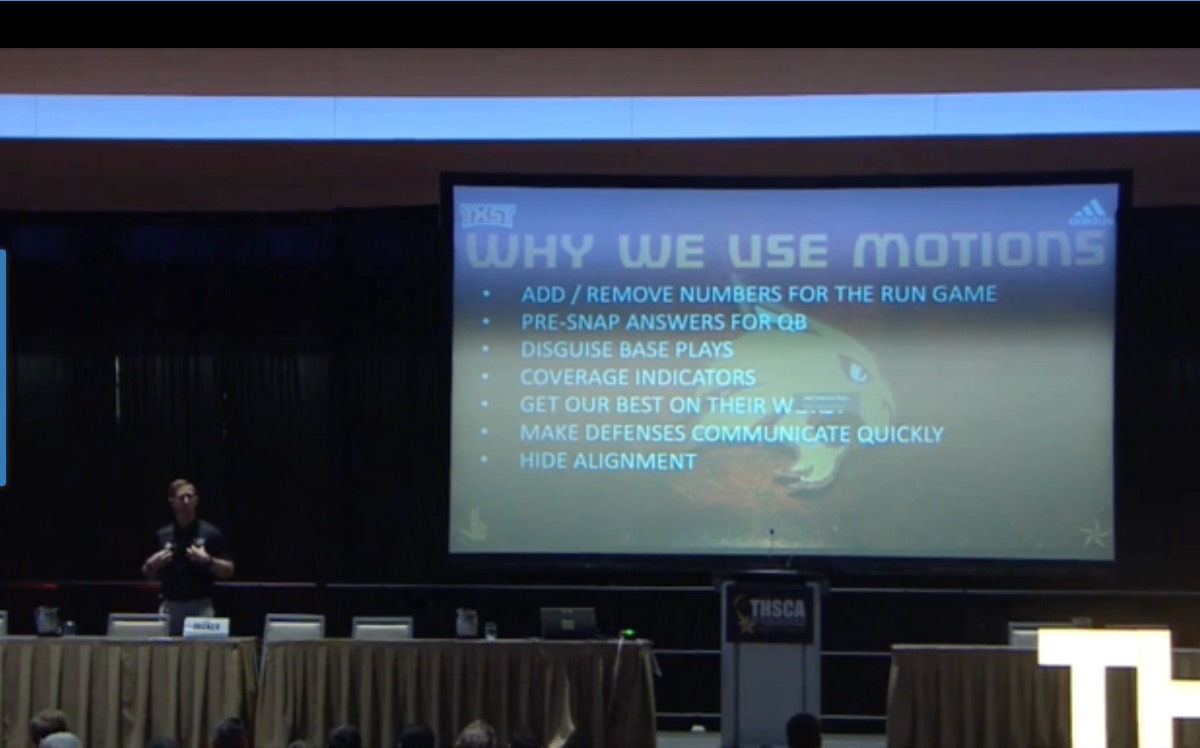
“We motion to either add people to the box or remove numbers from the defense in the run game,” Keopple explains. “If you just line up and stay stationary, the defense digs their cleats in and comes downhill. But if we make them move, make them communicate, it gives us the advantage.”
For Keopple, motion isn’t a distraction — it’s a diagnostic tool. Every shift and adjustment helps the quarterback see the field before the snap.
“I want to give the quarterback as many pre-snap answers as possible,” he says. “If he knows before the snap which side he’s working, which player to eliminate, our chances of success go way up.”
Disguising Simplicity as Complexity
Texas State’s attack looks multifaceted, but the secret is how Keopple disguises a small number of base plays with countless variations.
“Nothing we do is revolutionary,” he admits. “But being able to run our base plays 10 different ways makes it look like we’re really complicated — and we’re not. It gives our guys confidence and makes defenses guess.”
That philosophy gives Texas State the best of both worlds: players who play fast and decisive within a system that forces defenses to slow down and think.
Matchups, Leverage, and Motion
At the heart of Keopple’s system is the search for leverage. “Football is a game of matchups and angles,” he says. “We want to get our best player on their worst defender. When we do that, I like our chances to move the football.”
Motion helps make that happen. Every shift forces the defense to reveal coverage, communicate, and re-align — all while the offense stays one step ahead. “When we motion across, they have to rock and roll, bump, and check their assignments. Did everyone hear the call? If not, that’s when breakdowns happen,” Keopple says.
Engineering Space Through Alignment
In Keopple’s wide-split offense, alignment is everything. Motion becomes a tool to manipulate space and hide intentions.
“If I want to throw a speed out to the field, that’s a long throw from our wide alignment,” he says. “So I’ll motion in or out, condense the split — anything to keep the defense guessing. If I just tighten the split without motion, the defender knows something’s coming.”
By staying dynamic, the Bobcats disguise their intentions while creating cleaner throwing lanes and wider rushing seams — the kind that have made their ground game one of the nation’s most efficient.
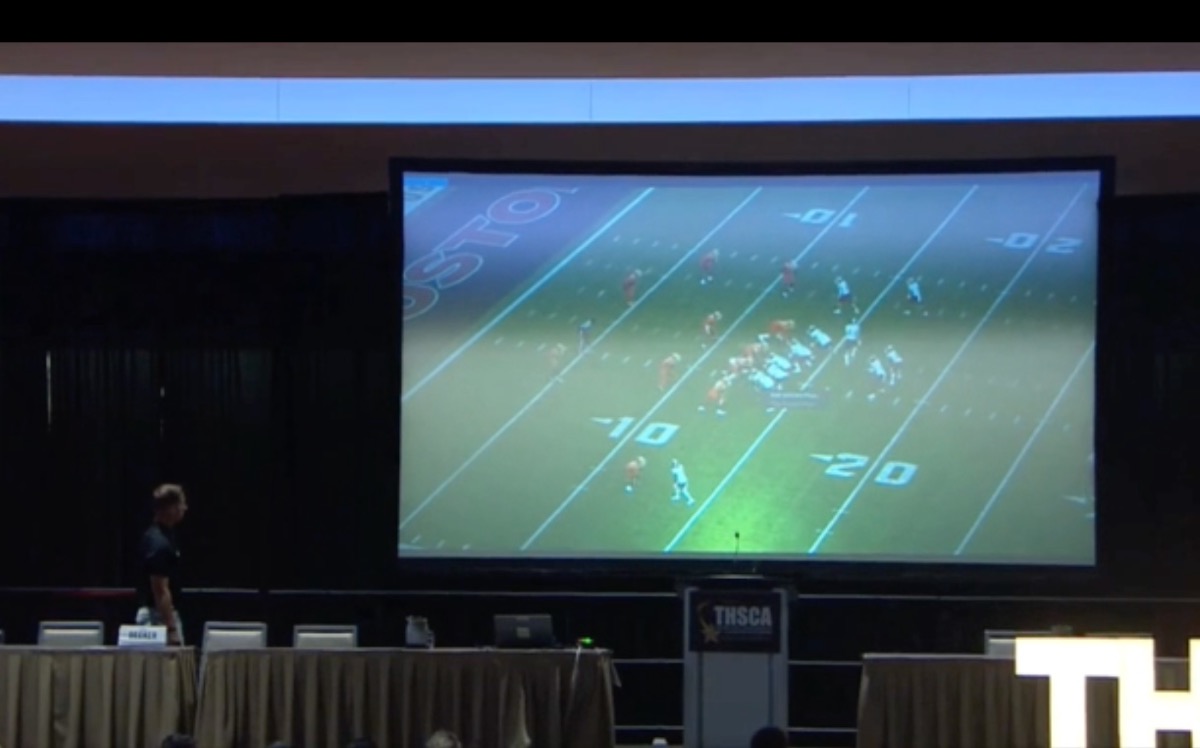
Example: Stress the Defense: Creating Space with 2x2 Motion & Screens
A System Built on Clarity and Confidence
What makes Texas State’s system special is how simple it feels for the offense and how complex it looks to the defense.
The motions aren’t for show — they serve a purpose: to help players play fast, quarterbacks make faster reads, and defenses communicate under duress.
As the Bobcats continue to roll through defenses this season, it’s clear that Keopple’s system isn’t about trickery — it’s about teaching. Every motion, every shift, every alignment is a lesson in football geometry — and right now, it’s a masterclass in offensive efficiency.
Always be growing!
Coach Grabowski
0 comments