Coach -
Over more than a decade as defensive coordinator, Pete Pappas has helped build a dynasty—seven Division 1 state championships and a reputation for smart, aggressive defense. His secret? It's not just about being aggressive—it's about being calculated.
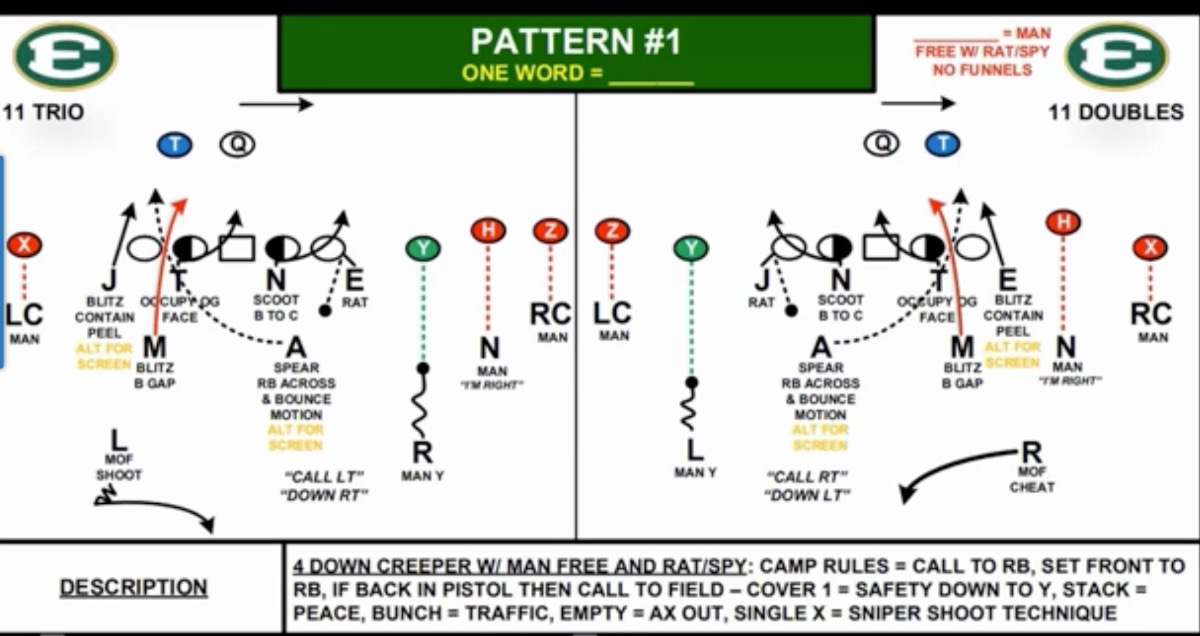
In his recent clinic presentation, Pappas broke down one of the staples of his defensive philosophy: distinguishing and deploying creeper pressures and simulated pressures to confuse quarterbacks, exploit protections, and still cover with seven.
“Low risk, high reward,” Pappas said. “If it doesn’t work, it’s no different than lining up and rushing four.”
Creeper Pressure: Simplicity That Deceives
Pappas defines a creeper as rushing a second-level defender (linebacker, safety, or corner) while dropping out a first-level defender—typically a defensive lineman—after the snap.
“You're presenting four guys, but you’re popping out one of them and sending a backer. The offense doesn’t know who’s really coming.”
It looks like base, but it isn’t. The defense sends heat from depth, while one of the down linemen quietly exits into coverage. Patterns like NCAA (All-American) blitz, trap 2, and build-a-bear are all staples in Pappas’s package, giving offenses the illusion of normalcy—until it’s too late.
Simulated Pressure: Threat in Numbers
Where creepers start from base, simulated pressures begin by showing chaos.
“You might show five, six, seven guys like you’re sending the house,” Pappas explained, “but post-snap, you’re only rushing three or four.”
This false front forces offenses into protection checks and hurried decisions. The threat is what matters—not the actual rush. Pappas showed examples of bear looks morphing into Tampa 2, of overstacked edges morphing into safe zone coverage—just four rushers, and still, a free runner.
Why It Works
Pappas’s system leverages one clear advantage: flexibility without sacrifice. These pressures don’t force you to abandon sound coverage. They keep seven in coverage, whether in Cover 1, Cover 3, trap 2, or Tampa 2.
They let the defense attack protections and manufacture free rushers without overcommitting bodies. And if it doesn’t produce pressure?
“It’s still just a four-man rush. You’re not giving anything away.”
For coaches looking to evolve their defensive attack without gambling away coverage integrity, Pete Pappas offers a masterclass in disguise and execution.
Thank you to Coach Pappas for sharing this in his presentation.
-The Coaches Clinic Team
About Pete Pappas
Now in his 11th year as defensive coordinator, Pappas has helped his program to seven Division 1 state titles. He credits his success to collaboration, a commitment to growth, and a focus on bringing out the best in his players and coaches. Off the field, he values family, friends, and the quiet moments that make life rich. On the field, he’s all business—and his defenses show it.
0 comments