Coach -
Introduction: The Meeting Room as a Competitive Advantage
Success on the field starts long before game day—it begins in the meeting room. The best defensive units aren’t just the most athletic; they are the smartest. They understand offensive tendencies, recognize formations instantly, and communicate in a common language. But creating that level of football intelligence doesn’t happen by accident. It requires an intentional approach to teaching, engaging players, and reinforcing learning.
This article breaks down how to structure your meeting room for maximum learning, how to teach defensive players to understand offense, and how to train them to watch film the right way—all while using quizzes and mental repsto solidify knowledge.
Creating an Engaging Meeting Room Culture
A great meeting room isn’t just a place where players passively absorb information—it’s a high-energy, interactive environment where players engage with what they’re learning.
- Make the meeting room a learning-focused environment: Coaches should ask questions, encourage participation, and hold players accountable for what they’ve learned.
- Use active learning techniques: Players should take notes, repeat terminology back, and explain concepts to each other.
- Break up the monotony: Vary the teaching methods by using film breakdowns, whiteboard sessions, quizzes, and on-your-feet walkthroughs.
“You’ve got to create an engaging environment, ask questions, and keep the meeting room a place where learning is a conducive environment.”
Why Defensive Players Need to Understand Offense
A great defense doesn’t just react—it anticipates. The best way to prepare defenders is to teach them how offenses think. This is why many successful defensive programs implement “offensive school” in the offseason.
- Start with the basics: Teach personnel groupings, formations, and run game concepts before ever installing defensive scheme.
- Don’t assume they know anything: Even at the collegiate level, coaches should not assume players understand the fundamentals of offensive structure.
- Speak a common language: If a linebacker sees a three-by-one set with a sniffer and a wide split receiver, he should immediately have an idea of what’s coming.
"You can’t skip steps. We don’t just send a new player an install sheet. We start with offensive school—what makes offenses tick?"
How to Teach Players to Watch Film Like a Coach
Many players watch film incorrectly—they follow the ball rather than analyzing their keys. Coaches must train players what to look for based on their position and responsibility.
- Three Types of Film Study:
- Learning the Defense – Studying base alignments, keys, and responsibilities.
- Opponent Study – Recognizing offensive tendencies, personnel groupings, and formations.
- Player-Specific Study – Watching elite players at the same position to learn techniques and habits.
- A Five-Step Process for Breaking Down a Play:
- Know the situation (down and distance, field position).
- Make the call and align yourself.
- Identify your key (what should you be watching pre-snap?).
- Anticipate what’s coming based on formation and past tendencies.
- Read your key and execute.
“Players have to flip their brains. Are they studying their key, watching themselves, or breaking down an opponent? They need to know the difference.”
Quizzes and Mental Reps: The Key to Retention
Just because a player hears something in a meeting doesn’t mean he truly knows it. The best programs quiz their players regularly to reinforce learning and force them to process information quickly.
- Make it interactive: Instead of just asking questions, have players write down answers and explain them to a teammate.
- Use scenario-based learning: Give players situations and formations and ask them to predict what the offense will run.
- Test recall speed: On the sideline, players don’t have time to think—they need to react immediately. Fast-recall quizzes train them to process information in real time.
"You have to continue to quiz them so it becomes second nature. It’s not about memorization—it’s about making them think like a coach.”
Conclusion: The Smarter Defense Wins
Building a great defense is about more than just physical skills. The best teams win with their minds first—and that starts in the meeting room. By creating an engaging learning environment, teaching players how offenses operate, training them to watch a film the right way, and reinforcing learning through quizzes and mental reps, coaches can build a faster, smarter defense that plays with confidence.
Want to take your defensive meetings to the next level? Start by teaching players how to think before they step on the field.
See part of Coach Bowen's presentation here:
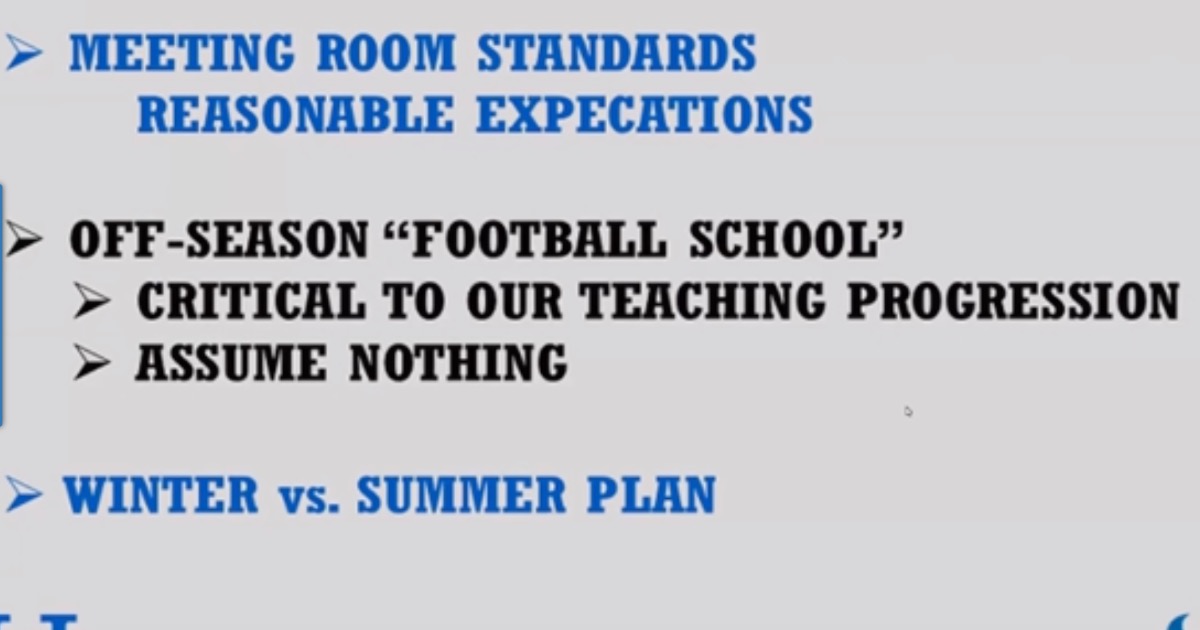
Coach Bowen delivered this presentation at the 2025 Lauren's First and Goal Virtual Clinic. Over 100 coaches presented to support fighting pediatric brain cancer. The clinic has 365 days of access for just $99 for all of these presentations. It is available here.
Always be growing!
Coach Grabowski
0 comments