Coach –
Depending where you are in the country, we are two-four weeks in, and tendencies are starting to show—but so are the adjustments. Now is the time to refine your process, anticipate where opponents will break tendencies, and make sure your players see the right looks all week.
On Offense – Noah Riley, Analyst, Baltimore Ravens
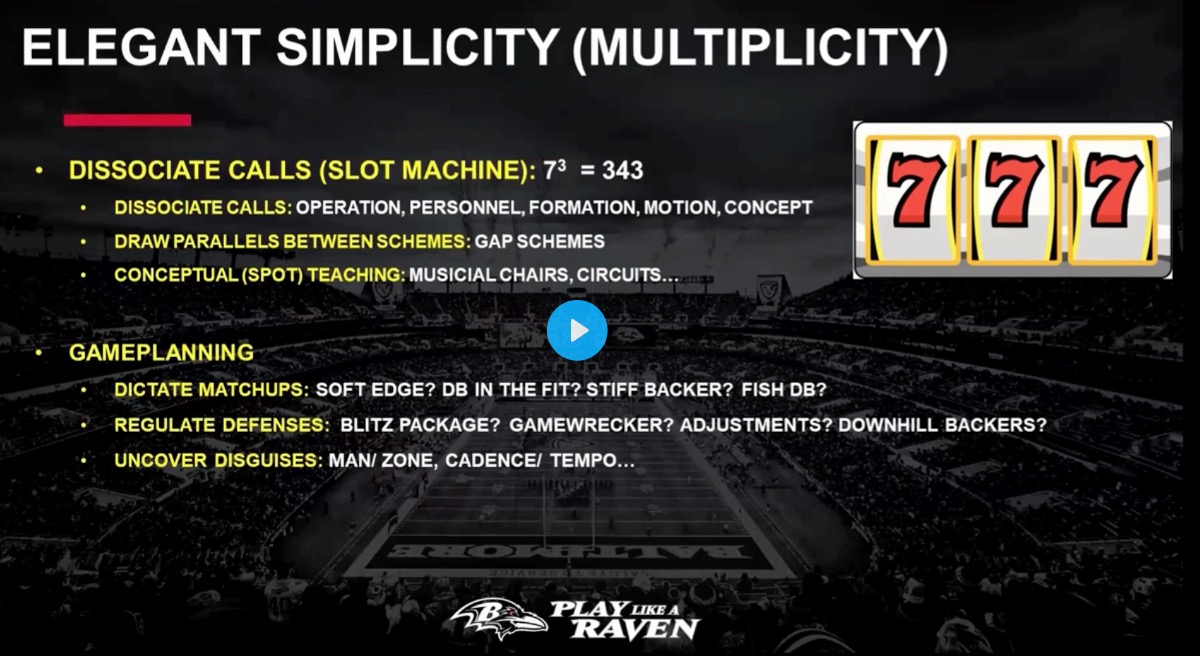
- Strive for “elegant simplicity”: keep teaching concepts consistent, but create multiplicity through personnel, formations, motions, and tempo. That way, defenses see a moving target without overwhelming your players.
- Always ask: How do they align? Study if the front is set by field/boundary, run strength, the back, or the tight end—and then identify the matchups that alignment creates.
- Dictate the game by forcing defenses out of their comfort zone:
- Run at soft edges and make DBs or corners fit the run.
- Use tempo and spread sets to take exotic pressures away.
- Move your best players to prevent the defense from pushing coverage to them.
“We’ve never won a game just pencil-whipping on chalk. But we have won by taking teams out of what they do best and making the game about us.”
On Defense – Matt Powledge, Defensive Coordinator, Baylor
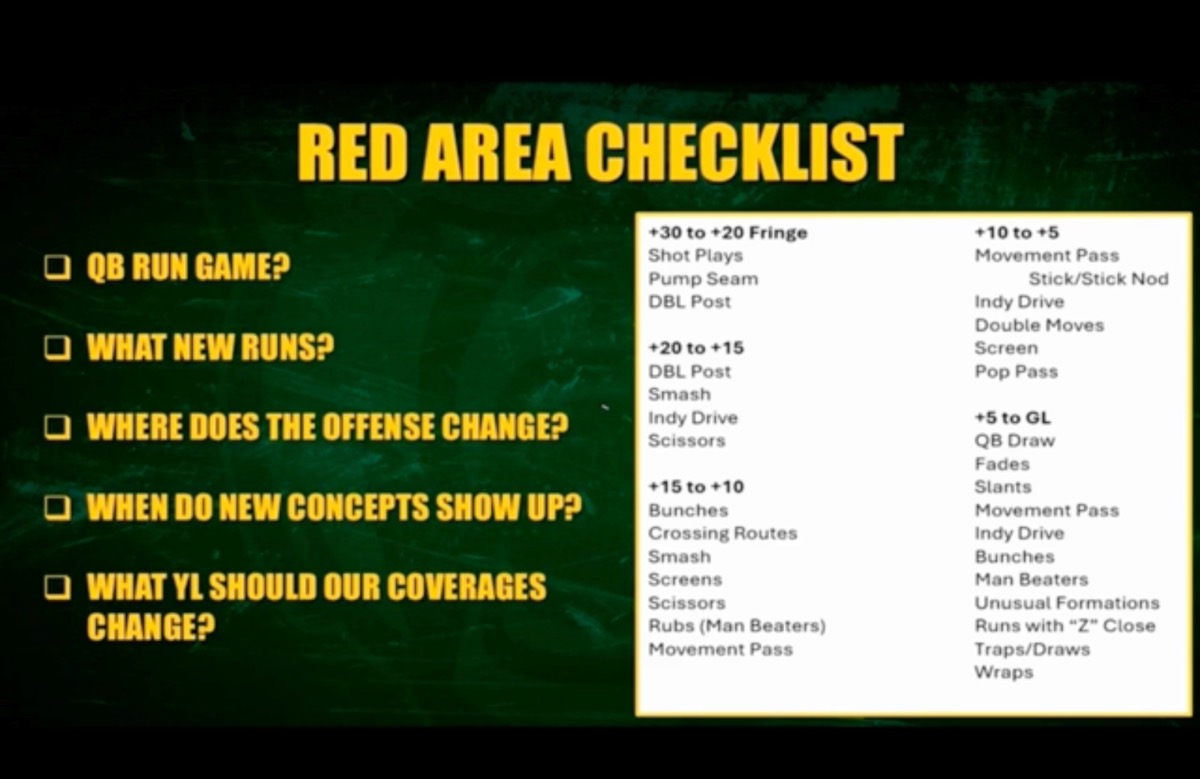
- In today’s game, the quarterback run is one of the biggest red-area threats—identify if and when your opponent uses it, since most offenses are selective about exposing the QB.
- Chart new runs and concepts that appear only in the red zone—speed option, direct QB runs, or gap schemes often show up inside the 20.
- Recognize that offenses change by yard line. Know exactly where those changes occur so you can adjust coverages and pressures accordingly.
- Build and use a red-area checklist each week to avoid overlooking small details in a high-stakes part of the field.
“It’s really important to have a checklist. The red area changes the game, and if you don’t account for it, you’ll miss the little things that matter most.”
On Special Teams – Andy Merfeld, Special Teams Coordinator
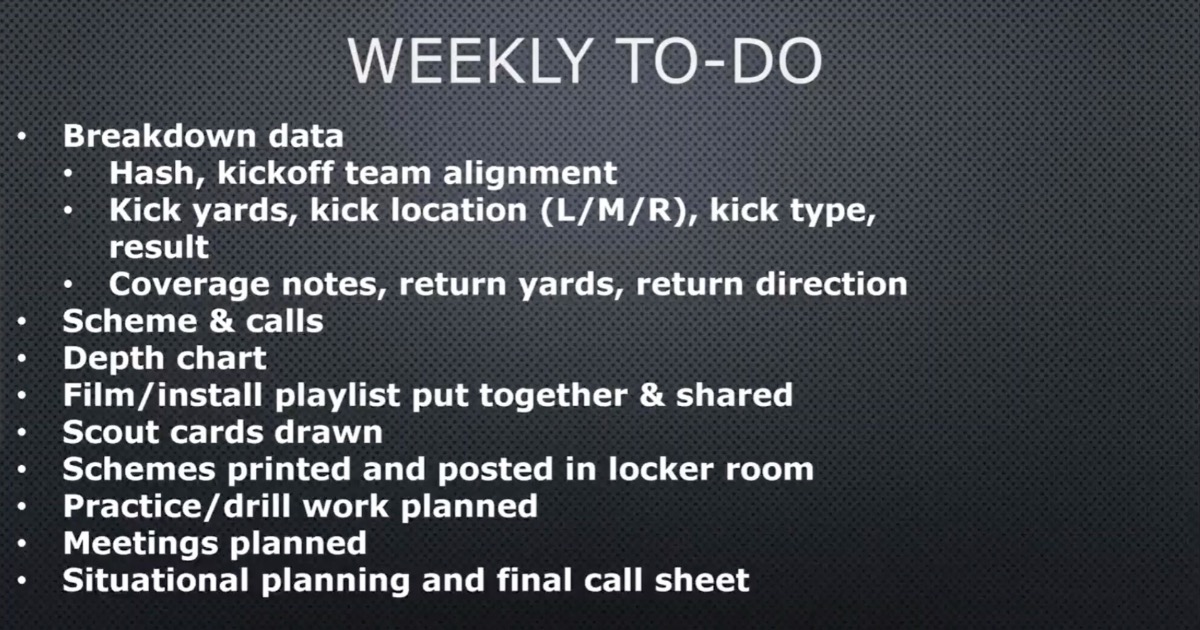
- Start the week with a comprehensive kickoff breakdown: hash, alignment, depth, direction, kick type, and coverage notes—organized so tendencies can be sorted and studied.
- Build a weekly workflow:
- Sunday – grade the previous game and start the next week’s plan.
- Monday/Tuesday – finalize the depth chart, post schemes, and script practice reps.
- Wednesday/Thursday – install, practice, and review with adjustments.
- Friday – jog-through and final reminders.
- Keep depth charts consistent, but adjust for injuries. Post schemes and scout cards early so players get extra time for study outside of practice.
- Script the entire practice week on Monday or Tuesday so both first and second units see the right looks and reps are maximized.
“On a unit like this, you can script the whole week of practice right on Monday or Tuesday. That way, every player sees the looks they need and runs the calls they’ll make on game day.”
Closing Note
By Weeks 3-5, the game becomes less about what’s on tape and more about how quickly you can adjust. The best staffs use structure, checklists, and detail to make sure nothing slips. Take these perspectives, refine your own process, and give your players the clearest path to success.
Find the Winning Edge!
– Coach Grabowski
0 comments