Coach -
Quick game is where zone coverage gets tested. Offenses snap it fast, routes break under five yards, and your defenders have to convert from zone reads to man reactions without losing a step. If your players don't have clear answers before the ball moves, it's already out by the time they process it.
Two college coaches break that down this week.
Dante Bartee, Defensive Assistant at the University of Oregon, covers the foundational language of MOFC zone match. Specifically, how your corners and seam-curl-flat defenders know their assignments before the snap.
Dan Owen, Defensive Coordinator at the University of West Georgia, puts those rules on film against quick game.
Video: Dante Bartee on MOFC Zone Match Coverage
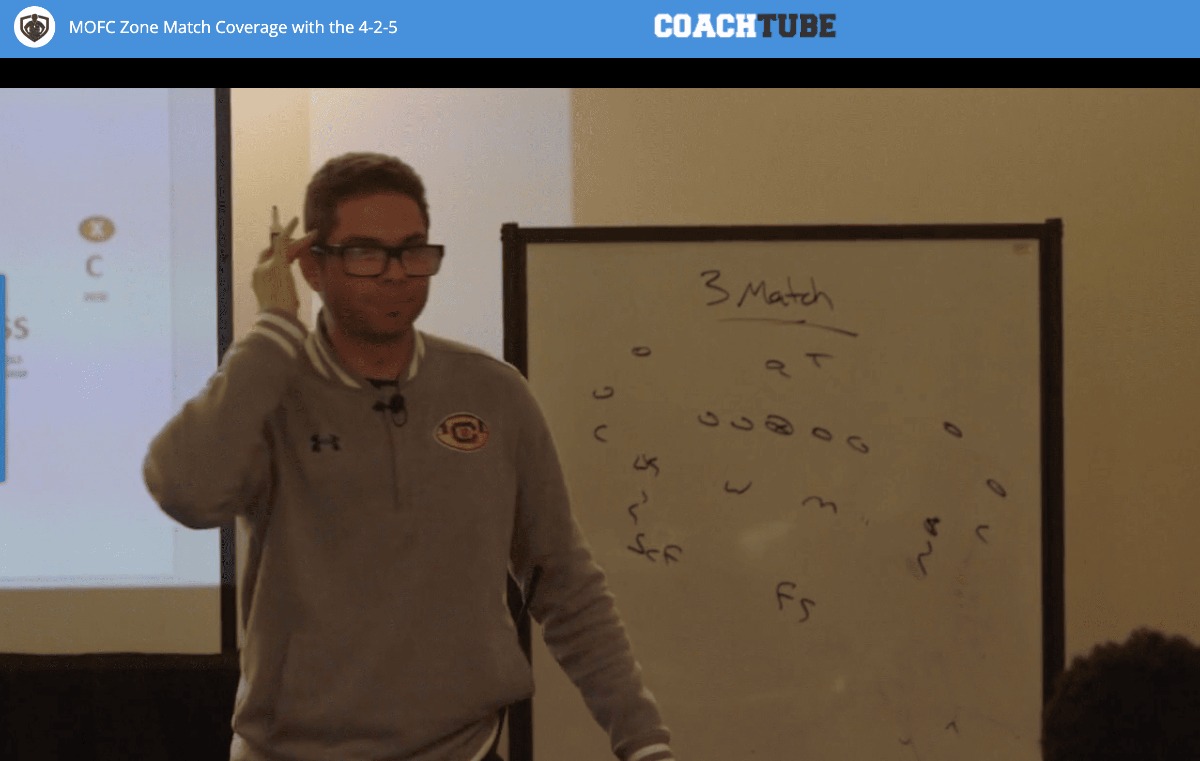
What MOD Means and Why It Matters for Corners
In zone match, corners need to know their technique before the ball moves. Bartee builds this in through three terms:
MEG = inch: Press technique.
MOD = bail: Play off, play man to man.
Midpoint = walkout: Walk out to the landmark.
Against quick game, your corners are typically in MOD. "Man on Deep." They bail to their landmark and play man to man—unless the route is a shallow, a hitch, or anything under five yards. When that happens, the corner converts and drives on it.
The value of the language is speed of processing. Players don't sort through a paragraph of rules at the snap. They hear a word and they know their technique. Meg means press. Mod means bail. Bartee explains how he builds this into his system in the clip above.
The Seam-Curl-Flat Read in 3-Match
While corners are playing MOD on the perimeter, the seam-curl-flat defenders are working underneath. Their job doesn't change based on the corner call.
In three-man match, the seam-curl-flat player is carrying verticals in the seam. He drops to the seam and reads three to two—the same read he makes in two-back formations. Same divider leverage. Same position maintenance. There's no field or close coverage distinction that changes his technique.
That consistency is the teaching point. Your corners can be bailing or pressing on any given play, and your underneath defenders are doing the same thing regardless. The reads and the dividers don't shift based on what the perimeter is doing.
The Upfield Hip Rule: Quick Game Answers on Film
Video: Dan Owen on RIP/LIZ Coverage vs. Quick Game
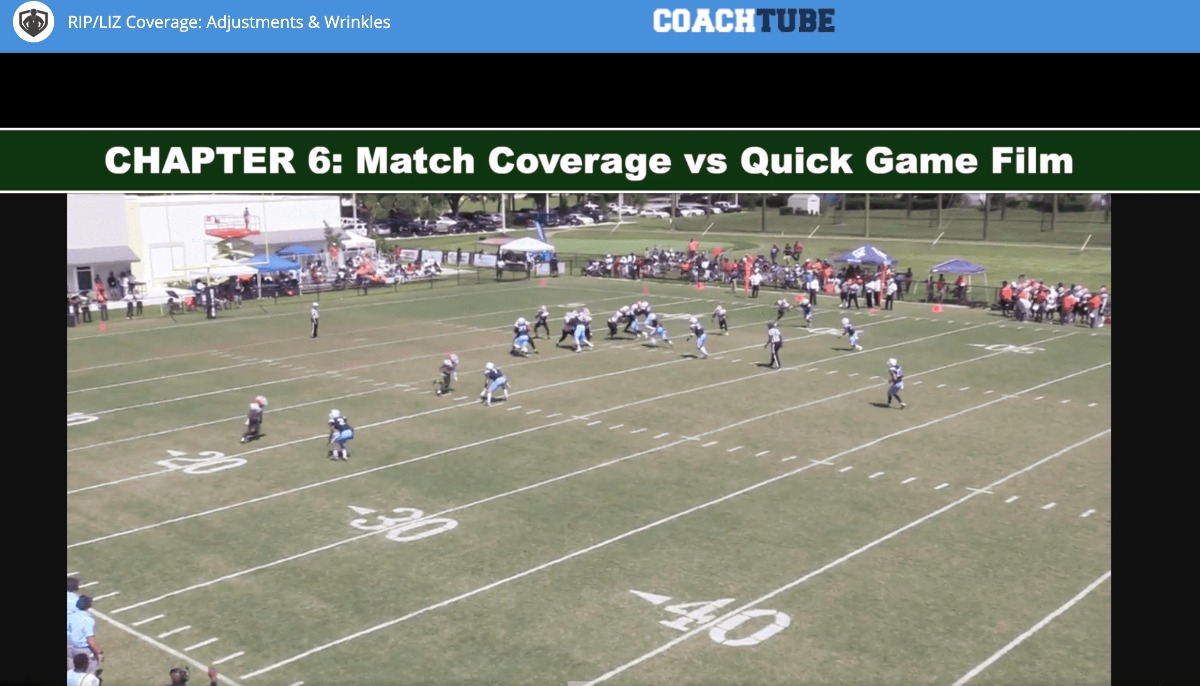
Third and three. Two by two. Ball is coming out fast.
Dan Owen has a specific rule for both the seam-flat player and the field corner on any quick game snap:
Seam-flat player on #2: Drive the upfield hip of number two. Not the body, not the route—the upfield hip. You know this is quick game. Get to that hip before the route breaks.
Field corner on #1: Drive the upfield hip of number one from the outside in. Your read is through the release of number two. If two releases inside toward the nickel or Sam, you now have the information you need—lean heavy on one and throttle down at the 12 to 15-yard break point.
Owen shows both a bad rep and a good one on film. In the bad rep, both seam-flat players have their eyes on the quarterback in the backfield instead of on their assignments. They're guessing. In the good rep, the field corner squeezes down on number one, gets flat, and drives back to the upfield shoulder. He's there for the seam break.
The final piece is the post safety. Owen calls it speed 90 deep technique: shuffle, stay ready to play speed option to both sides, account for quick game to both sides, then get into the **Runway**—between the hashes, about 20 yards deep. That's his home while the underneath players drive on the quick game.
The system holds against quick game because each player has a specific answer. Corners know MOD means bail, with a clear conversion rule for anything under five yards. Seam-curl-flat defenders read three to two with consistent dividers, regardless of what the corners are doing. And when quick game comes, seam-flat players and corners drive the upfield hip while the post safety finds the Runway.
That's not a complicated scheme. It's precise technique communicated with clear language, executed the same way every snap.
Never Get Out-Coached,
Coaches Clinic Community of Coaches Helping Coaches
P.S. Dante Bartee's full clinic, MOFC Zone Match Coverage with the 4-2-5, covers the entire system: playing skinny, rat adjustments, funnel and key principles, split-field coverage structures, stubby and connie variations, and match concepts against RPOs and offensive spacing.
Dan Owen's clinic, RIP/LIZ Coverage: Adjustments & Wrinkles, walks through Cover 3 match from the ground up, including Y-Cross answers, 3x1 and 2x2 formation rules, scooch technique, and advanced tags.
Link: Dante Bartee - MOFC Zone Match Coverage with the 4-2-5
Link: Dan Owen - RIP/LIZ Coverage: Adjustments & Wrinkles
Upcoming Clinics:
Passing Game Mastery Clinic March 7th
Hog O-Line Clinic Match 16th
0 comments