Coach -
In-season game planning is a balance of discipline, structure, and adaptability. Each phase of the game—offense, defense, and special teams—demands its own process, and the best coaches know how to sharpen those details every week. In this edition, we pull insights from three respected voices: Jordan Neal, head coach at McMurry; Chris Lorenti, defensive coordinator at Rhode Island; and John Mack, a championship-winning high school and college coach.
Offense: Jordan Neal, Head Coach, McMurry University
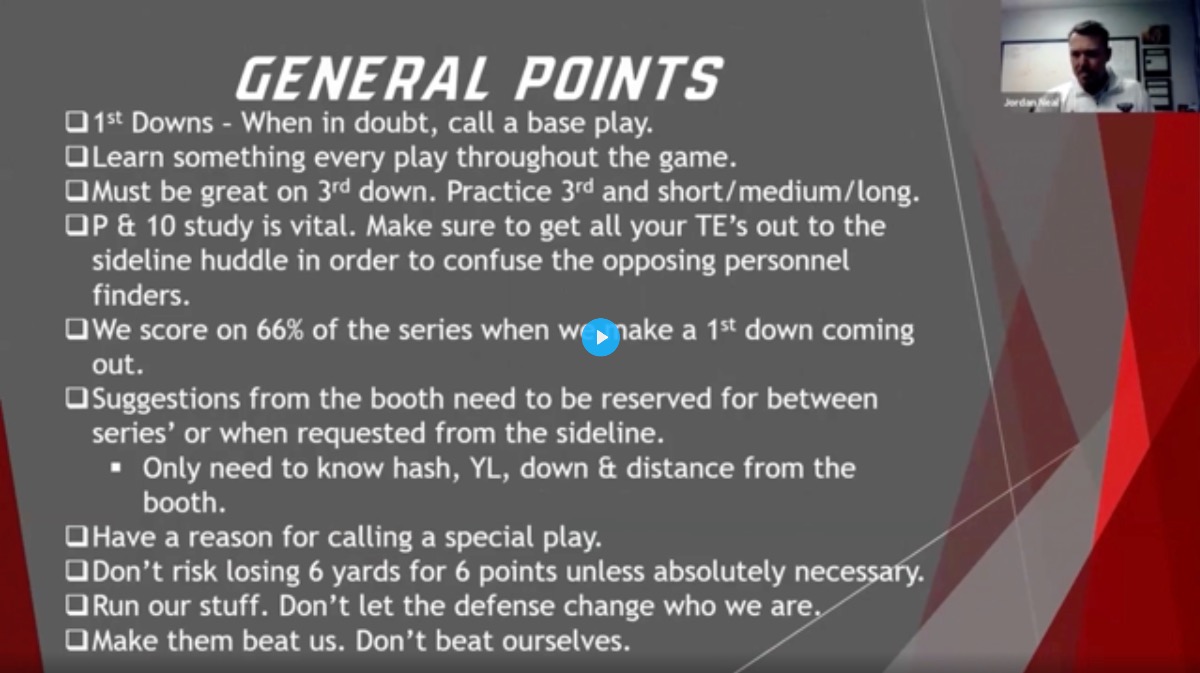
Jordan Neal has made a career out of building high-powered offenses. From leading NCAA statistical champion units at Hendrix College to delivering McMurry’s first winning season in over a decade, Neal has proven himself as one of Division III’s brightest offensive minds. His philosophy is rooted in staying on schedule and maximizing critical moments.
- First down philosophy: Neal emphasizes simplicity—when in doubt, call a base play. Staying on schedule early is the foundation for drive success, and his numbers back it up. Offenses that gain five or more yards on first down score on two-thirds of their series.
- P & 10 study: Neal highlights the importance of “possession and 10” plays—the first play of each series. With only 12–15 of these snaps per game, they disproportionately set the tone for scoring drives.
- In-game learning: Chart who’s making tackles throughout the game. Identifying defenders who consistently show up allows for live adjustments to the play calling.
- Play caller’s mindset: Discipline matters. Don’t risk big negative plays for the chance at a big strike unless the situation calls for it. Identity should drive the offense, not the defense’s attempt to dictate terms.
“The really good play callers aren’t the ones with the best plan on paper—they’re the ones who keep learning and adapting throughout the game.” – Jordan Neal
Defense: Chris Lorenti, Defensive Coordinator, Rhode Island
Video: Game Week Prep/Game Planning Par Runs
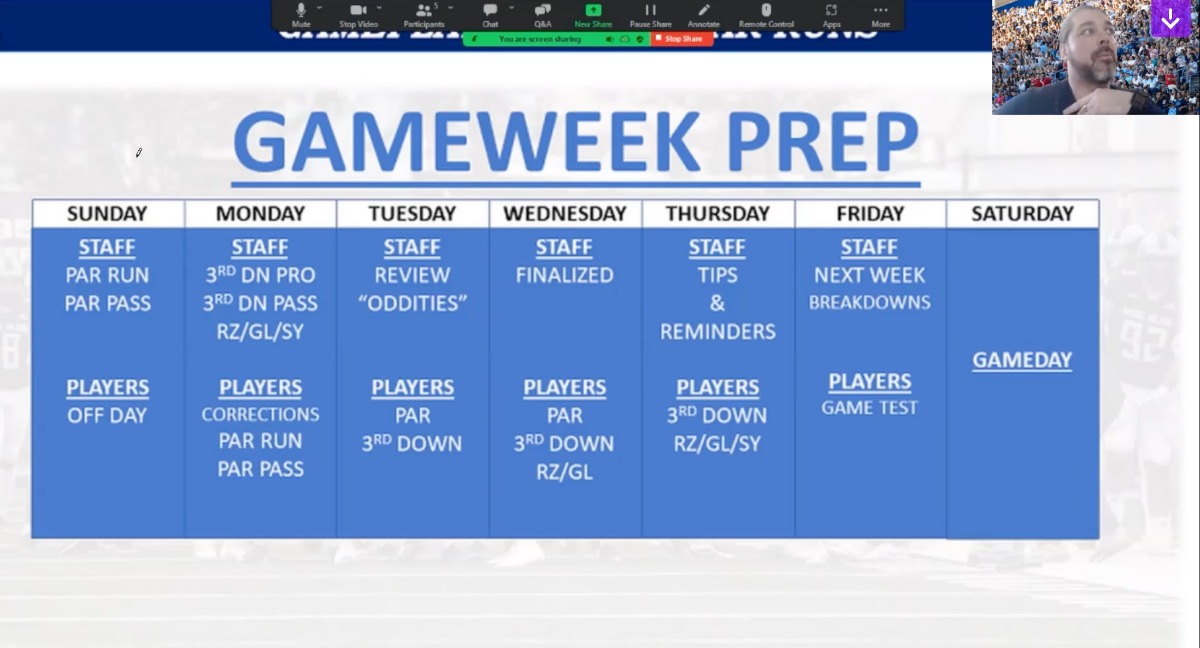
Chris Lorenti has steadily built Rhode Island’s defense into a championship-caliber unit, culminating in a 2024 CAA Football title and a top-10 NCAA playoff seed. His approach to weekly preparation is systematic, detailed, and collaborative.
- Sunday night focus: Each week starts with first and second down run game breakdowns—zone vs. gap, how the opponent attacks the C-gap, and any “oddity runs” that could create problems.
- Collaborative prep: Staff presentations cover both the run and pass breakdowns on Sunday, with third down, red zone, and short yardage studied on Monday.
- Front alignment decisions: Zone schemes demand careful thought. Should the defense use odd or even fronts? How does that decision affect C-gap fits, stunts, and linebacker play?
- Gap integrity vs. movement: Lorenti stresses clarity—when to spill the football to secondary support, when to cancel gaps, and when to hold steady. These decisions are dictated by formation and field position.
“When we see zone, we have to ask ourselves—odd or even front? Where do we want to play it, and how do we handle that C-gap? That’s the conversation that sets the tone for our run game plan.” – Chris Lorenti
Special Teams: John Mack, Retired High School & College Coach
Video: Checklist - Punters, Punt Returner, Blocking Kicks, Punt, and Punt Block
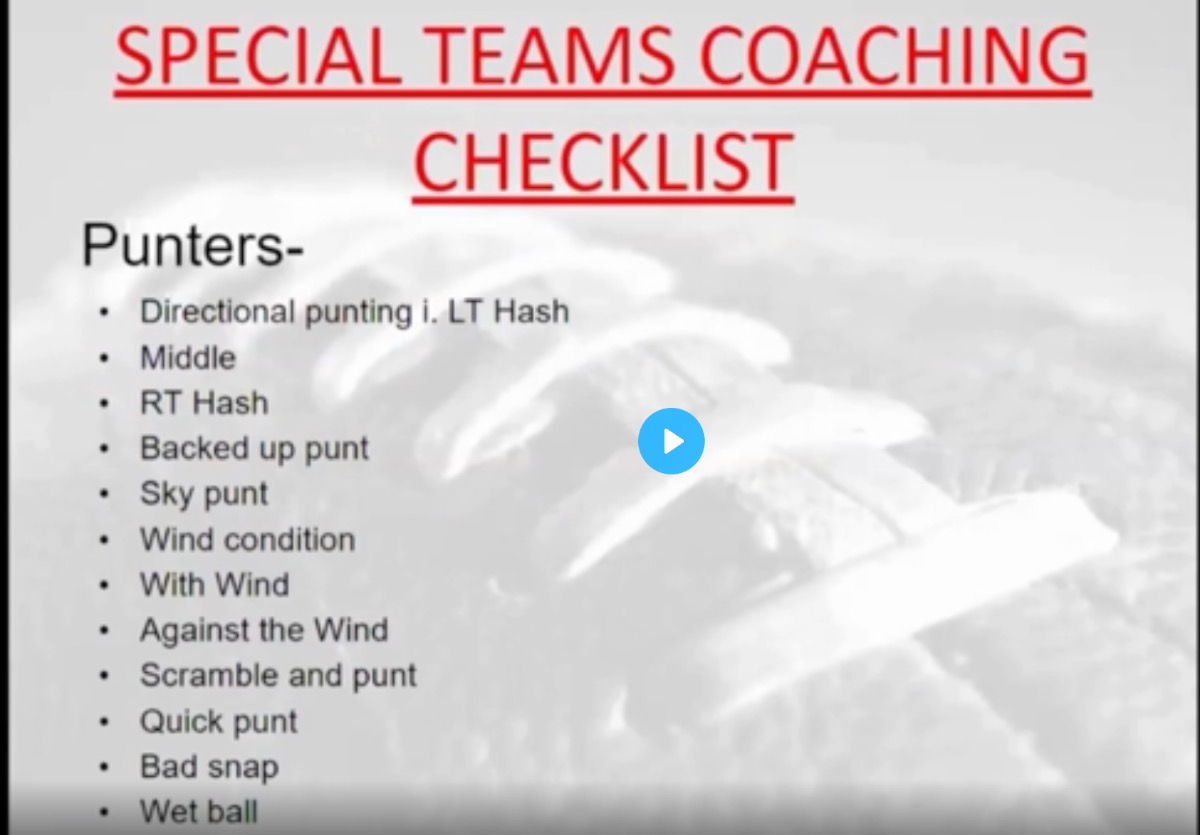
John Mack’s coaching career spans decades of success, with 12 league championships, 7 CIF titles, and 3 state championships at St. Bonaventure, followed by a conference title and bowl victory at Ventura College. His impact has always included a relentless emphasis on the kicking game.
- Avoiding critical errors: Mack instills a set of non-negotiable “don’ts”—don’t be offsides, don’t rough the kicker, don’t fall on a blocked kick, don’t let the ball hit the ground, don’t clip, and don’t block below the waist. Eliminating self-inflicted mistakes is the foundation of special teams discipline.
- Situational punting: Backed-up punts, sky punts, and directional punts all must be practiced under live pressure. Punters should train into and with the wind, and never punt from the same spot in practice.
- Return game discipline: Teach punt returners the 10-yard rule, proper fair catch technique, and how to judge the nose of the ball. Tricks like fake fair catches are out—Mack prefers players run away and draw coverage instead.
- Block and react: Drill block techniques and practice “scoop and score” after a block. Just as important, prepare the unit for what to do if a blocked punt crosses the line of scrimmage.
“We drill every situation—backed-up punt, sky punt, wet ball, scoop and score. If you practice it, your kids know how to react when the moment comes.” – John Mack
Takeaway
Game planning is not just about creativity—it’s about structure and discipline. Jordan Neal shows how offensive detail on first down drives success. Chris Lorenti demonstrates how systematic weekly prep creates defensive consistency. And John Mack reminds us that special teams discipline often decides the hidden yards that separate wins from losses.
Three coaches, three different lenses—each one sharpening the edge you can bring into this week’s game.
Have a great week!
Coach Grabowski
0 comments