Coach -
New Mexico’s 35–10 upset over UCLA was more than just a scoreboard shock—it was a signature moment for Jason Eck’s program. In just his second year, Eck showed what happens when a team buys into belief, embraces boldness, and executes with physicality.
“Fortune favors the bold,” Eck said after the game. “We don’t play these games to try to keep it close. We come to win these games.”
That mindset was clear in how the Lobos attacked. They rushed for 298 yards, controlled the tempo, and played with an edge that wore UCLA down. But underneath the upset was something deeper: a philosophy of offense that Eck has been shaping for years.
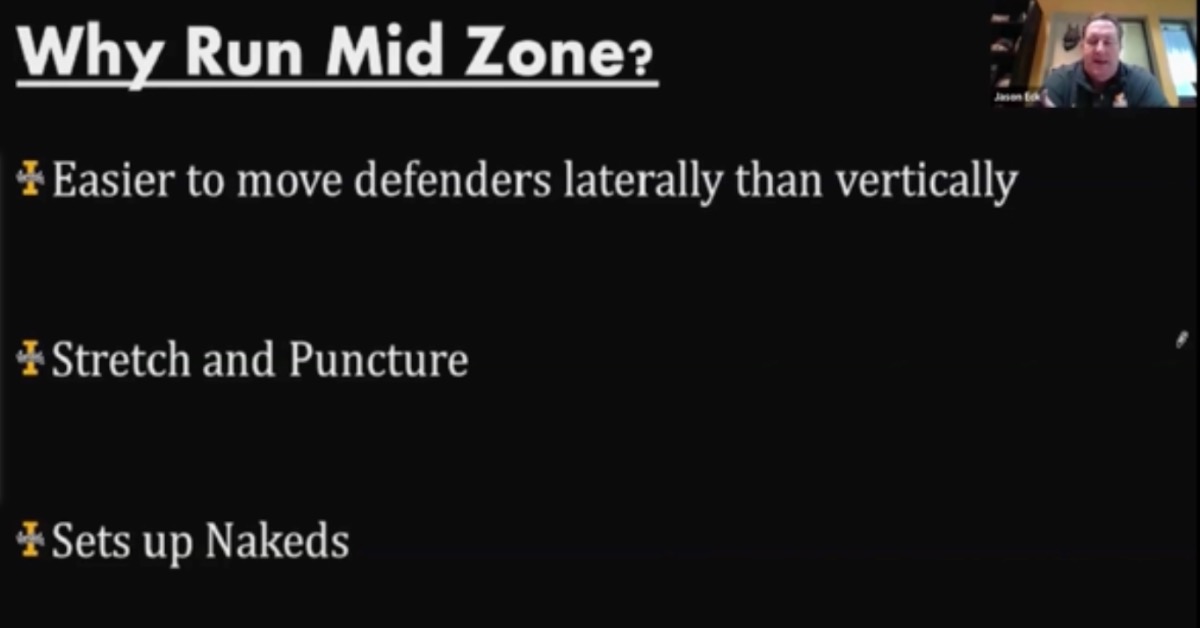
Building a Line, Building a Program
Eck knows that not every line can dominate right away. Developing an offensive front takes time. That’s why his approach emphasizes schemes that give players a chance to grow while still stressing defenses.
Instead of demanding overwhelming knock-back power, his teaching focuses on moving defenders laterally, creating seams, and setting up decisive north-south cuts. These are the kinds of plays that allow a line still finding its identity to compete with confidence.
Multiplying Threats
Part of what makes Eck’s offensive identity dangerous is its adaptability. He’s drawn from systems like Alex Gibbs’ Denver Broncos wide-zone tree, tailoring them for pistol and offset formations.
Plays like mid-zone—while not necessarily the star of the UCLA game—fit into this bigger picture. They give the illusion of outside runs, stretch defenses horizontally, and create opportunities for explosive play-action. The simplicity for the offensive line (consistent landmarks, same combinations) contrasts with the stress it puts on defenses when paired with motion, formations, and nakeds.
What Coaches Need to Know About Mid-Zone
One of Eck’s favorite teaching tools is the mid-zone run, a concept that continues to gain traction across levels of football. It’s a play that grows with the offensive line and pairs naturally with a vertical passing attack.
- Why It Works. Mid-zone stretches defenses laterally while allowing the back to make one decisive cut north–south. It’s a great equalizer for developing lines that may not yet dominate with sheer power.
- Landmarks. From offset, the aiming point is the outside leg of the tackle. From pistol, it’s the tight end’s butt—or a “ghost” tight end landmark if none is present.
- OL Technique. Linemen drive their nose to the playside armpit, then push vertical. Overreaching is discouraged to prevent defenders from backdooring blocks.
- Big Arm Technique. When defenders fight to stay free, linemen use the backside arm to throw them wide, opening the inside seam.
- Angles of Departure. The back’s shoulders should mirror the line’s shoulders, syncing movement and timing.
Because it is simple for the line yet stressful for defenses, mid-zone is one of those foundational concepts that can appear in multiple packages and keep an offense efficient.
The UCLA Upset: Proof of Concept
Against UCLA, Eck’s philosophy turned into a statement.
- Physical Edge. New Mexico didn’t flinch in the trenches, piling up nearly 300 yards on the ground.
- Aggressive Mindset. Eck’s commitment to winning, not just competing, showed in how the Lobos dictated tempo and refused to back down.
- Balanced Identity. Big runs, timely passes, and disciplined play created a full-team effort that stunned the Rose Bowl crowd.
What It Means
The upset won’t define the whole season—but it does signal what Eck is building. He’s giving his players belief, giving his offense tools that scale as the line develops, and giving New Mexico an identity: bold, versatile, and physical.
For the Lobos, this wasn’t just a win. It was the first step in proving that under Jason Eck, they’re capable of much more.
Always be growing!
Coach Grabowski
0 comments