Coach
When it comes to third down, Indiana Defensive Backs Coach Ola Adams believes clarity beats complexity.
“It’s not what you know,” he says, “it’s what you can execute in the moments that matter most.”
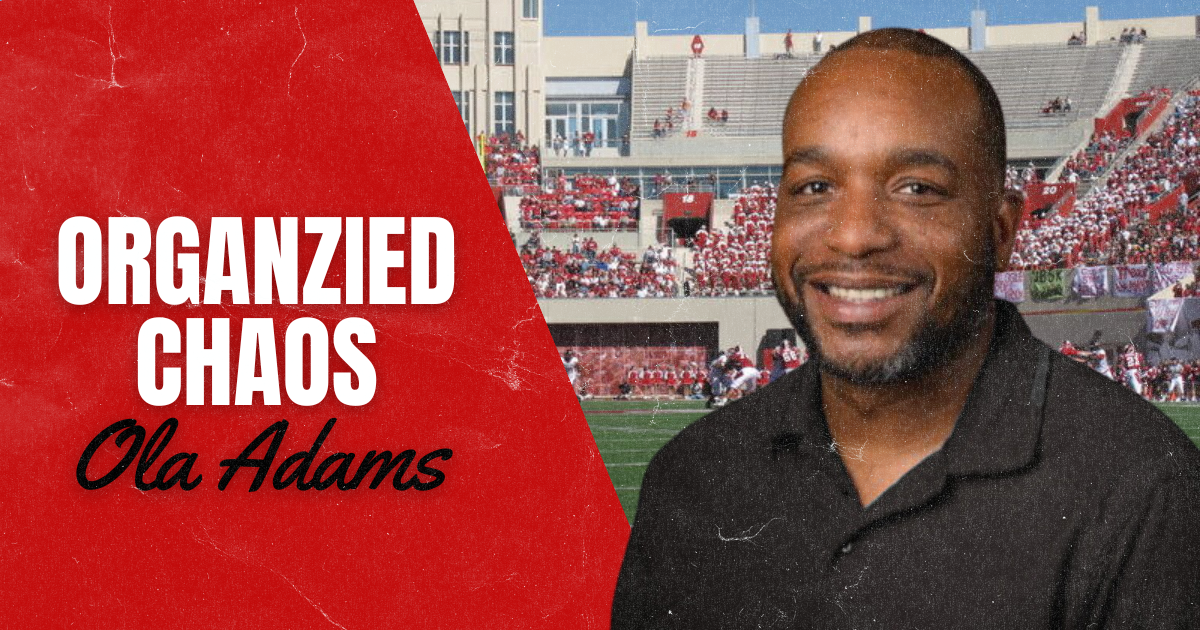
That philosophy—what Adams calls organized chaos—has become a cornerstone of Indiana’s 2025 defensive identity. Through six weeks, the Hoosiers rank 4th nationally in third-down defense, allowing opponents to convert just 23.4%of the time. It’s not by accident. Adams’ system, built on disguise, discipline, and situational mastery, creates pressure without predictability.
The Situational Mindset
Adams trains his players to think through every phase of a drive. His core message: field position equals scoring probability.
“If we force the offense to start inside our 20, it’s a one-in-thirty chance they score,” he explains. “As they move downfield, those odds rise, so every early stop matters.”
He divides third down into four key windows—1–2, 4–6, 7–10, and 11-plus yards—each demanding a distinct approach. Every call is tracked for efficiency: wins divided by total calls. If a scheme doesn’t fit the defense’s presentation, it’s gone, no matter how well it once worked.
“You can love a call,” Adams says, “but if it doesn’t match your look, it’s got to go.”
Dictating Protection Through Presentation
Adams builds everything around a consistent one-high safety shell on third down. The front may vary, but the picture never changes.
“We want to give the illusion that we’re bringing five or six every down,” he explains. “Even when we’re rushing four, the offense needs to feel heat.”
That commitment to disguise allows the Hoosiers to dictate protection. “We know where the protection is going based on our presentation,” Adams says. “We’re not playing a guessing game—they are.”
Execution by Down and Distance
- Third and 1–2: Treat it like goal line in the middle of the field. “We’re willing to do whatever it takes to stop them from getting a yard,” Adams says—zero coverage, loaded boxes, heavy personnel ready for tempo.
- Third and 4–6: The critical window. Expect quick game, bunches, and running back releases. Adams relies on creepers and simulated pressures—showing blitz, dropping into coverage, and eliminating “free” throws.
- Third and 7–10: Pressure becomes selective and surgical. “We tie it to the quarterback clock,” he explains. “If he holds it 2.8 seconds or longer, we attack. If it’s out at 2.4, we mix coverage.”
- Third and 11+: Conservative, not passive. “We want to surround their best receiver and force the ball underneath,” Adams says. “We’ll drop eight, play vision football, and rally short of the sticks.”
Confidence Through Education
The foundation of Indiana’s success isn’t scheme—it’s understanding. Players study not just formations but why the offense behaves as it does.
“Do you know who you’re playing against?” Adams challenges his group. “Do you know what that coordinator likes to do when he has to have it?”
Indiana’s defense profiles every opponent: who must be doubled, who can be isolated, and which linemen can be attacked. “Every package gives us a way to put our best player on their worst blocker,” Adams notes. “That’s how you win matchups.”
The Discipline Behind the Chaos
To outsiders, Indiana’s third-down defense looks aggressive and unpredictable. Inside the building, it’s scripted with precision. “We’re going to look like we’re playing man every snap,” Adams says, “and you’ll have to guess post-snap.”
That blend of structure and disguise—organized chaos—has helped the Hoosiers turn third down into a weekly advantage, one that’s fueling their top-five national ranking.
Key Takeaway
Ola Adams’ system is a reminder that elite defense isn’t about volume—it’s about identity. By staying committed to one presentation, studying offensive behavior, and executing situational detail, Indiana has made third down their winning down.
As Adams puts it: “Don’t call what you like—call what fits your presentation.”
Always be growing!
Coach Grabowski
0 comments