Coach -
Spring practice is short. You don't have time for wasted reps, and you don't have time for a tempo that teaches your kids to coast.
Most coaches who want to play fast practice fast. All the time. Every drill, every period. And it works for about two weeks. Then the kids adapt. They learn to pace themselves. What was 100 percent becomes 75, and nobody notices because 75 is just what "fast" looks like now.
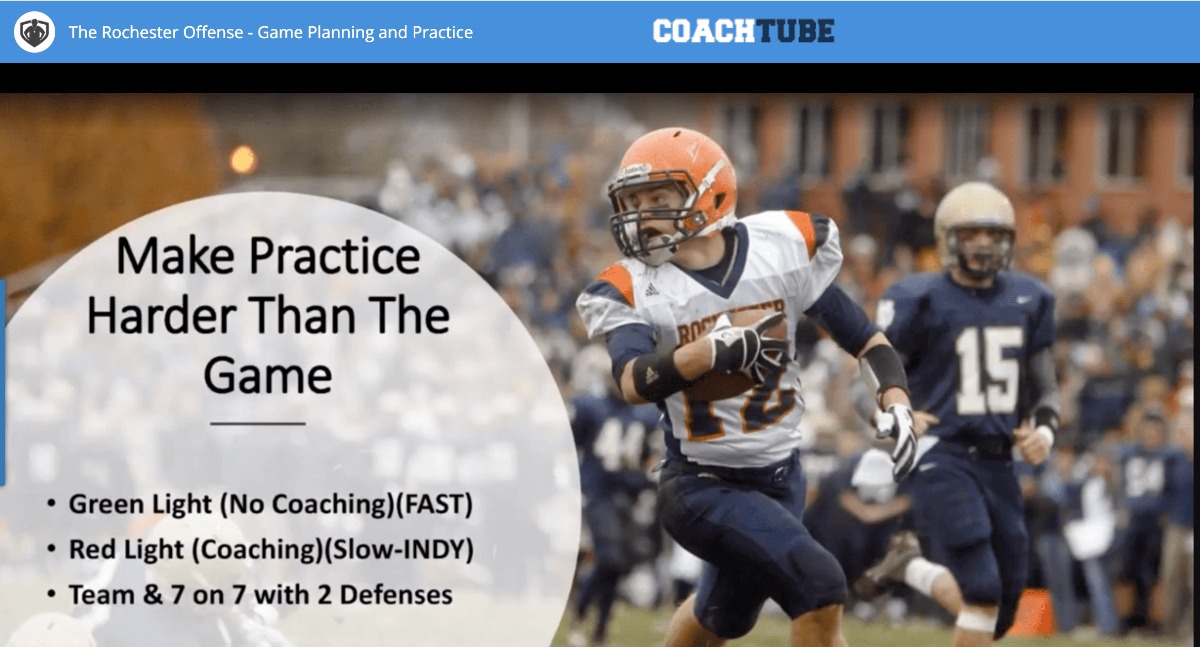
Coach Derek Leonard solved this problem inside the Rochester Offense with a system he calls Green Light / Red Light. It's a practice structure that alternates between full-speed, no-stoppage periods and slower, coaching-heavy individual work.
The result: when his teams hit the field on Friday, the game feels slow. Mentally and physically.
Video: Derek Leonard on Making Practice Harder Than the Game
The Problem With Going Fast All the Time
Coach Leonard learned this the hard way. When he first started running tempo in 2007, his practices were tougher than the games. The offense moved faster in practice than they'd ever have to move on Friday night. That part worked.
But over time, something shifted. When you demand the same speed every drill, every period, every day, kids who aren't platooning figure out how to survive. They regulate. The intensity that started at 100 drifts to 75, and 75 becomes the new baseline. Nobody's dogging it. They've just adapted to the pace, and your "fast" practice isn't fast anymore.
College programs threw resources at this problem. Balls everywhere, lifting fast, flying from drill to drill. Coach Leonard didn't have that. He had to find a way to keep the intensity real and functional without the infrastructure of a Power Five program.
Green Light / Red Light
Here's the system.
Green Light means full speed. No stopping. No coaching between reps. If a coach needs to talk to a player, pull him out, get someone else in, and keep going. Coach Leonard's benchmark: in a five-minute Green Light screen period, his offense is trying to get 14 to 15 screen plays on air. That's a rep roughly every 20 seconds. There's no time for teaching. You coach on the run or you don't coach at all.
Red Light means slow down. This is individual work, position-specific teaching, technique breakdowns. Ten minutes. Coaches can stop reps, talk through details, walk kids through footwork or assignments. Coach Leonard is direct about this: some of his coaches, especially the older, more analytical guys who were his own coaches in high school, are better in this setting. They coach best when they can slow down, and the Red Light periods let them do that.
The two alternate throughout practice. A Green Light team or 7-on-7 period followed by a Red Light individual period. Then back to Green Light. The rhythm keeps the high-speed reps genuinely high-speed because the players know the Red Light period is coming. They don't have to pace themselves through a 90-minute practice that runs at one tempo. They have to go 100 percent for five minutes, and then they get to breathe and learn.
That's what keeps Green Light from becoming Yellow Light. The contrast is the tool.
Two Defenses to Keep the Tempo Real
The other piece Coach Leonard figured out early: one scout defense kills your tempo.
In the past, with one defensive unit running scout looks, the offense couldn't go fast even when it wanted to. The scout team couldn't line up correctly. Coaches couldn't get calls in. The offense was standing around waiting, and the whole point of the Green Light period died at the line of scrimmage.
The fix is two defensive units during team and 7-on-7. While one defense resets, the other is already lined up. The offense never stops. Coach Leonard also mixes in a significant amount of on-air work during these periods, because sometimes air reps are better than going against bodies when the goal is speed and execution, not physicality.
Coach Leonard goes into the details of how he rotates those units and structures the on-air versus live work in the clip above.
Why This Matters for Spring
The goal of this system isn't just fast practice. It's making the game feel slow.
When Coach Leonard's players had been running Green Light sessions all week, practicing at a tempo faster than any game would demand, Friday nights changed. The refs told players to get out of the way. The 25-second clock ran. And instead of the game speeding up and forcing kids to think faster, the game slowed down. They'd already operated at a higher speed. The thinking was done. The execution was automatic.
For the other team, it was the opposite. The game was speeding up on them. They were the ones processing.
If you're building your spring practice schedule right now, this is the kind of structural decision that shapes every day you have with your team.
Always be growing,
Coaches Clinic Community of Coaches Helping Coaches
P.S. This clip is part of Coach Leonard's full course, The Rochester Offense: Game Planning and Practice.
The complete clinic goes well beyond practice tempo. He walks through his entire weekly preparation model from Sunday through Thursday, how he builds his game plan, how he organizes opponent analysis, and the origins and development of the Rochester Offense itself. If you're looking for a complete system for structuring your weeks and getting your offense ready to perform, the full clinic is below:
Link: Derek Leonard - The Rochester Offense: Game Planning and Practice
P.S.S. Here's a really interesting online Practice Planner and Game Planner I can't stop tinkering with that can save a ton of time when you're planning. ❤️
0 comments