Coach -
Week 2 is in the books. By now, the opening jitters are gone, tendencies are starting to take shape, and the grind of the season has begun. Each Sunday, I’ll keep sending you insights from coaches across the game—ideas to help you fine-tune your process and gain an edge as you prepare for the next opponent.
– Keith Grabowski
On Offense – Joe Loth, Head Coach, Western Connecticut
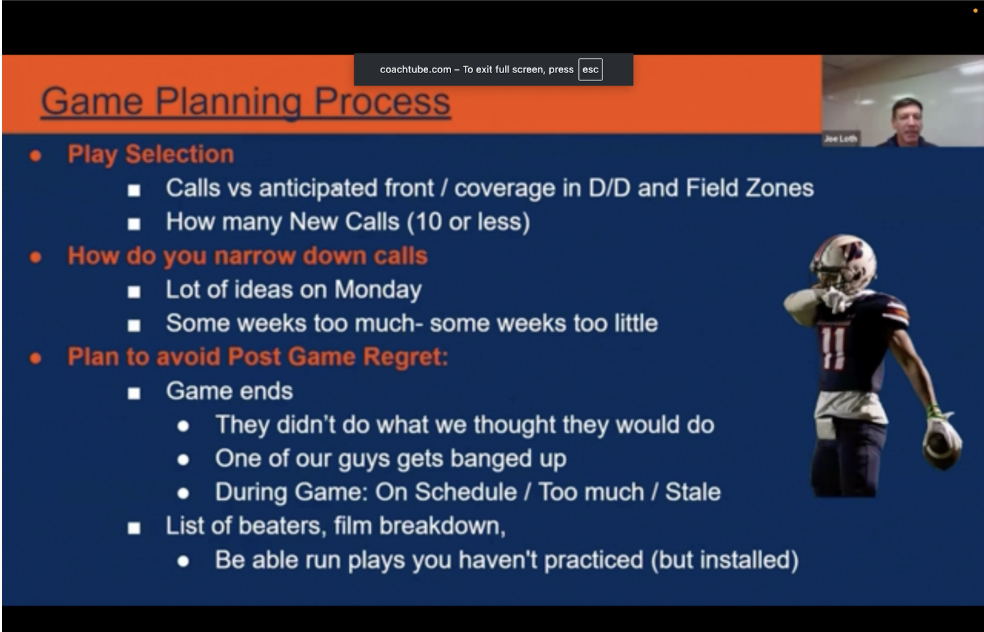
- Build a season-long call bank of 100 plays and track how many new calls you add each week—keeping it to 10 or fewer helps players master execution.
- Use a template for narrowing calls so you avoid “game regret”—being unprepared when the opponent shows something unexpected.
- Keep a list of beaters from film study and be ready to pull from camp installs to counter defensive wrinkles, even if they weren’t repped that week.
“We always want to try to avoid game regret. That means having answers ready, so if they do something different, we’re not stuck without a plan.”
👉 [Watch the clip]
On Defense – Wes Goodwin, Outside Linebackers Coach, Oklahoma
- Start Sunday with grading the previous game as a staff, then meet to study and delegate scouting report responsibilities.
- Build a DNA profile of the opposing play caller—what does he like in certain situations (after turnovers, midfield, plus territory, third down)?
- Break down formation and personnel tendencies, especially on first and second downs, separating out special situations.
- Track motion indicators—for example, is jet motion 100% run, or does motion across formation reveal a strong tendency?
“My biggest feel is getting a sense of the opponent’s play caller—his DNA, his tendencies, what he likes in each situation. That’s where our defensive game plan starts.”
👉 [Watch the clip]
On Special Teams – Jeff Simmons, Coordinator, Carnegie Mellon
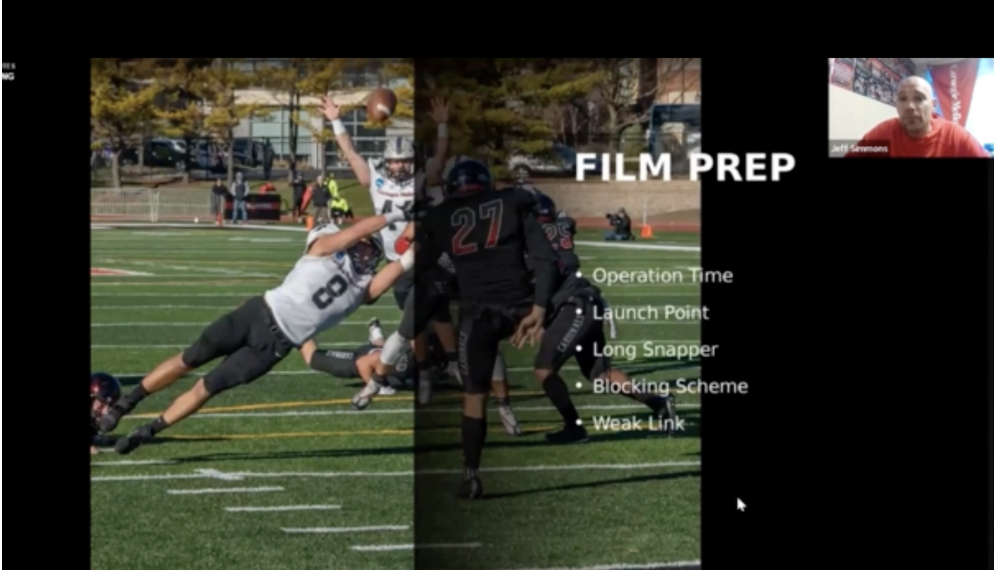
- Track operation time (snap-to-kick) — anything 2.1 seconds or slower is an opportunity to go after it.
- Chart the launch point of the punter; knowing his steps and exact yard line from center identifies your block point.
- Study the long snapper for tails — many have subtle giveaways that tip the snap timing.
- You can drill into blocking schemes; alignments often create exploitable weaknesses for smart players.
- Target the weak link in protection—if someone new appears in the unit, make him prove he belongs.
“Operation time is key. Launch point is key. Scouting that long snapper—very important. If we can find the weak link, we’re going to take advantage of it.”
Closing Note
The season moves fast. The coaches who consistently gain an edge are the ones who keep sharpening their process week after week. Use these insights to tighten your prep, adjust quicker, and keep your team one step ahead.
Find the Winning Edge!
– Coach Grabowski
0 comments