Coach -
Scheme is always fun to study. New fronts, new pressures, new coverage structures.
But there's another skill that doesn't get talked about as much: knowing what to fix after a bad play. Not just that something went wrong, but exactly where the breakdown came from and who owns it. That's the part that determines whether you actually get better next week or just run the same play and hope.
Coach Nick Davis breaks this down in his clinic Defending the Spread on 3rd Down. He pulls up four of his most explosive plays against and sorts each one into the category it actually belongs in: a great play by the offense, a player execution failure, or a coaching mistake. The sorting is the whole point. You can't fix the right thing if you haven't identified who owns it.
Video: Nick Davis - Biggest Plays Against on 3rd Down
Sometimes They Just Make a Play
The longest play Coach Davis gave up in four years. Match man coverage. Orange front with a Mexico stunt (middle pick), linebackers playing match man behind it, one owning the tailback and the other playing the hole.
On film, everyone is in position. The defense wedged the front. The DB is in the right spot. The quarterback just made a great throw, and the receiver made a great catch.
"Whether we're playing zone, whatever we're doing, if that quarterback's going to throw that ball and that guy runs that route, they're going to catch it 50% of the time."
Coach Davis owns what he can: he could have generated more pressure, could have had a better pass rusher on the field. But the player in coverage did his job.
"That's not on that kid. He did pretty much everything I asked him to do."
This is the first sorting decision. If you put this play on the DB, you're punishing a kid who executed his assignment. You erode trust. Coach Davis makes sure his players see the film and understand that this one isn't on them. There's more detail on the coverage in the clip above.
When It's on the Players: Four Missed Tackles
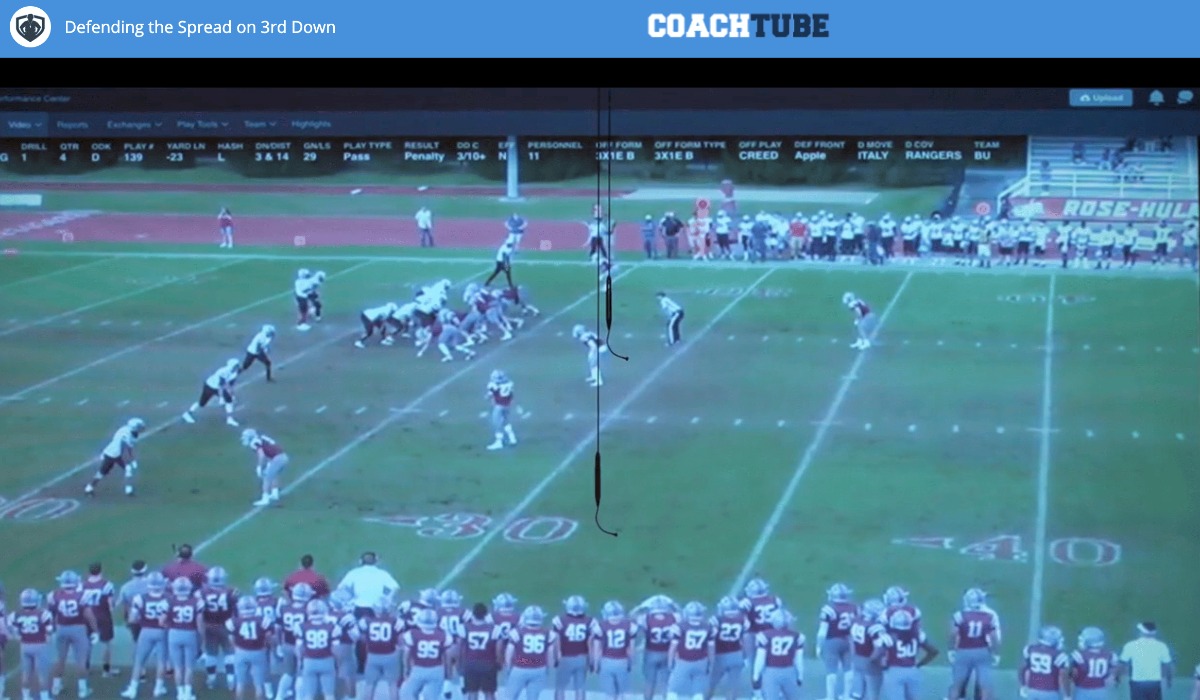
Third and 14. Apple front, stunts, and the quarterback scrambles. The play goes for 29 yards plus a helmet-to-helmet penalty.
Coach Davis counts four missed tackles on film. He pauses and walks through every one.
"Should have tackled him there. Could have got him there. Could have got him there. Could have got him here."
The scheme worked. The stunt created the play. But four guys had a chance to finish it and didn't. That's not a schematic problem. That's execution. Coach Davis takes a shot at himself too: "Besides being a bad coach at tackling, I guess." But the sorting is clear. This one goes in the player execution category, not the scheme category. If you respond by changing the call instead of fixing the tackling, you've misdiagnosed the problem.
When It's Eye Discipline: Cover 0 Breakdown
Third and 10. Cover 0. The DB on this play was one of Coach Davis' best. Lots of interceptions, lots of big plays over his career. On this rep, his eyes went to the backfield.
In Cover 0, there's no safety help. You peek at the quarterback, you lose your man. The DB looked, lost his receiver, and gave up 28 yards.
Coach Davis says the player is "on my presentation for the rest of his life." Every DB who comes through his program will see this clip. That's not punishment. That's the teaching tool. One rep from a good player that shows exactly what happens when your eyes wander in zero coverage.
This one goes in the player column too, but it's a different kind of failure than missed tackles. This is discipline. And the fix is different: it's not a drill problem, it's a film and repetition problem. Coach Davis goes into the details on the play in the clip.
When It's on You: The Bad Matchup
Fourth quarter. Up 35 points. Apple front, linebackers drop to Cover 3 pre-snap. The Will linebacker rolls into the hole against the number three receiver running a bender. That receiver played at Boston College. The Will can't cover him.
Coach Davis doesn't hedge: "That's on me."
He'd already rolled the coverage weak to put two defenders over their best player on the boundary side. But in doing that, he left a linebacker on a receiver he couldn't match. The bender gets open. Twenty-eight yards.
Here's what makes this category different from the others. When it's on the coordinator, the fix isn't a correction on the practice field. It's a structural change to the defense.
"We changed the defense. We made sure we didn't get a bad linebacker out on a good player like that ever again."
Coach Davis adjusted the scheme so that matchup couldn't happen the same way twice. That's the right response to a coaching mistake. Not just noting it. Changing the system.
Four plays. Four different owners. If Coach Davis blames himself for the missed tackles, the tackling doesn't get fixed. If he blames the DB for the matchup he created, the matchup shows up again next week. The precision in the sorting is what leads to the right correction. Coach Davis walks through each play on film in the clip above, and the honesty in his evaluation is what makes the fixes stick.
Always be growing,
Coaches Clinic Community of Coaches Helping Coaches
P.S. This clip covers Coach Davis' film breakdown of his biggest plays against, but the full clinic goes much deeper into his third-down defensive system.
He breaks down the front alignments he uses, including Apple, Banana, Cherry, and Orange, and explains how he pairs them with pressure concepts and coverage structures like Cover 0 and Cover 1 to attack spread offenses on third down.
If you're building a structured third-down plan against the spread, the full breakdown is below:
0 comments