Coach -
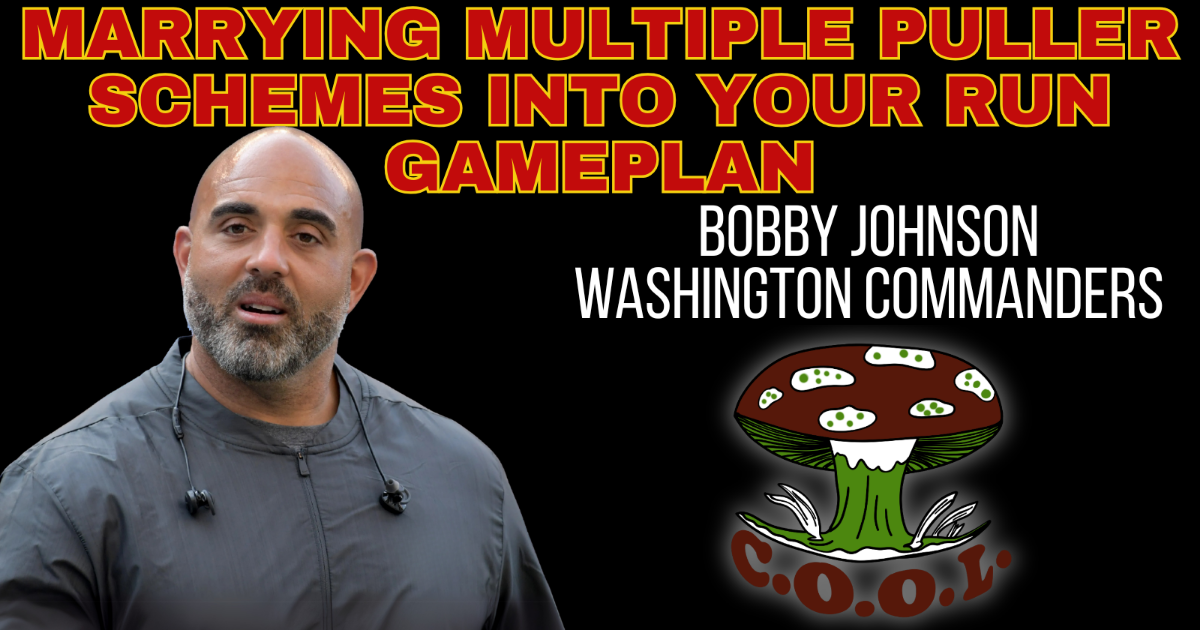
At the 2025 C.O.O.L. Clinic, Washington Commanders offensive line coach Bobby Johnson didn’t just share plays—he shared a mindset. His talk was a masterclass in pre-snap strategy, focused on controlling structure, not just calling schemes.
“We don’t just run plays. We hunt for matchups, angles, and leverage. We manipulate structure.”
Start with Personnel, Win with Matchups
Everything begins with personnel groupings. In the NFL, defenses match what you show. Show 11 personnel, and you’ll likely see nickel. Go with 12, and you may get base or big nickel. Johnson's goal is to predict that matchup and choose the grouping that forces the defense into a structure you can exploit.
Sometimes that means switching which tight end you use—not because of their blocking ability, but because of how the defense reacts to them. It’s chess before the whistle.
Formations, Motions, and Shifts That Create Advantage
Once the personnel forces the structure, the next layer is about unlocking defenders. Which formations and motions:
- Move a force player out of position?
- Change a defensive end’s technique?
- Get a corner (who’d rather cover than tackle) involved in the run fit?
The goal is to attack where they’re vulnerable—whether that’s a finesse corner, a soft defensive tackle, or a linebacker pulled into conflict.
Put Defenders in Conflict
One of Johnson’s favorite tools? Conflict creation.
He looks for ways to stress defenders with dual responsibilities. A player might have a B-gap run fit and be responsible for covering a zone. So Johnson sends a route through that zone and runs the ball right at him.
"We ask: What can we do that makes him wrong no matter what he chooses?"
It’s not about confusing the whole defense—it’s about isolating one player and making him hesitate.
Protect Your Best Runs
The Commanders don’t try to win with volume. Their game plan includes just 12 to 15 run plays. That means their top calls—what Johnson calls “above-the-line runs”—will be used multiple times.
But good defenses adjust quickly. If they recognize the play, they can call it out and blow it up. Johnson refuses to let that happen.
He protects his best runs in three ways:
- Same look, different play – Something that mirrors the favorite run pre-snap but attacks another gap.
- False reads – Post-snap movement or angles that send defenders the wrong way.
- Disguised intent – Using motion or formation to hide the real target.
“If your best run is obvious, it’s already beat.”
A Blueprint Built on Experience
Johnson’s philosophy didn’t come from a playbook—it came from years of learning on both sides of the ball. He credits mentors, past mistakes, and time in both offensive and defensive meeting rooms.
He’s not chasing scheme volume. He’s chasing efficiency, structure control, and tactical conflict.
“You don’t need more plays. You need more ways to make your best plays safe—and more ways to make the defense wrong.”
The Takeaway
Johnson’s talk wasn’t about installation—it was about intention. It was a reminder that great offensive line play starts long before the snap—with matchups, movement, and manipulating structure.
Want more insight from one of the game's top minds?
Watch Bobby Johnson’s full presentation from the 2025 C.O.O.L. Clinic.
Marrying Multiple Puller Schemes into Your Run Game Plan
Get it from the Chalkboard to the Grass!
-The C.O.O.L. Clinic Team
0 comments