

From Middle America to the Ends of the Universe
AI is overhyped.
AI technologies are everywhere these days. At my day job, both coworkers and I have used a number of AI tools, from ones purpose built for patent law to general purpose chatbots.
So far, there's no sign of Skynet.
AI systems to date are idiot savants with an obsequious streak. They're adept at generating boilerplate text ("I need a list from 1.5 to 6.5 in 0.1 increments"). Saves me time to spend doing real work.
But if your patent attorney or agent says AI will write the entire patent application, take your work elsewhere.
"Bubble or Skynet?" is actually not very important. There's a question that matters a lot more. I'll answer it in a minute.
My current writing project
First, I’ve started drafting book 1 in my next sf universe. Working title is “Toffib War Book 1.”
I found a way to have jump-point faster-than-light travel without causality paradoxes. That’s been fun to explore.
But that’s just background. At this point, the story content of the overall series will likely include two wars with alien intelligences, plus political intrigue, shifting alliances, etc.
It’s a big universe to play in, and I’ve learned lessons from the way my past series have fizzled out to avoid those same mistakes.
Now comes the important question.
“Are you using AI to write it?”
You might have strong opinions on how AI should be used. Maybe strong enough to stop reading an author who uses AI in one or more ways.
I’m never going to lie to you. In the spirit of full disclosure, here’s how I use AI tools in various aspects of my writing and publishing work.
My writing is 100% me.
A huge divide in AI uptake among writers and authors relates to why people create fiction.
Some people are writers. They enjoy taking stories from their imagination and putting them down in a linear text. Is it always easy? No. But there are moments of surprise and delight that only come when one’s imagination reveals anspects of the characters, the world, or oneself that the writer’s conscious mind would never have found.
On the other hand, some fictioneers are authors. They want to be a character in an old movie, Breakfast at Tiffany’s or As Good As It Gets, someone in a tweed jacket who gets invited to all the best cocktail parties where they can talk about ”the novel” in pretentious tones. They seek the validation of awards, critical commentary, glowing reviews, or college class reading lists—or all four.
Other authors seem very different at first glance but are fundamentally the same. These authors are in it for the money. Write to market, rapid release, hit the tropes and only the tropes of the hottest subgenre, follow the spreadsheet, run it through Grammarly, and generate a product.
For either category of author, putting words in order is a necessary evil to achieve the real goal. In a quote I heard from an English major ex-girlfriend many years ago, “It is hell to write. It is heaven to have written.”
Which one am I?
I am a writer.
Yes, I enjoy getting paid for my fiction. I enjoy the ego boost of a positive review in Analog or Locus. But I wrote for decades before those outcomes were plausible. I wrote because I fell in love with telling scientifically-informed, humanity-affirming stories. I still do.
It’s heaven to write. Full stop.
It helps I don’t need to scramble for a living. My real world skill set pays pretty well. If I my choice is a day job or cranking out three ghostwritten/work-for-hire/franchise universe novels per year, I’ll keep my day job. Why associate the fiction writing process with projects I lack passion for?
Summing up, every word you read in my fiction is there because I put it there.
How do I use AI in my publishing?
The writer/artist divide I just mentioned speaks to something else. I’d much rather write stories than publish and market them.
Unfortunately, running my own indie publishing business requires me to take charge of the publishing and marketing too. I could spend money on custom cover art, ad services, or virtual assistants. Or I could spend time sifting through stock art sites and crafting marketing copy.
Since I have a day job and a family, I want to wisely invest the time spent on my publishing business. I’ve spent money on custom cover art and virtual assistants with little to show for it.
So automations, including AI, are the least bad option for a number of things. Here are some of them.
Cover art
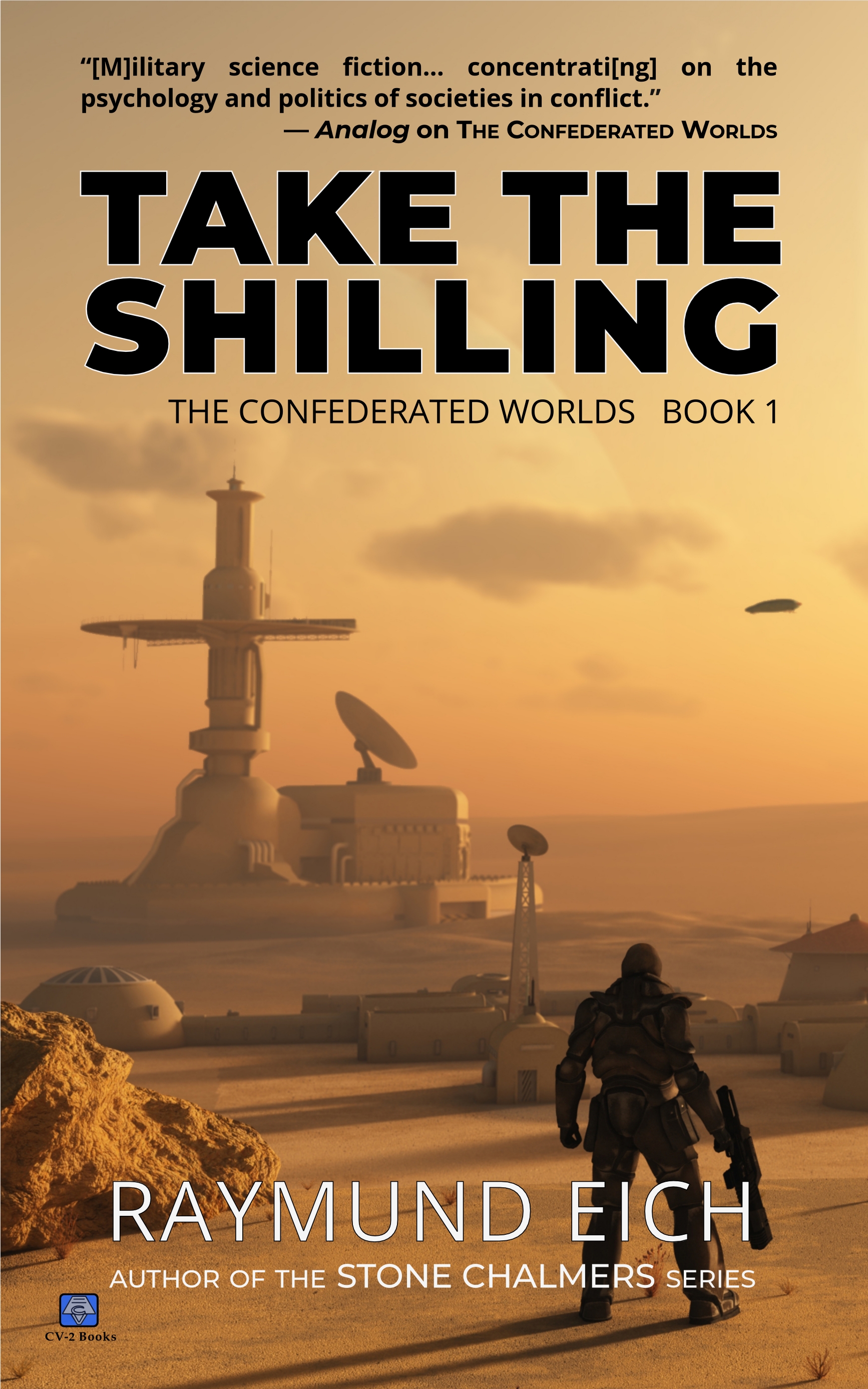
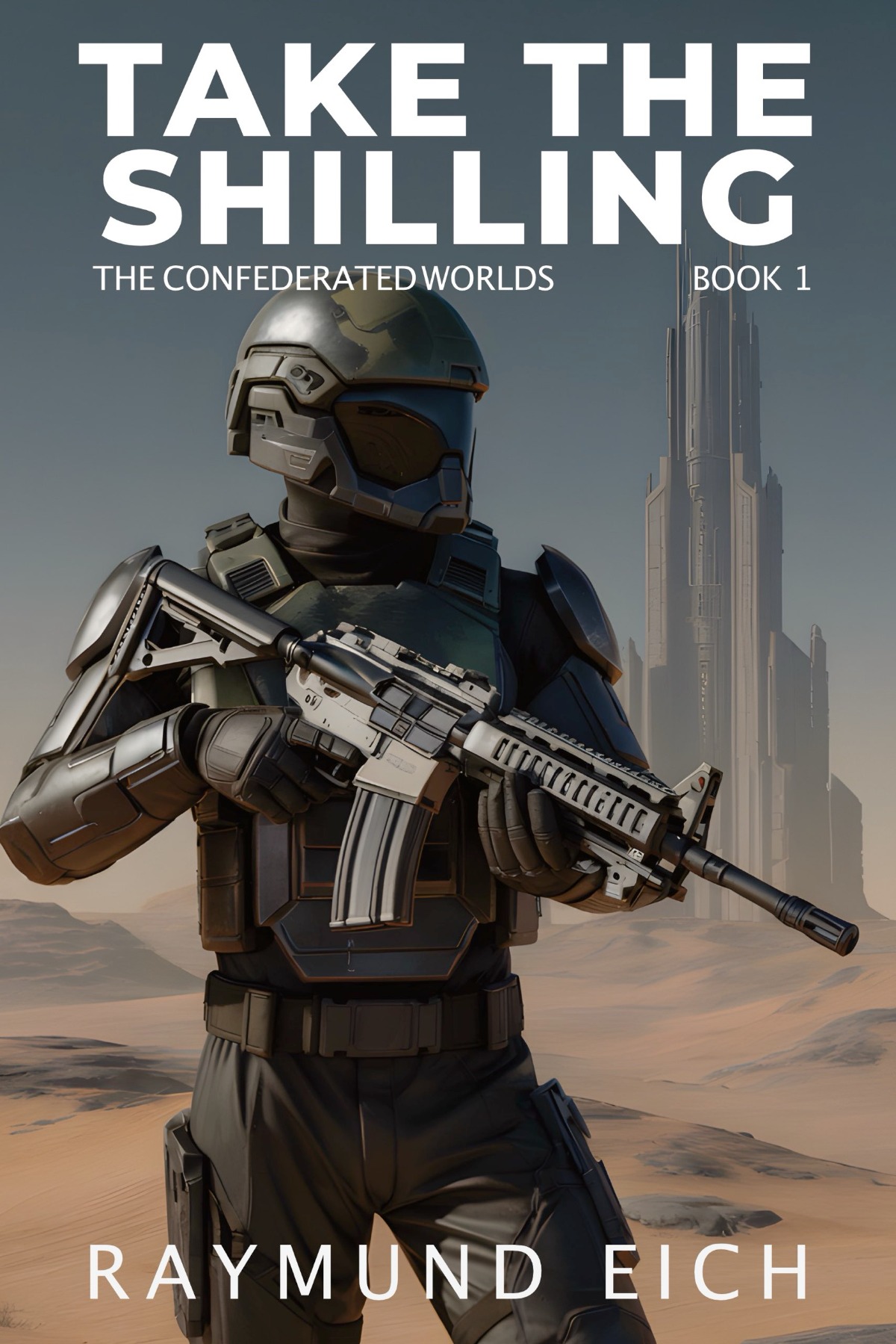
I’ve spent time hunting through stock photo sites for an image that might be good enough for a book cover. (And where are the artist might get a few bucks for a cover that could sell thousands of copies). I’ve spent hundreds of dollars commissioning an artist with lackluster results.
AI image generators are the third alternative, and, so far, the best I’ve found.
Here are some comparisons.
Stock photo (left) vs. AI (right)
Commissioned art (left) vs. AI (right) (same book, different titles):
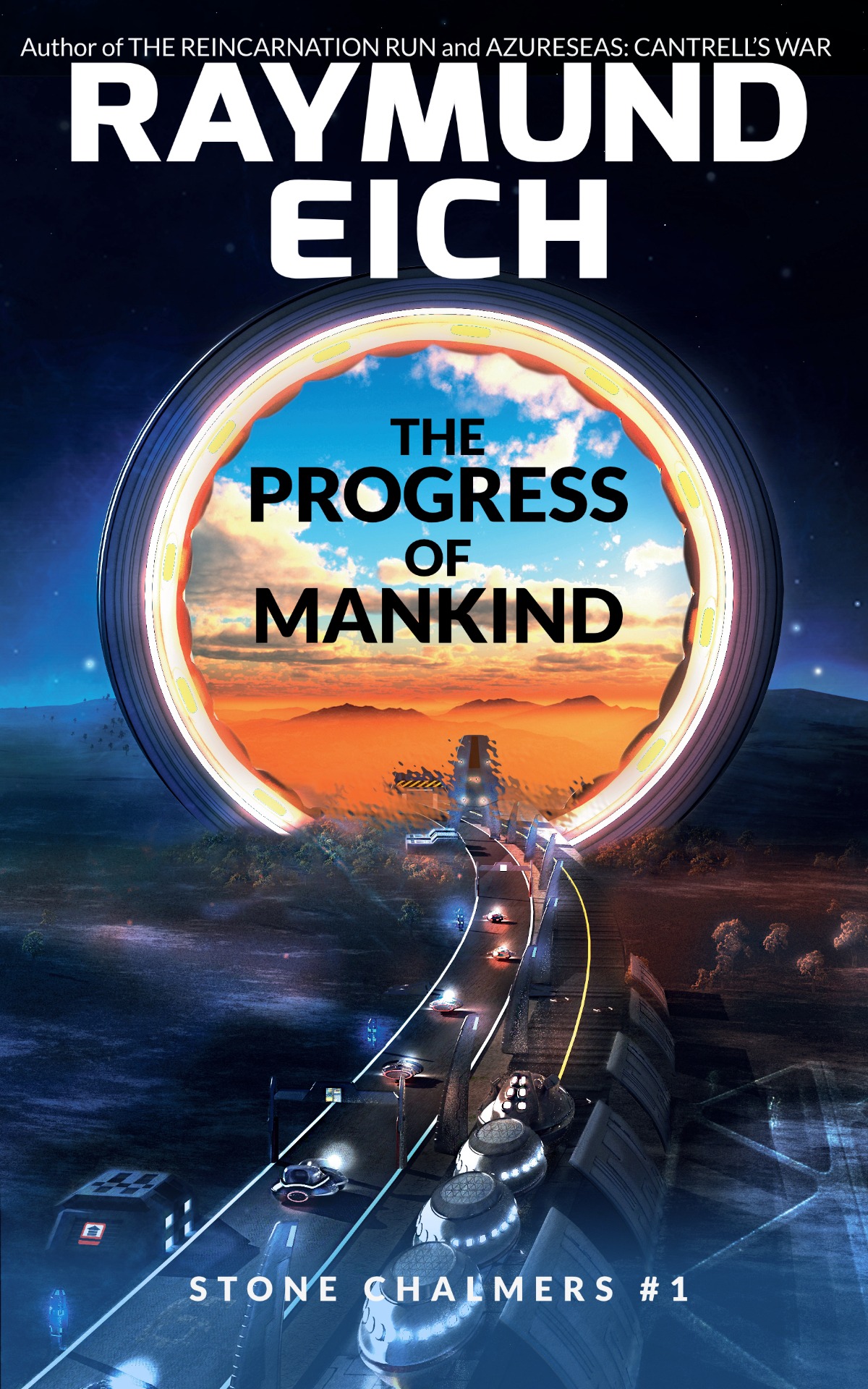
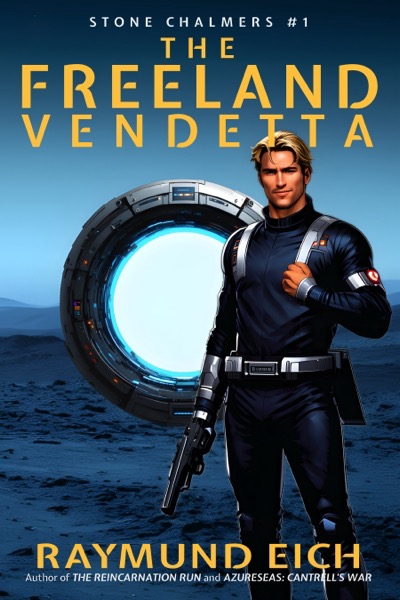
I think the AI-generated images better show what these books are about than the original cover art. If you’ve read any of them, do you agree? Hit reply and let me know.
Brainstorming Assistance
I’ve used software to help me brainstorm minor things for years. I wrote a Python script to randomly assemble tags-bits of appearance, speech, mannerisms, and personality traits for a character. I’ll pick a few that work together and build on them. Using those tags helps you and me both keep them straight throughout a book.
Speaking of Python, the universe of my current project was built by scripts I wrote to implement the worldbuilding algorithms of Architect of Worlds. (Not an affiliate link). My coding efforts saved a lot of headache compared to rolling 3d6 thousands of times.
In addition, both those examples gave me ideas I wouldn’t have come up with on my own. My creative side considered those ideas, ran with a few, and discarded the rest.
So if rules-based software can help me brainstorm, AI might be able to also.
In fact, it already has. Asking a chatbot for “10 characteristics of jungle warfare in Vietnam” gave me some ideas for scenes in Toffib War Book 1. I fit two or three into the growing outline and shucked the rest.
And when I turn the outline into the novel, the words in those two or three scenes will come from me.
Speaking of which, I should get back to work.
Till next month,
Happy Reading!
Raymund
0 comments