In Honor of The Center of Jewish History’s 25th Anniversary as a public institution “devoted to exploring the richness of Jewish life and letters, and showcasing the considerable contributions Jews have made to modern civilization.” Mazal Tov to the CJH’s Guardians of Jewish History Award honorees: Founder and former Chair Bruce Slovin (A”H), former Chair Amy Goldman Fowler, as well as stalwart Board Members Michele Tocci (David Berg Foundation) and Shelby White (Leon Levy Foundation).
Click here to dedicate a future issue in honor or memory of a loved one
Subscribe ◊ Upcoming Events ◊ ASF Sephardi Shop ◊ Donate ◊ Sephardi Ideas Monthly ◊ ASF Sephardi House ◊ Archive
The Sephardi World Weekly is made possible by Daniel Yifrach, Rachel Sally, Professor Rifka Cook, Maria Gabriela Borrego Medina, Rachel Amar, Deborah Arellano, & ASF VP Gwen Zuares!
“Who Was Judah Touro? A Name Etched Into Jewish and American History”
By Hillel Kutler, The Librarians (National Library of Israel)
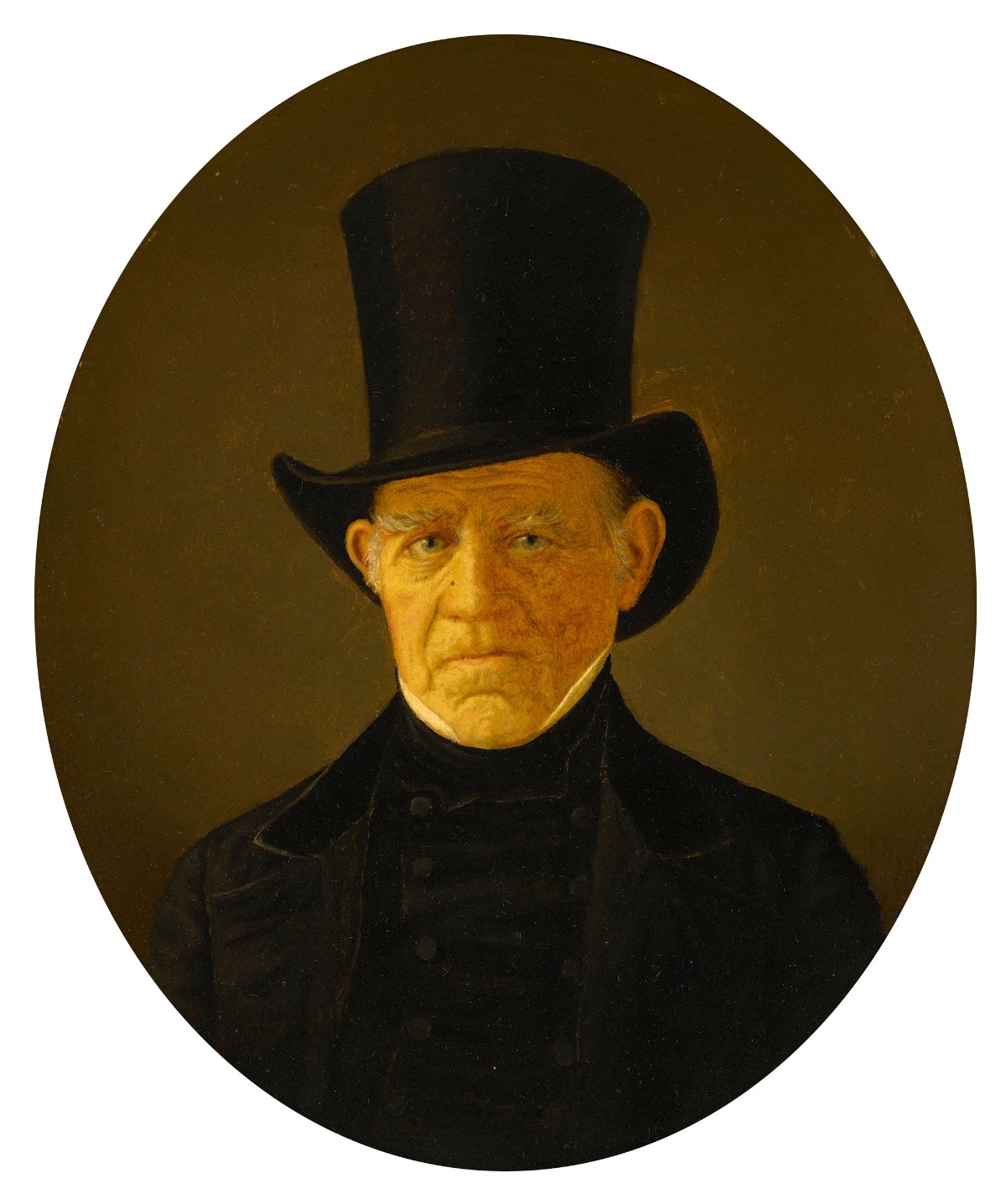
Judah Touro
(Image courtesy ofDavid R. Chittenden)
Judah Touro was a prominent 19th‑century American merchant and philanthropist of Sephardic descent whose family fled the Inquisition to Amsterdam before his father, Isaac, immigrated to colonial America in 1758. Once in America, Isaac served as the hazzan of what is now Touro Synagogue, the oldest surviving Jewish house of prayer in the United States.
Born in 1775, Judah built a successful business in New Orleans, where he lived most of his life. A generous supporter of both Jewish and non-Jewish causes, Judah was seriously wounded fighting as a volunteer in the Battle of New Orleans that ended the War of 1812. His long recovery left him increasingly reclusive and focused on his business and charitable work. He gave generously to synagogues, cemeteries, and hospitals in New Orleans, New York, and New England, including major bequests to what became Mount Sinai Hospital in New York and Touro Infirmary in New Orleans.
In her 2020 children’s book, Judah Touro Didn’t Want to be Famous, Audrey Ades highlights how Touro’s way of life resonates with contemporary audiences, especially his deliberate choice to avoid fame despite his great wealth and good deeds. The reactions generally divide into two groups:
Adults are impressed by the generous charitable contributions made by Touro… Children wonder why Touro avoided the limelight he’d earned for doing such good deeds.
The kids “did not understand why a person would not want to be famous, which was fascinating to me,” said Ades… ‘They were really grappling with that. I think they were more interested in that than the philanthropy.’
Why did Touro flee from fame?
Ades speculated that Touro’s father, Isaac, taught his children about the rungs of charity conceived by the great Jewish thinker Maimonides (Rambam), of which remaining anonymous is the most noble. “By donating in secret, Judah reached the highest levels of charitable giving in Jewish tradition.”
Judah Touro’s immense generosity, combined with his patriotism and support for both Jewish and non‑Jewish institutions, made him one of the most respected Jews of his era. If anyone wants to go toe‑to‑toe on “Heritage Americans,” Jewish Americans have nothing to be afraid of: figures like Judah Touro stand as a powerful testament to our deep patriotic roots, civic contributions, and quiet, principled generosity in American life.
FEATURE: ASF at Georgetown University: The Past and Future of a Pluralistic Khorasan
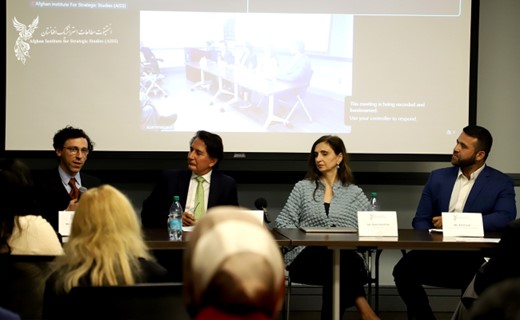
Jason Guberman (Executive Director, ASF), Former Afghan Ambassador Hon. Sayed Tayeb Jawad (Chairman, American University of Afghanistan/AISS), Award-winning author Roya Hakakian, Kalid Loul (Managing Director & Co-Founder, MALA)
(Photo courtesy of the Afghan Strategic Studies Institute)
At the Afghan Institute for Strategic Studies’ “Jews and the Persianate World Conference” at Georgetown University’s Center for Jewish Civilization, ASF Pomegranate Award Honoree Roya Hakakian and the ASF’s Executive Director Jason Guberman spoke at the concluding session, “Dawn of Khorasan: Reclaiming & Reimagining the Future.”
In his opening remarks, Guberman noted how contemporary Islamists distort Khorasan’s historic legacy as a crossroads of knowledge and cultural exchange. While warning against overly idealizing Khorasan’s past, Guberman delineated a vision for a middle path based upon the simple, empirical fact that Khorasan’s historical record includes “values that we should bring forward… I want us to take the best values of the past and build a better future.”
BONUS FEATURE: The Afghan Liturgical Quire: A Witness to Jewish Life in Central Asia
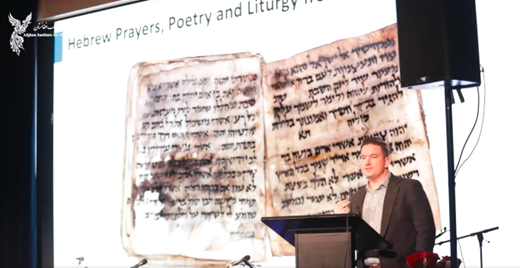
Herschel Hepler, “Rumi Night in Washington: Celebrating Our Shared Humanity,” Museum of the Bible
(Screenshot courtesy of the Afghan Strategic Studies Institute)
In a special lecture, “The Story of the Afghan Liturgical Quire,” Herschel Hepler, Associate Curator of Hebrew Manuscripts at the Museum of the Bible, presented the Afghan Liturgical Quire (ALQ), a small 7th/8th‑century Hebrew codex discovered in Afghanistan, as the oldest known complete Hebrew book in bound form. Hepler traced how the manuscript, containing Sabbath prayers, Sukkot poetry, and a Haggadah (written upside down), was initially misattributed to the Cairo Genizah but later identified through photographic evidence as Afghani, secretly safeguarded and passed down for generations by a family from the Shi’a Muslim, Hazara ethnic group before being smuggled out of the country in 2001. According to Hepler, the ALQ serves as a witness to a Jewish community in Central Asia that preserved its liturgical traditions far from the major centers of Jewish life, and that bridged Persianate and Jewish cultural heritage along the “Silk Roads.”
The Museum of the Bible adopted a human rights-based approach to cultural heritage by partnering with the Afghan Jewish Community as represented by the American Sephardi Federation, the Afghan Jewish Foundation, and Congregation Anshei Shalom to ensure the ALQ’s preservation, accessibility, and promotion.
Hepler’s special lecture was delivered as part of “Rumi Night in Washington: Celebrating Our Shared Humanity,” held at the Museum of the Bible on 29 September 2025, following the Afghan Strategies Studies Institute’s (ASSI) international conference “Jews and the Persianate World: Politics, Culture, and Historical Ties” at Georgetown University. Georgetown’s Center for Jewish Civilizations, the American Sephardi Federation, and Muslim American Leadership Alliance partnered with the ASSI to deepen understanding of the historical ties between Jewish and Persianate civilizations, from the time of Cyrus the Great to modern Central Asian Jewish communities.
~~~~~~~
Concealed: Memoir of a Jewish Iranian Daughter Caught Between the Chador and America
By Esther Amini
Esther Amini grew up in Queens, New York, during the freewheeling 1960s. She also grew up in a Persian-Jewish household, the American-born daughter of parents who had fled Mashhad, Iran. In Concealed, she tells the story of being caught between these two worlds: the dutiful daughter of tradition-bound parents who hungers for more self-determination than tradition allows.
Exploring the roots of her father’s deep silences and explosive temper, her mother’s flamboyance and flights from home, and her own sense of indebtedness to her Iranian-born brothers, Amini uncovers the story of her parents’ early years in Mashhad, Iran’s holiest Muslim city; the little-known history of Mashhad’s underground Jews; the incident that steeled her mother’s resolve to leave; and her parents’ arduous journey to the U.S., where they faced a new threat to their traditions: the threat of freedom. Determined to protect his daughter from corruption, Amini’s father prohibits talk, books, education, and pushes an early Persian marriage instead. Can she resist? Should she? Focused intently on what she stands to gain, Amini comes to see what she also stands to lose: a family and community bound by food, celebrations, sibling escapades, and unexpected acts of devotion by parents to whom she feels invisible.
In this poignant, funny, entertaining, and uplifting memoir, Amini documents with keen eye, quick wit, and warm heart how family members build, buoy, wound, and save one another across generations; how lives are shaped by the demands and burdens of loyalty and legacy; and how she rose to the challenge of deciding what to keep and what to discard.
Exploring Sephardic Customs and Traditions
By Rabbi Dr. Marc D. Angel
Over the centuries, Jewish communities throughout the world adopted customs that enhanced and deepened their religious observances. These customs, or minhagim, became powerful elements in the religious consciousness of the Jewish people. It is important to recognize that minhagim are manifestations of a religious worldview, a philosophy of life. They are not merely quaint or picturesque practices, but expressions of a community’s way of enhancing the religious experience. A valuable resource for Sephardim and Ashkenazim alike.
~~~~~~~
Upcoming Events or Opportunities
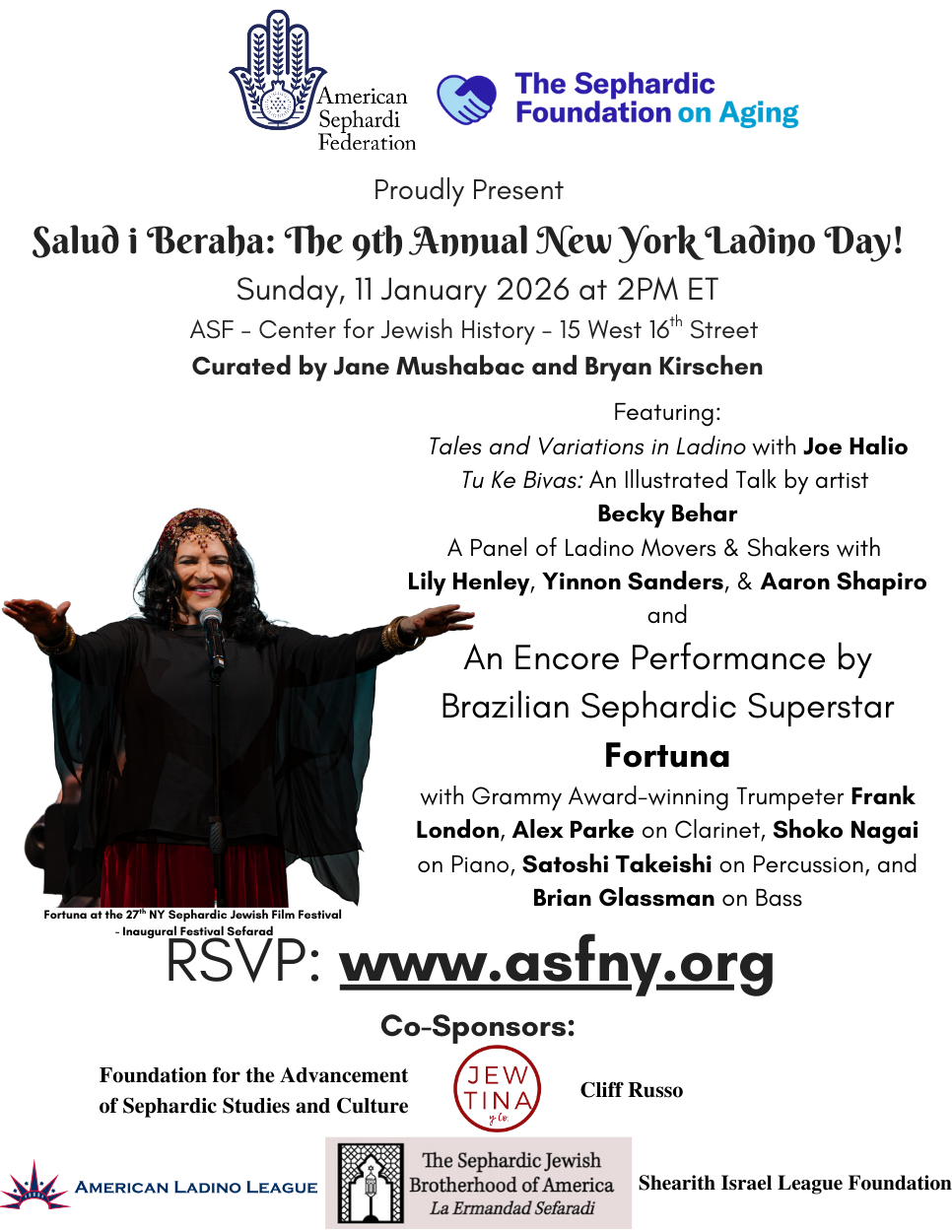
The American Sephardi Federation with the Sephardic Foundation on Aging proudly presents:
Salud i beraha: The 9th NY Ladino Day!
Curated by Jane Mushabac and Bryan Kirschen
Featuring:
Tales and Variations in Ladino with Joe Halio
Tu Ke Bivas: An Illustrated Talk by artist Becky Behar
A Panel of Movers and Shakers of Ladino, with Lily Henley, Yinnon Sanders, and Aaron Shapiro
An Encore Performance by Brazilian Sephardic Superstar Fortuna, with Grammy Award-winning Trumpeter Frank London, Alex Parke on Clarinet, Shoko Nagai on Piano, Satoshi Takeishi on Percussion, and Brian Glassman on Bass
Sunday, 11 January 2:00-5:00PM EST
In-Person @ ASF - Center for Jewish History
15 W 16th Street, New York City
Sign-up Now!
$26 General Admission
(Admission to Ladino Day)
$36 Friend of NY Ladino Day
(Includes a copy of the book: The Historic Synagogues of Turkey, and admission to Ladino Day)
$56 VIP Friend of NY Ladino Day
(Includes VIP reception prior to the program (1:00-1:45PM), a copy of the book: The Historic Synagogues of Turkey, and VIP seating at Ladino Day)
Please support New York Ladino Day with a generous, tax-deductible contribution to ASF so we can continue to cultivate and advocate, preserve and promote, as well as educate and empower!
Sponsorship opportunities available:
Since 2013, Ladino Day programs have been held around the world to honor Ladino, also known as Judeo-Spanish. January 11th marks New York’s 9th Annual Ladino Day hosted by the American Sephardi Federation.
Ladino is a bridge to many cultures. A variety of Spanish, it has absorbed words from Hebrew, Turkish, Arabic, French, Greek, and Portuguese. The mother tongue of Jews in the Ottoman Empire for 500 years, Ladino became the home language of Sephardim worldwide. While the number of Ladino speakers has sharply declined, distinguished Ladino Day programs like ours celebrate and preserve a vibrant language and heritage. These programs are, as Aviya Kushner has written in the Forward, “Why Ladino Will Rise Again.”
Postcard: Frederic Leighton’s “Old Damascus: Jew’s Quarter (Gathering Lemons),” c.1873-1874
Co-Sponsors:
The American Ladino League, Shearith Israel League Foundation, Cliff Russo, The Sephardic Jewish Brotherhood of America, Jewtina y Co., and Foundation for the Advancement of Sephardic Studies and Culture.
~~~~~~~
Our friends at 14th Street Y in partnership with the American Sephardi Federation present:
Kedmah Song Circle
“Join Yosef Goldman and Josh Kaye for an immersive evening of Middle Eastern Jewish poetry and song. Each month from January to May, we’ll delve into a single piyyut - a sacred Jewish poem - learn its melodies, and discover the stories and contexts that shaped it. Come sing, learn, and connect in community. All are welcome.”
On Mondays at 7:00PM EST
12 January
19 February
16 March
27 April
18 May
In-Person @ 14th Street Y
344 East 14th Street, NYC
Sign-up Now!
Tickets: $18
About the Event:
“Kedmah is a musical and educational collective devoted to Mizrahi Jewish poetry and song. Through teaching, performance, and communal singing, Kedmah invites participants to experience the vitality of sacred poetry that has shaped Jewish life across generations.
Yosef Goldman is a composer, vocalist, and spiritual artist drawing on Mizrahi and Ashkenazi devotional traditions to create transformative musical experiences. He co-founded Kedmah and serves as senior advisor to Hadar’s Rising Song Institute. His work has been featured at the Kennedy Center and Kimmel Center. As a rabbi and ritual artist, Yosef leads prayer and teaches sacred music across the spectrum of Jewish life.
Josh Kaye is a guitarist, oud player, and award-winning composer. He performs across the U.S. as a member of the Stephane Wrembel band and leads the Middle Eastern fusion project, Baklava Express. Josh has performed at venues such as The Town Hall, Dizzy’s Club, Blue Note, Symphony Space, and Lincoln Center.”
~~~~~~~
Our friends at 14th Street Y in partnership with the American Sephardi Federation present:
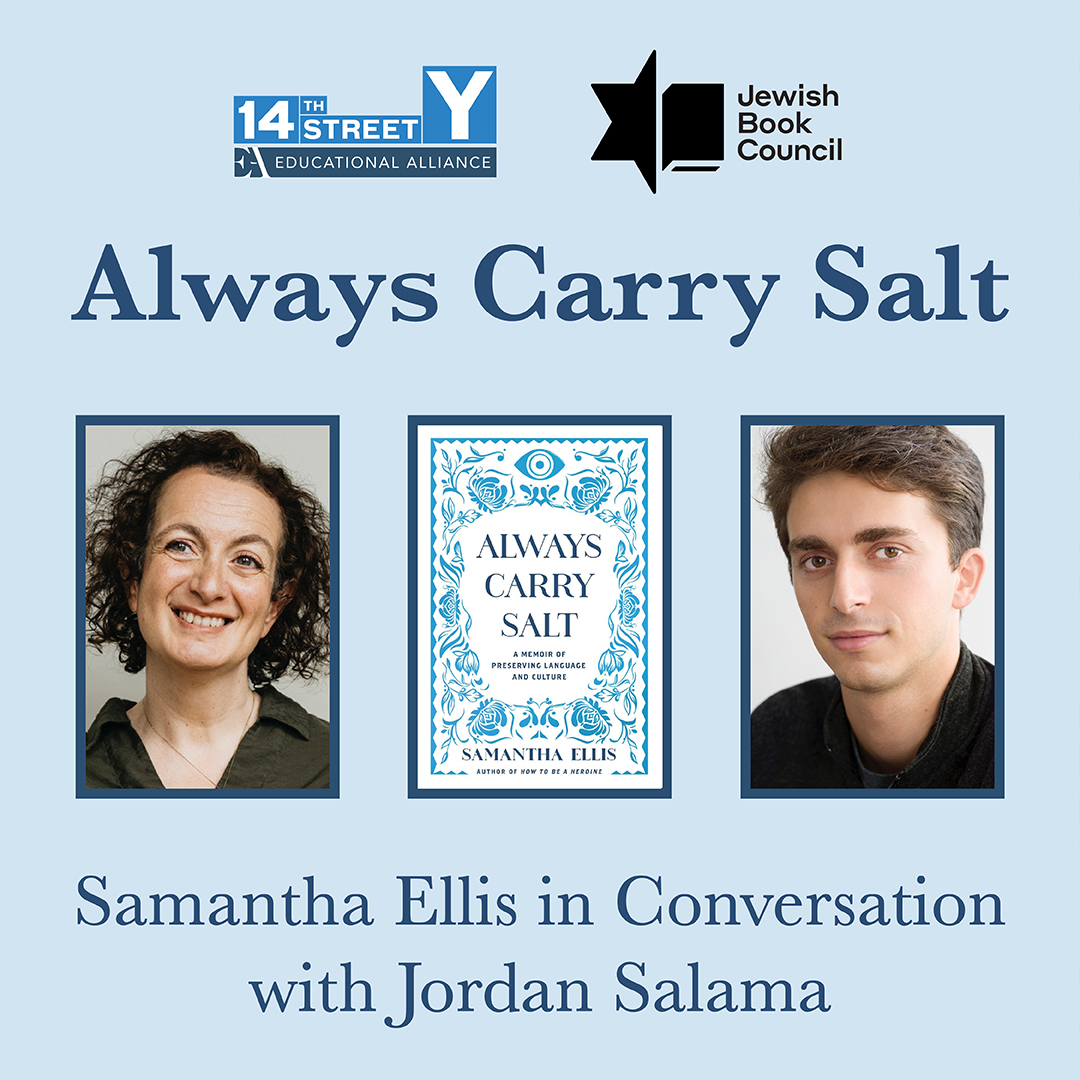
Always Carry Salt
“Join acclaimed authors Samantha Ellis and Jordan Salama as they discuss Ellis's powerful new memoir Always Carry Salt. In this moving meditation on language and resilience, Ellis - the daughter of Iraqi Jewish refugees - sets out to reclaim her fading mother tongue, Judeo-Iraqi Arabic. Along the way, Ellis uncovers a fascinating and largely forgotten world of ancestral recipes, family lore, and ancient artifacts.”
Thursday, 15 January 7:00-9:00PM EST
In-Person @ 14th Street Y
344 East 14th Street, NYC
Sign-up Now!
Tickets: $1 General Admission
About the Event:
“This event is presented in partnership with the Jewish Book Council and cosponsored by the American Sephardi Federation, Be’chol Lashon, HUC Jewish Language Project, Kanisse, Sephardic Brotherhood, and Sephardic Mizrahi Q Network.
Samantha Ellis is the author of How to be a Heroine and Take Courage. Her plays include How to Date a Feminist, Cling to me Like Ivy and Operation Magic Carpet. Her journalism has appeared in the Guardian, the TLS, the Spectator, and Literary Review. She lives in London, where Always Carry Salt was published as Chopping Onions on My Heart.
Jordan Salama is a regular contributor to The New Yorker and National Geographic. His first book, Every Day the River Changes, about a journey down Colombia’s Río Magdalena, was named a Kirkus Reviews Best Book of 2021. Most recently, he is the author of Stranger in the Desert (2024), an intergenerational family story tracing his search for the legacy of his great-grandfather, a Syrian traveling salesman in the Andes.”
~~~~~~~
Our friends at HUC Jewish Language Project in partnership with the American Sephardi Federation present:
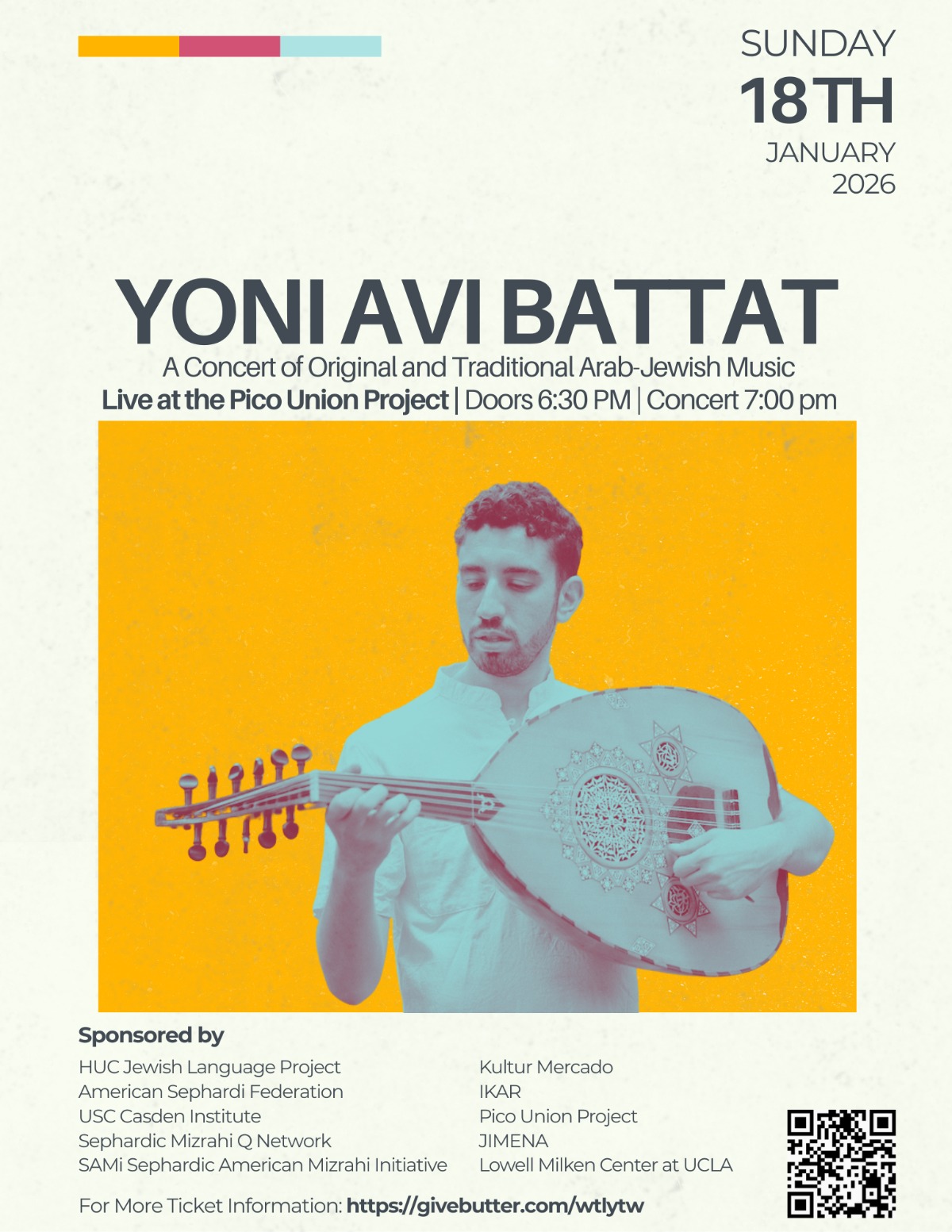
Fragments: The Yoni Avi Battat Ensemble
Live at Pico Union Project
A Concert of Original and Traditional Arab-Jewish Music
“Join us for an unforgettable live concert with multi-instrumentalist, vocalist, and composer Yoni Avi Battat.
Battat’s music bridges Jewish traditions from across the globe with contemporary improvisation. Drawing on his roots in Iraqi and Eastern European Jewish heritage, Battat weaves together sounds of the Middle East, North Africa, and Eastern Europe, blending them seamlessly with jazz, classical, and folk influences.
This performance will draw largely from his 2022 album, Fragments and focus on music and sounds of Middle Eastern life.
With Battat on oud and through his warm and expressive voice, Yoni takes audiences on a journey through centuries of migration, memory, and re-imagined tradition.
His performances are both celebratory and contemplative—rich with stories of resilience, joy, and cultural connection. Come experience a night of music that transcends borders and invites us into a shared space of beauty and belonging.”
Yoni’s ensemble features:
Yoni Avi Battat, oud/vocals
Eylem Basaldi, violin
Jim Grippo, qanun
Janie Cowan, bass
Jamie Papish, percussion
Sunday, 18 January at 6:30PM PST
@1153 Valencia St, Los Angeles, CA 90015
Sign-up Now!
Tickets: $25-$36
Sample Yoni’s music with tracks “Adon Olam,” and “Vapor”.
Co-sponsors:
Pico Union Project, USC Casden Institute, Kultur Mercado, IKAR, Lowell Milken Center for Music of American Jewish Experience at UCLA's Herb Alpert School of Music, JIMENA, American Sephardi Federation, Sephardic Mizrahi Q Network, and SAMi Sephardic American Mizrahi Initiative