It’s been quite a week. First we were arguing about sandpaper, then we were arguing about coffee. I had a cup of tea and had thoughts about both.
Sandpapergate
If you follow cricket, you’ll remember Sandpapergate. In 2018, during a Test in Cape Town, cameras caught Cameron Bancroft using sandpaper on the ball. I was as unimpressed as anybody else. It was cheating. Three Australian players were suspended, and that was that. The fallout continued for a few years as Smith and Warner served out their suspensions. Bancroft, a young, inexperienced player, probably suffered the most. But then as the years passed it became an unpleasant footnote in cricket’s history, right beside the ‘underarm’ incident with New Zealand.
Then Usman Khawaja brought it all back with his new book, written after he retired. His account is that the whole team knew what was going on. Other players dispute that, and I’ll spare you the rounds of who said what. ABC News Forgive me if I see the whole furore as much as a marketing ploy as anything else. Why wait for eight years, Uzzie?
The idea was to get the ball to reverse swing, which makes life considerably less pleasant for the batter. Back then it seemed every international side could get the ball to reverse. These days I hardly see it. Make of that what you will.
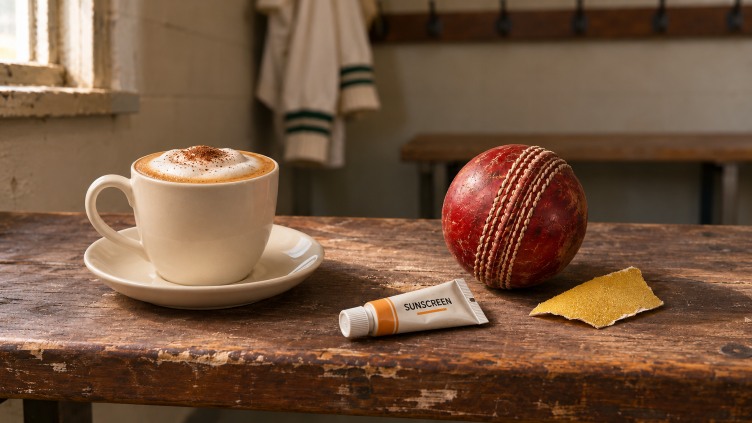
Ball tampering is part of the game, anything for an advantage. I’ve read about gel, sunscreen, and people picking at the seam. Then there’s the old trick of aiming the return at a scuffed patch of ground to roughen the ball (that’s natural sandpaper if you will).
What’s brought it all back is the question of who knew. Usman Khawaja says in his book that the whole team knew what was going on. Pat Cummins, who was in the bowling attack in 2018 and is now Australia’s captain, disputed Khawaja’s account. Then Bancroft weighed in with his own version, backing Khawaja’s claim that the rest of the team knew. It's all about trust.
But for the sake of cricket, and the rest of the players – especially those who weren’t even there – let’s get over it and move on.
COP31 – an overblown, expensive gabfest
Meanwhile, at COP31 in Türkiye, Australia’s official delegation numbered 192. That's pollies and public servants. On top of that, the federal government handed out more than $700,000 in travel grants to 34 organisations to help send people to Antalya. That raises a question the delegation figure alone can’t answer. How many people went with taxpayer support, and what was the total bill?
The US federal government skipped the conference, although American state and local officials turned up. The Chinese and Indians sent delegations to advocate for developing nations' interests. In UN climate negotiations, both China and India are officially classified as developing countries. Huh.
I’d like to know what Australians got for the money we spent. This is an approximate breakdown of what it has cost us. [2]
More than 98,000 registered and accredited people attended the event. Thousands of people took jets from different parts of the world to participate and sanctimoniously agree to terms that are often unrealistic and unattainable. Australian Climate Change and Energy Minister Chris Bowen is committed to a domestic target of 82% renewable electricity in Australia’s national grid by 2030.
Oh, get real. Our ageing coal-fired power stations are the only things keeping us running at night.
Let’s add to the hypocrisy quotient. Australia leads the world in coal export revenue. Yay us. We’re happy to sell coal, uranium, and gas overseas, but there’s little appetite in Canberra for new coal-fired power stations, and federal law still bars nuclear power stations. In Victoria they’ve even banned connecting new homes to the natural gas pipelines. Although you can still use bottled LPG. And by the way, almost all the Pacific Island nations rely on diesel generators to create their electricity supplies.
Meanwhile, every time I open a power bill, I wonder when all this talk about the energy transition is going to translate into cheaper electricity. Pacific island nations aren’t going to disappear under the sea anytime soon but they have real concerns about flooding and saltwater getting into their freshwater supplies. I’d like to hear what the conference will actually do about those problems, too. iea.org
Perhaps we’ll get some answers when everyone gets home. I’ll put the kettle on. But I won't be holding my breath.
0 comments