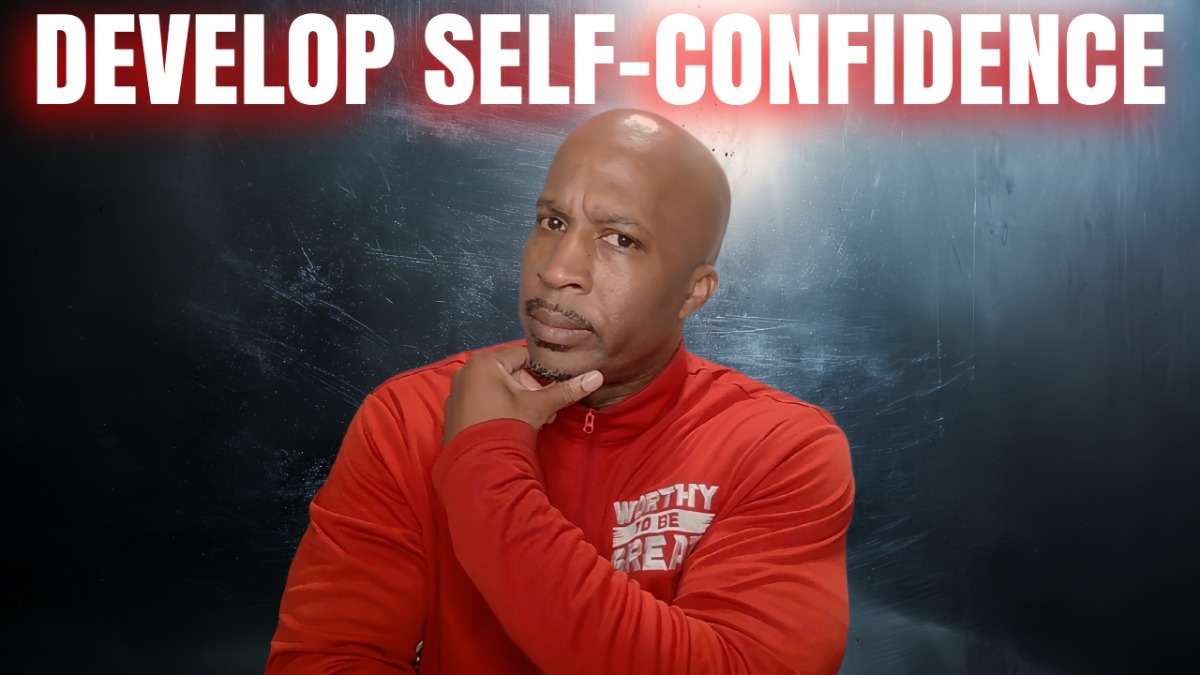
3 WAYS TO DEVELOP SELF CONFIDENCE
You’re struggling with your self-confidence and really want to develop it, but find it difficult. Because of this, you’re not pursuing the things you want to achieve in life, as you don’t feel confident enough to try.
I understand how that feels because I struggled with my self-confidence for many years. One of the main reasons was dealing with abandonment issues.
If you have experienced rejection, abandonment, or trauma related to abandonment in childhood, that pain can carry over into adulthood.
Today, we’re going to talk about the fear of abandonment and self-confidence. I’ll also share three things you can do to help develop your self-confidence so your abandonment issues no longer control your life.
CREATE A BELIEF SYSTEM THAT SERVES YOU
Now, the first thing I want to encourage you to do is to develop a belief system that serves you. I’m going to talk about this from a religious perspective because that’s how I grew up.
I’m not a religious person now, but I am a man of faith. I believe there’s a God, and you should have faith in Him. That’s my view. However, I want to encourage you to have your own belief system—one that you create for yourself.
The reason I’m no longer religious is that, growing up in the church, I always felt religion was extremely controlling. It seemed like I couldn’t do this or say that.
One situation that really stood out to me as a kid was the demand to give 10% as a tithe.
Even when I was small, my mama said, “Listen, if you make $5, you need to give 10%, which is 50 cents. So, you always had to give 10% to the church.”
I remember asking my mama, “Why do I have to give 10% to the church? Why should I give it to this pastor guy? What am I giving him money for?”
She would tell me, “We don’t question God. We don’t question the pastor. The pastor is there because God put him there.”
That stuck in my mind for a long time. I used to think that if I didn’t give this 10%, God would abandon me, the church would abandon me, my mama would abandon me. That fear of abandonment stayed in my subconscious.
Over the years, I gave thousands of dollars to the church even though I didn’t want to, all because of that fear.
I still question the legitimacy of the tithe because of a situation that happened at the church when I was a kid.
We had a pastor who every Sunday asked for tithes and offerings. It always felt fishy to me because no one could ever ask what they were actually doing with the money.
That seemed strange even to a kid. Eventually, that pastor was arrested after the church discovered he had been stealing thousands of dollars. He had to step down.
The craziest thing was that after he stepped down, the church got another pastor, and the people remained loyal to the tithes.
They still wouldn’t question it. They would still give that 10%. And that just really boggled my mind—I didn’t understand or get it.
Years later, the final nail in the coffin for me was when my cousin died, and we had to attend the funeral. When we arrived, we were deep in the hood, and there was a brand-new BMW parked outside. I thought, “Wow, which one of my family members got a BMW?”
We went into the church and listened to the pastor. Then we went outside, got into our cars, and headed to the gravesite.
As my mama, sisters, brother, and I were driving off, I stared out the window, curious about who drove the brand-new BMW. Then the pastor came out and got into it. I remember thinking, “Wow, that’s crazy—this man, deep in the hood, driving a brand-new BMW.”
I thought about how everyone else was driving old, busted-up cars while he was driving a luxury car.
I said to myself, “I’m not giving my money to any religious organization just to put money in the pastor’s pocket. I’d rather take my money and give it to a food bank or buy food myself and give it to the homeless or someone who needs Christmas presents for their kids. I’d rather give money knowing where it goes.” So, I decided to adopt a new belief that served me.
Whatever your current beliefs are, ask yourself, “Are these beliefs serving me? Are they truly my own or someone else’s?” If they aren’t serving you, chances are they are beliefs imposed by others. Because you’re so attached to them, it’s hard to break free.
One major reason is fear—you worry about being abandoned by family or friends if you let go of beliefs that don’t serve you. If you want true self-confidence, you must develop your own belief system.
DECIDE WHAT VIRTUE MEANS TO YOU
Second, decide what virtue means to you. Many of us have heard others tell us what is virtuous, but we never truly determine what virtue means to ourselves. From my experience, that was definitely the case for me, as it led me to believe that poverty has virtue.
When I was growing up, people talked about poverty as if it were a badge of honor. They said you had to be poor to be close to God or to show humility. I always thought that was crazy. What really made me question this was government cheese.
When I was little, the government used to send us a huge block of cheese every month. That cheese was actually good; we ate it with crackers and even on Christmas Day, and I was addicted to it.
But then, one month, the cheese didn’t come. I asked my mama, “Where’s the block of cheese?” She said the government had stopped sending it.
At that moment, I understood something important: when you’re in poverty, what people give you can easily be taken away. I didn’t want to be in a position as an adult where I depended on others—especially the government—and they could take away what they gave at any time.
There was no empowerment in that, so I decided there was no virtue in poverty.
Instead, I believe true virtue comes from working hard, achieving success, and using that success to help others. You can build a business, employ people, and use your wealth to serve others.
For example, I used to visit juvenile detention centers to teach job skills, life skills, and communication skills—skills many of those young men lacked because they grew up in poverty without fathers. Helping them find a better path—that, to me, is virtuous, not poverty.
So ask yourself: What is virtue to you? If someone else has defined virtue for you and you decide to break away from that, you might fear abandonment. That fear can be so strong that you continue to believe someone else’s idea of virtue instead of your own.
But you must choose your own virtues without worrying about rejection or abandonment. When you reach that point, you begin to develop true self-confidence.
LIVE YOUR LIFE
Three: Stop letting others tell you how to live your life. One of the most disrespectful things is when someone tries to dictate how you should live as an adult.
What I’ve discovered is that when people are bitter or their lives aren’t going the way they want, they have plenty of time to tell you how to live yours.
If you keep letting them do this, you will never develop self-confidence because you’ll become dependent on someone else’s path for your life. I remember one Thanksgiving several years ago when a nosy family member, who always tries to tell me how to live my life said, “When are you going to date someone? I want to see you put on some weight—you’re too skinny.”
As she said this, everyone was looking at me, and I felt myself getting really pissed off. But I told myself, “Gene, don’t engage.”
Here’s the thing: while she was telling me I was too skinny, she was giving herself an insulin shot because she has diabetes. So many thoughts ran through my mind—I wanted to comment on her weight and her diabetes—but I knew better than to stoop to her level.
As an adult, if you let others dictate how you live your life out of fear of abandonment, rejection, or criticism, I highly encourage you to stand firm in your independence. Doing so will help you develop self-confidence.
You have the right to make your own decisions about your life, and you don’t owe anyone an explanation for them.
You’re no longer a kid—you’re an adult with the right to choose your path. So claim this right and develop true self-confidence because You Are WORTHY TO BE GREAT!
P.S. What has unworthiness already cost you? How many times have you given up on a dream or never even started because you didn’t believe you were enough? Imagine what you could accomplish if you truly believed in your value instead of sabotaging yourself because of low self-worth.
My premium ebook, WORTHY TO BE GREAT, can help you change that. It offers practical skills and tools to transform your life by building unshakable self-worth.
If you’re tired of low self-worth stealing your dreams, click the link below and get the premium ebook WORTHY TO BE GREAT today.
0 comments